
Updated March 17, 2026 @ 2:58pm
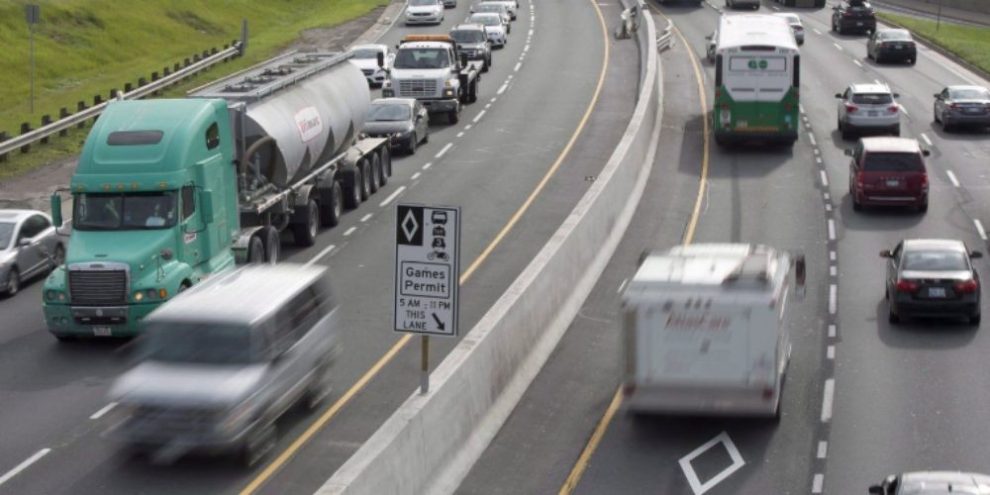
Ontario drivers may soon be able to use high-occupancy vehicle lanes at times, even if they are all by themselves.
Premier Doug Ford's government is proposing to amend the Highway Traffic Act to allow single-occupant vehicles to use the HOV lanes during off-peak hours, saying it would reduce travel times and ease gridlock.
"It's pretty common sense," Ford said Tuesday. "After rush hour, those lanes are sitting empty and if there's a traffic jam or whatever, (at) seven, eight o'clock at night, people should be able to use the HOV lanes."
Transportation Minister Prabmeet Sarkaria said the ministry's modelling shows it would increase average speeds in both HOV and general-purpose lanes across major highways during off-peak hours.
“Gridlock is costing our economy billions of dollars every year and robbing Ontario drivers of valuable time and quality of life,” he wrote in a statement.
The government plans to consult on the proposed amendment first, and hopes the change can take place by the end of the year.
It hasn't yet decided which hours will count as off-peak.
Right now, only vehicles with two or more occupants, buses, licensed taxis, green-plate vehicles, airport limousines, motorcycles and emergency vehicles can use HOV lanes.
NDP Leader Marit Stiles said the idea has some merit, but she questioned the timing of the announcement and several others recently.
"I don't think it's the worst idea possible, but I will say as well that I think those lanes existed for a reason, so I would like to see the evidence and the research to prove that this is going to be helpful to anyone," she said.
"But I think pretty much everything that he's rolling out and at the speed of which he's rolling all these announcements out, is just simply to distract us from the fact that this premier wants to hide all of these cellphone records from the people of Ontario."
The Ford government announced Friday that it will make the premier and cabinet ministers' records secret, by exempting them from freedom-of-information laws.
This report by The Canadian Press was first published March 17, 2026.