Updated March 26, 2026 @ 6:18pm
Ontario is delaying a path to balance once more, as one of several shock absorbers meant to ease the province down a potentially bumpy economic road ahead, though it is currently faring better than previously feared in the face of U.S. tariffs.
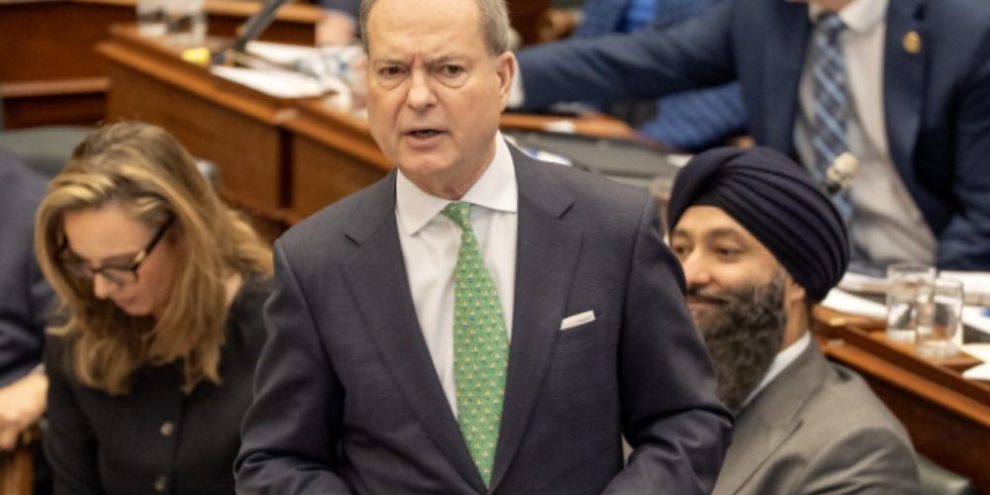
Finance Minister Peter Bethlenfalvy is for the third year in a row delaying a surplus, now projecting black ink in 2028-29, with an expectation of closing out this fiscal year $12.3 billion in the hole and worsening to $13.8 billion next year.
That nearly $14-billion deficit is a significant jump from the $7.8-billion deficit the 2025 budget eyed for this upcoming year, as Ontario bets big on infrastructure, research and innovation funds, high-growth industries and cutting costs for small business.
Barrie's News Delivered To Your Inbox
By submitting this form, you are consenting to receive marketing emails from: Central Ontario Broadcasting, 431 Huronia Rd, Barrie, Ontario, CA, https://www.cobroadcasting.com. You can revoke your consent to receive emails at any time by using the SafeUnsubscribe® link, found at the bottom of every email. Emails are serviced by Constant Contact
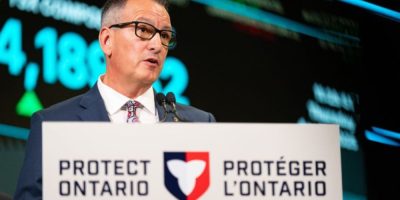
"I'd prefer to have a smaller deficit," Bethlenfalvy said. "I'd prefer to balance sooner, but we have to live in the world we're in, and we have now many challenges in front of us."
Bethlenfalvy said amid geopolitical and trade tensions his $244.2-billion plan is "cautious where it must be and ambitious where it should be."
The budget allocates billions for what it calls high-growth industries; it boosts research and innovation funds, and implements a small business tax cut.
It cuts the small business corporate income tax rate from 3.2 per cent to 2.2 per cent, and allows faster writeoffs of capital investments. The writeoffs mean more than $3.5 billion in tax relief over four years, while the tax cut will cost the treasury $1.1 billion over three years, the government said.
The Canadian Federation of Independent Business had pushed for just such a move, and said it will help both the businesses themselves and the broader economy.
"We expect this investment will be returned in spades, since small businesses have told us they would capitalize on any new tax savings by directing them to economy-stimulating measures, including increasing employee compensation, expanding their operations and hiring new employees," representatives for the small business association said in a statement.
The province is using the remaining $4 billion from a $5-billion account meant to protect from tariff-related shocks to create an investment fund that the government says will diversify the economy and increase independence from U.S. trade relationships.
The Protect Ontario Account Investment Fund will see the province invest with a general partner, which could bring in additional investments from pension plans and other institutional investors. It would look toward industries such as artificial intelligence, defence and advanced manufacturing, the government said.
Ontario's exposure to U.S. tariff shocks has been lower than anticipated, officials said, with exports to the United States down 1.7 per cent from 2024 to 2025, and total international exports up 5.6 per cent. GDP growth projections are stronger than they were in last year's budget.
The approach is cautiously optimistic yet prudent, Bethlenfalvy said, as he tries to shore up the economy against future threats.
"When we locked in the budget, there was no war between the U.S. and Iran, and that level of global conflict," he said. "So we don't know what's around the corner, but I'm going to guarantee you that this government is focused on protecting Ontario."
Officials also note it's not known whether the upcoming review of the Canada-United States-Mexico Agreement on trade will bring positive or negative effects to the country. The budget earmarks high reserve funds, at $1.5 billion, $2 billion and $2.5 billion over the next three years.
Ontario's net debt is projected to surpass $500 billion next year, while the net debt-to-GDP ratio is expected to be 37.7 per cent next year.
Bethlenfalvy said the province is taking on debt in order to build infrastructure such as hospitals, schools and roads, but the Liberals said it means interest payments to service that debt are rising faster than program spending.
"Ford's the half-trillion-dollar man who seems to love the gravy train," said interim Liberal leader John Fraser.
Green Party Leader Mike Schreiner said there is little in the budget in direct affordability measures for the average Ontarian, but a lot of measures that will make well-connected insiders happy.
"You can see it by the priorities in this budget — an island airport, a ridiculous tunnel under (Highway) 401, Ontario Place, Highway 413," Schreiner said.
"(As a) matter of fact, these projects are so irresponsible that the government talks about them in the budget and never assigns dollar figures to them because they're too embarrassed by the high cost associated with them, when so many people are struggling to get by."
There are a few large investments on the services side, including $1.1 billion for home care over three years and $1.1 billion for the upcoming year for hospitals.
The hospital sector had said it is dealing with a $1-billion structural deficit, but that it would need about $2.7 billion to meet full operating needs.
It comes after the Ministry of Health tasked hospitals with setting up a three-year plan to balance their budgets, with an assumption of getting two per cent annual funding increases. This increase does match the four per cent increases they have received in the past few years, but does not keep up with the six per cent pace at which the sector says costs are rising annually.
Health Minister Sylvia Jones said the funding in the budget signals a commitment to continue working with the sector.
"We're there as a partner to our hospital sector," she said. "But I think it's also important to remember that we all have a responsibility to look at our systems and make sure that the money that is being spent, the money that is being invested, is actually going to frontline patients."
Ontario's budget for autism services is also rising to nearly $1 billion. An additional $186 million is earmarked in this budget for the coming year, putting the total at $965 million.
This report by The Canadian Press was first published March 26, 2026.