
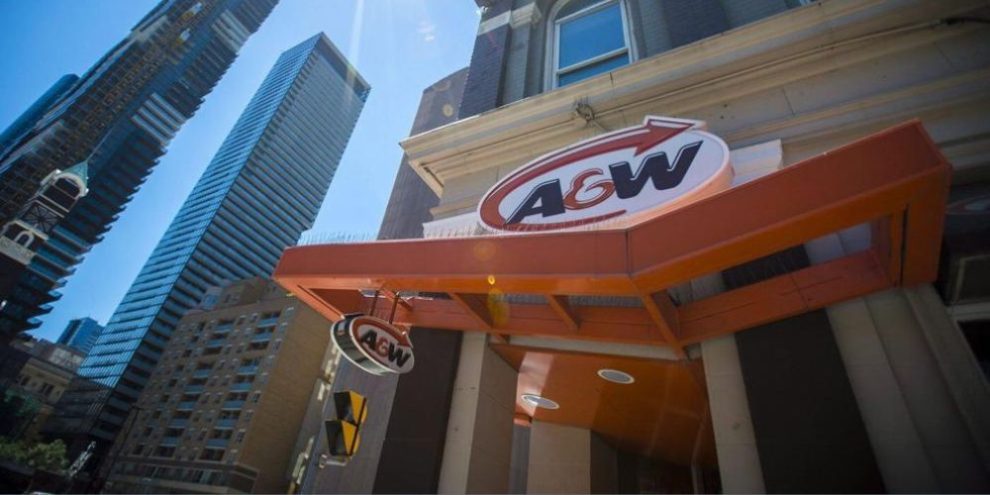
Preet Pandher was studying in Edmonton in 2016 when he got a job washing dishes on the weekend at A&W.
As someone with an entrepreneurial mindset, he remembers looking at piles of dishes during the breakfast service while calculating in his head the rough cost per meal.
A decade later, Pandher owns nine A&W locations as the CEO of Elmwood Capital Ltd., with six more on the way.
“I think one of the best things about the franchising model is it's really scalable,” he said.
Pandher, whose mother is a part-owner in the business, said he remembers watching his parents struggle as independent business owners of dry cleaners, liquor stores and gas stations, but never finding those ventures to be “scalable for them.”
Barrie's News Delivered To Your Inbox
By submitting this form, you are consenting to receive marketing emails from: Central Ontario Broadcasting, 431 Huronia Rd, Barrie, Ontario, CA, https://www.cobroadcasting.com. You can revoke your consent to receive emails at any time by using the SafeUnsubscribe® link, found at the bottom of every email. Emails are serviced by Constant Contact
Franchising is a large industry in Canada and can be profitable for many, but it offers less flexibility and creative control than other types of small businesses. As a result, some industry players say it is best suited for process-oriented entrepreneurs who want to work within an existing model.
Daryl Ching, owner of Vistance Accounting, which works with franchise clients, said that owning a franchise is a lot like buying a business structure, where the franchisee takes on the financial risks but gains access to brands that are tried, true and tested.
“Instead of building a plane from scratch, imagine that you are able to fly a plane that's already tested and there are already passengers on board,” he said.
“However, there's a catch. There are restrictions on your flight paths, and the food you're allowed to serve is predetermined.”
In running a franchise, Ching said there isn’t a lot of room for changes when it comes to the menu, prices or suppliers.
“If you are very strong in operational efficiencies, if you're good at managing staff and getting more productivity out of employees, this is an ideal situation because you can take what is a somewhat profitable franchise and turn it into a very profitable franchise and make more from it,” Ching said.
Owning a franchise can often be more work than some think, he said. When employees call in sick or suddenly quit, oftentimes owners have to roll up their sleeves and jump in until they can find a replacement.
There can also be significant costs associated with starting such a venture.
In his industry, Pandher said the cost to buy an existing franchise is typically based on earnings or profit multiples of the location. If it is a new location, he said, the cost is often just the cost of construction.
He said there is often a franchise fee involved, which in his case was a one-time fee of about $55,000 plus tax in 2023 in return for a licence to run that store for 25 years. However, many franchise systems also have ongoing payments like royalties or marketing fees, depending on the agreement.
Finding the right location is another key factor.
Pandher said franchisors can help with identifying key regional indicators like traffic, population density, and local incomes.
When evaluating potential locations, he said restaurants in residential or suburban areas may experience higher demand around dinner and late-night hours, but lunch time will likely be slow with many local residents at work during the day.
If a restaurant is in a non-residential area, like a business centre, Pandher said it may see more demand during breakfast and lunch.
“It's very important to know what factors impact your business in what way,” he said.
Sherry McNeil, president and CEO of the Canadian Franchise Association, said this type of business model can reduce uncertainty and risks associated with starting a new venture.
“We like to say (in) a franchise business, you're in business for yourself, but not by yourself,” she said.
“Because in franchising, there's already established brand recognition, already proven systems and processes, training, ongoing support that the franchisor provides.”
McNeil said Canada’s franchising industry has grown from a $100 billion industry in 2019 to a $138 billion industry by the end of last year.
Franchising is also the 12th largest industry in the country, she said, with Canadians interacting with an average of three to five franchise locations each day.
One of the largest restaurant operators in the Canadian franchising landscape is Redberry Restaurants, with many locations across the country, including 171 Burger Kings, 35 Taco Bells and 21 Jersey Mike’s locations. Ken Otto, CEO of Redberry Restaurants, said the company brought a new franchise to Canada in recent years after becoming the master franchisee for Jersey Mike’s in 2024.
Otto said the process took about 15 months, beginning toward the end of 2022 and consisted of diving into all elements of the sandwich brand.
But along with potential upside for franchise owners, there can be hurdles.
“Like anything, you never bat a thousand. There's some locations that sales may be a little lower than expectations. What we do is we learn,” he said.
If a location isn’t performing up to expectations, Otto said it's important to evaluate aspects like whether the store was a demographic fit or if there was an access or visibility mismatch and apply the lessons to future stores.
Overall, he said successful franchising is not a “get-rich-quick exercise.”
“This is the beauty of franchising where you have the ability to take a proven system ... and when properly executed, the path to wealth creation is highly motivating for us and for franchisees,” he said.
This report by The Canadian Press was first published April 5, 2026.