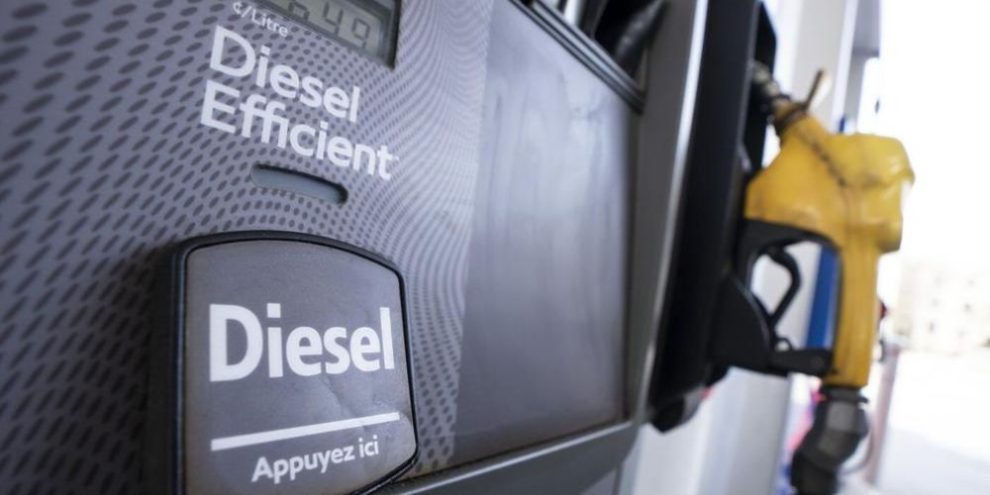
High diesel prices continue to ripple through the economy and put pressure on consumers — with no end in close sight — even as a shaky ceasefire in the Middle East offers a hint of relief to global commodities.
The average wholesale price of diesel remained more than 55 per cent above pre-war levels in the last few days, according to Natural Resources Canada data, despite the U.S. announcement of a two-week pause in hostilities with Iran on Tuesday.
While diesel prices are expected to ease somewhat following the deal, experts say elevated fuel costs will see higher price tags slapped on items ranging from groceries to garments for months to come.
“A load going from Toronto to Montreal is going to be $300 more than it was six weeks ago,” said Mike Millian, president of the Private Motor Truck Council of Canada, which represents about 200 companies with in-house fleets including Tim Hortons, Home Hardware and Loblaw.
“That’s going to have to be passed on to the consumer.”
Barrie's News Delivered To Your Inbox
By submitting this form, you are consenting to receive marketing emails from: Central Ontario Broadcasting, 431 Huronia Rd, Barrie, Ontario, CA, https://www.cobroadcasting.com. You can revoke your consent to receive emails at any time by using the SafeUnsubscribe® link, found at the bottom of every email. Emails are serviced by Constant Contact
Meanwhile, damaged infrastructure, supply disruptions and processing bottlenecks caused by attacks and the closure of the Strait of Hormuz mean diesel will be flowing from refineries more slowly for a significant chunk of the year.
The narrow waterway, where blockages have kept oil and natural gas locked in the Persian Gulf and out of the hands of customers across the globe, remains effectively shut down. Many crude distillation facilities have slashed production, sending global prices surging.
“All of the modes of transit are now out of alignment and there’s going to be a long time ahead before anything is remedied and put back in place,” said Vancouver-based transportation consultant Mary-Jane Bennett.
Truckers who haul produce, clothes and pharmaceuticals across the continent to Canadian shelves can absorb only a small fraction of the resulting cost increase. That holds equally true for shippers facing fuel surcharges from carriers and for retailers who form the front line of sales.
“When you’re on a margin of about two per cent and you’re getting cost increases of 10 and 15 per cent, and whether you bake it into the price or you add it as a surcharge, you have to pass that on,” said Gary Sands, a senior vice-president at the Canadian Federation of Independent Grocers, which represents about 6,900 stores.
“If you don’t, you’re not going to be an independent grocer; you're going to be an out-of-business grocer.”
Produce often travels thousands of kilometres by tractor-trailer to reach Canadian stores and warehouses. Meat and dairy requires refrigerated trucks that guzzle more diesel per kilometre. Those three food categories have already seen price hikes, Sands said.
“We’re importing about 80 per cent of our produce into the country. Diesel is where that impact is more immediate and significant,” he said.
While the rising cost of gasoline at the pump may be top of mind for many Canadians, it’s diesel and other petroleum derivatives such as jet fuel that have seen the biggest jumps in price. The average retail price of gasoline sat roughly a third higher than pre-war levels near the end of the week, having barely budged after news of the ceasefire broke, according to Natural Resources Canada.
Retail diesel prices actually inched higher on Wednesday — the day after the temporary truce was announced — before dropping two per cent below Tuesday’s yearlong high of just over $2.39 per litre.
"There's potential for this actually to get worse before it gets better," said Ross Prentice, co-founder of Evotrux, an online platform connecting shippers and carriers.
Diesel powers industries ranging from agriculture to mining and manufacturing, and the bigger expenses they face are likely to show up as higher price tags on consumer items.
The shortages emerging from the conflict have also snarled supply chains as factories slash production.
“Our makers in Asia, they’re telling us to watch out. Prices are going to increase because their prices are going to increase to get the materials,” said Francois-Xavier Robert, co-founder of Montreal-based parka maker Quartz Co.
Production can be delayed due to procurement problems with components ranging from eyelets to zippers and trim, he said.
“There’s stuff they’re just not going to be able to get at all. They have shortages, not just overcharges,” he said of suppliers.
More than 80 per cent of the oil and natural gas that normally passes through the Strait of Hormuz goes to Asian markets. Bangladesh and Sri Lanka have been rationing fuel for weeks.
The U.S. Energy Information Administration projected this week that the price of Brent crude, the international standard, would be 39 per cent higher this year than last, with global production of oil — from which diesel is derived — returning "close to pre-conflict levels in late 2026." That's assuming hostilities cease for good by the end of the month and traffic through the strait "gradually resumes."
“Hard to say what our future’s going to look like. It’s been so volatile the last five years it’s pretty tough to make guesses," said Ted Daniel, CEO of Ontario-based Titanium Transportation Group.
“Take it day by day, and try and figure things out.”
This report by The Canadian Press was first published April 10, 2026.