
As concerns continue to grow among Canadian parents, educators and health experts about how social media affects young people, a former Meta engineering director has told a U.S. court that Instagram adopted a “don’t ask, don’t tell” attitude toward children younger than 13 using the platform.
The allegations surfaced this week during a major trial in Oakland, Calif., where Meta is facing claims from multiple U.S. states over child safety and privacy practices tied to Facebook and Instagram.
Former insider challenges Meta’s approach to youth safety
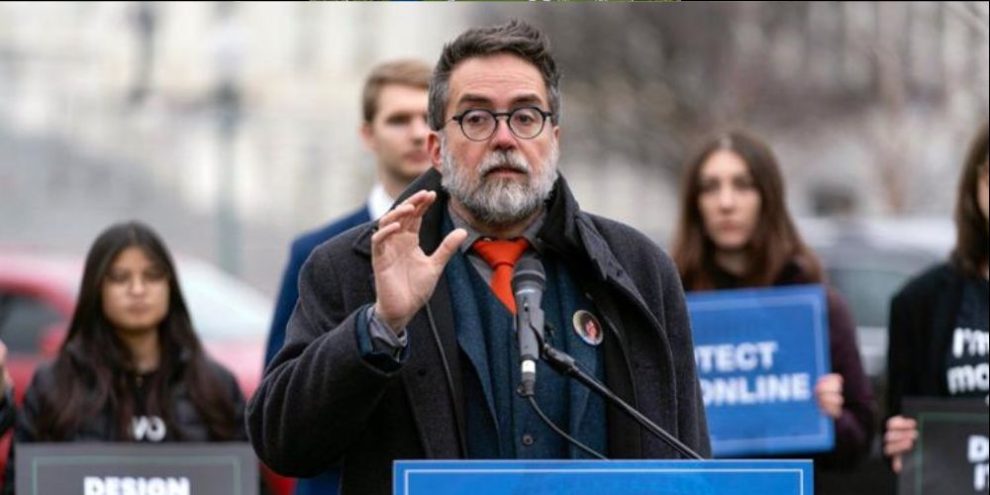
Arturo Béjar, a former engineering director at Meta who previously testified before Congress on child safety issues, spent a second day on the witness stand Wednesday.
Béjar told jurors the company repeatedly prioritized engagement and growth over user well-being, focusing heavily on how often people used its products and how long they stayed on them.
“If you step away from the product, they are not going to make any money,” he said.
Meta's rules require users to be at least 13 years old to create an account, in accordance with the U.S. Children’s Online Privacy Protection Act, known as COPPA.
But Béjar testified that the company’s attitude toward younger users was different in practice.
“The attitude in particular on Instagram was ‘Don’t ask, don’t tell,’” Béjar said in response to a question about his perception of the company’s attitude towards users under 13.
Lawsuit centres on child safety and privacy
The federal trial began Tuesday and is expected to continue for about six weeks.
Meta is facing off against California, Colorado, Kentucky and New Jersey. Those states are among 29 that sued the company in 2023 over child safety and privacy concerns. The remaining 25 states are expected to go to trial later. Meta is also facing related lawsuits in state courts, including one currently underway in Tennessee.
The states allege Meta contributed to the youth mental health crisis by knowingly designing features that encourage addictive behaviour among children while concealing the risks from the public.
The lawsuit also claims the company routinely collected personal data from children under 13 without parental consent, contrary to federal law.
Barrie's News Delivered To Your Inbox
By submitting this form, you are consenting to receive marketing emails from: Central Ontario Broadcasting, 431 Huronia Rd, Barrie, Ontario, CA, https://www.cobroadcasting.com. You can revoke your consent to receive emails at any time by using the SafeUnsubscribe® link, found at the bottom of every email. Emails are serviced by Constant Contact
Meta denies the allegations and says evidence presented during the trial will demonstrate its commitment to protecting young users.
“You will hear over the course of this case a lot of important issues, issues like teen mental health, issues like social media, issues like how teens use social media,” Meta lawyer Paul Schmidt said Tuesday. “Those are important issues, and they’re issues where Meta believes that it has a responsibility. It has a responsibility to act on its own. It has a responsibility to try to work with teens and parents in partnership to try to address those questions.”
Safety described as an ‘afterthought’
Béjar worked at Facebook from 2009 to 2015, gaining recognition for efforts to combat cyberbullying. He later returned as a contractor between 2019 and 2021 to focus on safety issues.
He previously told Congress in 2023 that Meta executives, including CEO Mark Zuckerberg, were aware of harms linked to Instagram but did not make significant changes to address them.
During Wednesday’s testimony, Béjar said employee evaluations and compensation for teams building user-facing products were largely tied to growth and engagement metrics.
“In that context, safety was an afterthought,” he said.
The states are seeking both changes to Facebook and Instagram's user experience and financial penalties that could total billions of dollars. California's attorney general's office has said any damages would ultimately be determined by the court.
“This case is about stopping Meta from offering a dangerous product to teens, and from lying to teens, families, and the public about the dangerousness of their platforms. The primary remedy under our state consumer protection law is an injunction,” the office said in a written statement.
Questions raised about platform design
Béjar also pointed to several Instagram features he believes are unsafe for teenagers.
Among them is video autoplay, which can expose users to potentially harmful content without requiring them to actively select it. He also cited popularity metrics such as likes, views, comments and follower counts.
Experts in child development have long noted that teens are generally more vulnerable than adults to social comparison, making popularity-focused features potentially more harmful to their mental health.
Age verification remains under scrutiny
Although Meta says it actively identifies and removes users under 13, Béjar testified that he uncovered “tens of thousands” of underage children on Instagram through his own research.
He described the presence of younger users as “common knowledge” within the company.
“Meta has one of the most sophisticated infrastructures in the world to detect fake accounts,” he said.
Yet he testified there were “no goals, no metrics” focused on identifying users suspected of being under 13.
Béjar also criticized some of Meta's youth safety initiatives, arguing they were ineffective.
One example was the “Take a Break” feature introduced in 2021. Béjar said the tool was “designed to fail” because users must first enable it themselves.
Drawing a comparison to vehicle safety systems, he said requiring users to activate the feature was like expecting drivers to turn on their airbags every time they get behind the wheel.
“A safety tool has to be on by default,” he said.
He also noted that the feature can be dismissed with a single tap, arguing that if Meta genuinely wanted users to take a break, it would not be so easy to ignore.
- with files from The Associated Press