
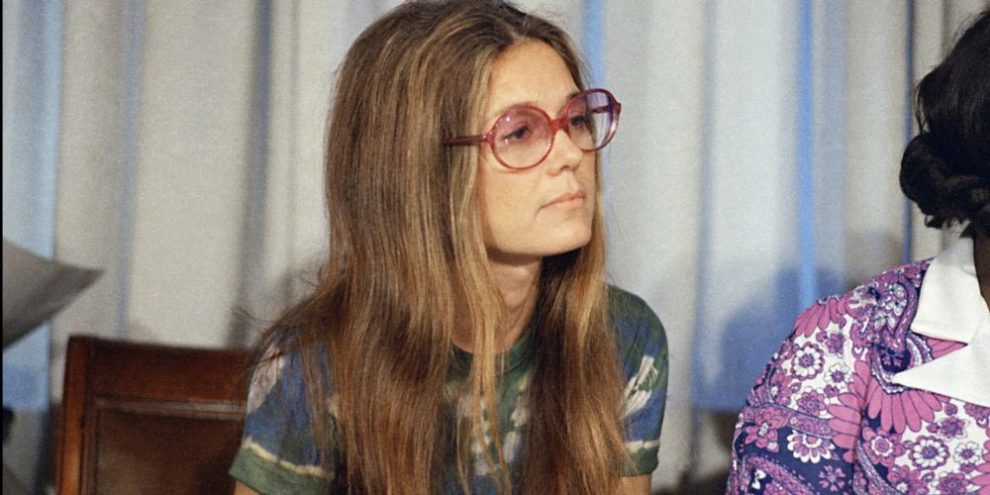
Gloria Steinem, the influential author, activist and feminist leader whose advocacy helped shape the modern women’s rights movement in the United States, has died at the age of 92.
Steinem died Wednesday at her home in New York City, according to posts shared by her family and foundation on social media.
“Gloria’s greatest gift was her ability to listen to others, to make others feel seen and heard,” the posts said. “Her words, actions, and example gave people permission to be their truest selves. Gloria lived true to her independent spirit, always with curiosity and a great sense of humour.”
One of the most recognizable figures in the women’s movement for more than five decades, Steinem spent much of her life travelling, speaking at universities, rallies, community gatherings and political events while advocating for gender equality and other social causes.
In recent years, she continued writing and remained active in community discussions, hosting talking circles at her home attended by hundreds of people. Her death comes shortly before the planned release of a new memoir this fall.
“You can’t do it on the phone or on the web,” she told The Associated Press in a 2015 interview. “You have to be there with all five senses. It should be obvious that people can’t empathize with each other unless we’re in the same room.”
A journalist who became an activist
Before becoming one of the most prominent voices of modern feminism, Steinem built a career as a journalist.
Among her early assignments was a 1963 undercover investigation into conditions facing Playboy Bunnies in Hugh Hefner’s empire, a story that brought widespread attention but one she later described as a mistake.
A turning point came in 1969, when she attended an abortion rights hearing and listened as women publicly shared their experiences.
“That speak-out was the beginning of activism for me,” Steinem, who had undergone a secret illegal abortion herself at age 22, told the AP in an email in 2022, reflecting on the reversal of Roe v. Wade. “Either our control over our own bodies is equal, regardless of sex or race, or we’re not living in a democracy.”
Barrie's News Delivered To Your Inbox
By submitting this form, you are consenting to receive marketing emails from: Central Ontario Broadcasting, 431 Huronia Rd, Barrie, Ontario, CA, https://www.cobroadcasting.com. You can revoke your consent to receive emails at any time by using the SafeUnsubscribe® link, found at the bottom of every email. Emails are serviced by Constant Contact
Despite becoming a powerful public speaker, Steinem often said she initially feared speaking in front of audiences.
Editors at the time showed little interest in publishing stories about the emerging women’s movement, leaving her to take the message directly to audiences instead.
“So I ended up going out and speaking, which was my nightmare,” she said. “I mean, I was terrified. But I’m grateful, even though I still get scared even now.”
A lasting presence in public life
Steinem remained active well into her 80s and 90s, travelling internationally and speaking out on a range of issues, from women’s rights to global peace efforts.
Still, equality for women remained her central cause.
“Being a feminist means that you see the world as whole instead of half,” she once said. “It shouldn’t need a name, and one day it won’t.”
Her influence also extended into popular culture. At 83, she attended her first fashion show as a guest of designer Prabal Gurung. A feature film based on her 2015 memoir, The Glorias: A Life on the Road, premiered in 2020 with Julianne Moore among the actors portraying her.
At 91, she collaborated with Liberian peace activist and Nobel laureate Leymah Gbowee on the picture book Rise, Girl, Rise: Our Sister-Friend Journey. Together for All, published in February.
Despite decades of accomplishments, Steinem frequently expressed frustration that media coverage often focused on her appearance.
“Nobody ever called me beautiful until I was publicly a feminist, and that was in my mid-30s,” she told AP in a 2011 interview. “It was clear that label was being assigned to me. The most hurtful part is that you work very hard, and people say it’s because of your looks.”
Praise and criticism throughout her career
Steinem faced criticism from opponents throughout her public life, including criticism from some women who disagreed with her views.
She recalled being stunned during a 1990 appearance on CNN's Larry King Live when a female caller told her to “rot in hell” for allegedly damaging “the beautiful American family.”
By that point, however, feminism had become part of mainstream political debate.
In 1972, Steinem co-founded Ms. Magazine, a publication many early critics predicted would quickly fail. Instead, it became one of the most enduring publications associated with the women’s movement and continues today under the Feminist Majority Foundation.
Even President Richard Nixon was among her critics. Oval Office recordings later captured Nixon mocking both Steinem and the title “Ms.”
Steinem responded in kind during a 1972 National Press Club speech, calling Nixon “the most sexually insecure chief of state since Napoleon.”
Known for her wit, she often joked about remaining unmarried for much of her life, once saying, “I can’t mate in captivity.”
In 2013, she received the Presidential Medal of Freedom from President Barack Obama.
“Because of her work across America and around the world, more women are afforded the respect and opportunities that they deserve,” Obama said, “but she also changed how women thought about themselves.”
Early life shaped her future work
Gloria Marie Steinem was born on March 25, 1934, in Toledo, Ohio.
Her father worked as a travelling antiques salesperson and much of her childhood was spent on the road. Without regular schooling, Steinem developed a love of reading.
“I just read everything I could get my hands on,” she told an audience at Manhattan’s 92Y in 2026. “Which was frequently completely unsuitable ... just everything and anything. I also was in love with the movies — my idea of heaven was a movie and a malted.”
After her parents divorced in 1944, Steinem helped care for her mother, a journalist whose career was disrupted by family responsibilities and mental health struggles.
She attended Smith College in the 1950s before travelling to India through a fellowship opportunity. Later, she moved to New York and pursued journalism, though many early assignments focused on fashion and lifestyle topics rather than politics.
She also recounted experiences that today would be recognized as workplace harassment.
“There was no word for sexual harassment then,” she has said. “It was just life.”
Building a movement
Steinem’s writing became increasingly political after she joined the editorial board of New York magazine.
In 1971, she helped found the National Women’s Political Caucus alongside Betty Friedan, Shirley Chisholm and Bella Abzug.
She also developed a powerful partnership with Dorothy Pitman Hughes, a Black feminist and child welfare advocate. Together, they challenged perceptions that feminism was solely a movement for white middle-class women.
Steinem went on to help establish several influential organizations, including the Women’s Action Alliance, the Women’s Media Center, Voters for Choice and the Ms. Foundation for Women. She also helped launch Take Our Daughters to Work Day.
When the Equal Rights Amendment stalled despite congressional approval, Steinem became one of its most vocal supporters.
“If they want us to become the radicals that they fear we are, just let them stop the ERA and we will become those radicals,” she said at the 1977 National Women’s Conference.
Family, marriage and later years
Steinem often said she never regretted choosing not to have children.
“No, not for a millisecond,” she told the AP. “But they applauded,” she said of women in India who supported that decision. “It’s important that some of us not have children, to show that we have a choice.”
In 2000, at age 66, she married British activist and businessman David Bale, father of actor Christian Bale.
“I thought, ‘I haven’t changed, marriage had changed,’” Steinem said. “David and I wanted to be together, we loved each other. He needed a green card.”
The couple married in a Cherokee ceremony in Oklahoma. Steinem later cared for Bale until his death from brain lymphoma in 2003.
Though she often reflected on regrets involving family relationships, she generally focused on the impact of collective action and community.
Her 2015 memoir, A Life on the Road, celebrated a lifetime spent travelling and organizing. Even then, she noted with amusement that she had never learned to drive.
A voice that inspired generations
Steinem remained a leading presence in public life during the 2017 Women’s March in Washington, where hundreds of thousands gathered following the inauguration of U.S. President Donald Trump.
“We are linked,” she told the crowd. “And this is a day that will change us forever because we are together.”
Although many viewed her as one of the defining figures of the women’s movement, Steinem often rejected the notion that change depended on any one individual.
“The primary thing is not that they know who I am,” she said, “but that they know who THEY are.”