Ontario's fiscal outlook has worsened due to global uncertainty and trade disruptions, leading to a larger deficit this year and a delayed path to balance, the finance minister said Thursday in an economic update.
Peter Bethlenfalvy's spring budget had projected a $13.8-billion deficit this year, but his fall economic statement now says there will be $16.9 billion in red ink this year.
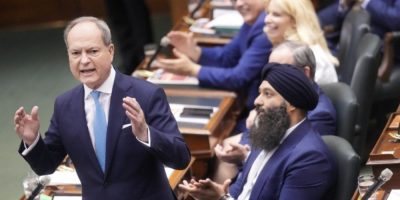
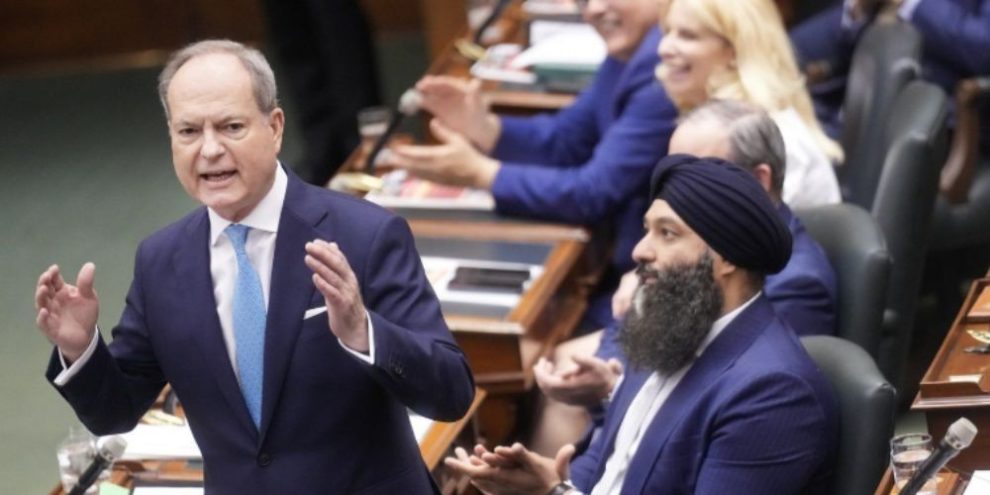
"The impact of U.S. tariffs which have hit, among others, our steel, auto and manufacturing sectors, and global conflicts such as the Strait of Hormuz impacting energy prices, has led to the world awash in a sea of instability," Bethlenfalvy said in a speech in the legislature.
"We need to look no further than the price of gas, rising cost of goods due to tariffs and the impact of uncertainty on investment and employment. As a result, Ontario families and businesses are feeling the impacts. No doubt the world has changed."
Barrie's News Delivered To Your Inbox
By submitting this form, you are consenting to receive marketing emails from: Central Ontario Broadcasting, 431 Huronia Rd, Barrie, Ontario, CA, https://www.cobroadcasting.com. You can revoke your consent to receive emails at any time by using the SafeUnsubscribe® link, found at the bottom of every email. Emails are serviced by Constant Contact
The province also projected in the budget that the books would be balanced in 2028-29, but Bethlenfalvy now says that won't happen until 2029-30.
This marks the fourth time since 2024 that Premier Doug Ford's government has pushed its plans to balance by a year. Officials say that's not ideal, but the province's fiscal health is not in as dire shape as it was during the 2008-09 recession or the COVID-19 pandemic.
The outlook has deteriorated since the spring budget due to new U.S. tariffs, the threat of more tariffs, and the war in Iran, officials said. That instability has prompted Ontario to add $3.8 billion this year to its contingency fund, which will sit at $4.9 billion. Most of that is expected to be used by the end of the year, the officials said.
Previously announced measures in the fall economic statement include matching the federal government's recent move to give businesses a tax break on capital investments, and billions of dollars in funding for tariff-hit sectors such as steel and autos.
"These actions are helping businesses adapt, attract investment, create good-paying jobs and strengthen Ontario's resilience," Bethlenfalvy said.
The fall economic statement also includes housing start projections, and it shows starts decreasing slightly this year to 64,700, down from 65,400 starts in 2025. It projects flat growth for 2027 with increases to 71,700 starts in 2028 and 75,400 starts in 2029.
This report by The Canadian Press was first published Oct. 29, 2026.