
Canadians are increasingly struggling to keep up with mortgage payments, and Ontario homeowners are among those facing the greatest pressure as borrowing costs continue to rise.
A new third-quarter consumer credit trends report from Equifax Canada shows the national mortgage delinquency rate for payments overdue by more than 90 days has climbed to 0.32 per cent, the highest level recorded since the credit reporting agency began tracking the measure in 2013.
The figure represents a 31.1 per cent increase from a year ago, driven largely by missed mortgage payments in Ontario and British Columbia.
"That's the highest we've seen, particularly for Ontario. And it's still going up," said Rebecca Oakes, Equifax Canada's vice-president of advanced analytics, said in an interview.
"That's the biggest concern for us."
Ontario among hardest hit
The findings add to growing evidence that higher borrowing costs are weighing heavily on households across Ontario.
A report from TD released last week found mortgage arrears in the province have nearly tripled from pre-pandemic levels and are approaching the peak reached during the 2008 financial crisis.
"This reflects elevated mortgage balances and greater sensitivity to borrowing costs," wrote TD economist Maria Solovieva in the report.
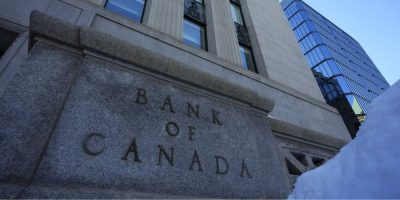
Many homeowners have already absorbed years of elevated interest rates. Last month, the Bank of Canada raised its key policy rate by a quarter percentage point to 2.5 per cent, its first increase in more than three years, citing concerns that higher energy prices could fuel broader inflation.
The move prompted Canada's major banks to raise their prime lending rates, affecting a range of borrowing products, including variable-rate mortgages.
Variable-rate borrowers face added pressure
Equifax estimates roughly 1.4 million Canadians hold a variable-rate mortgage. Another 1.3 million have a home equity line of credit, or HELOC, balance exceeding $50,000.
According to the agency, every quarter-point increase in interest rates adds approximately $860 million annually in interest costs for Canadians with variable-rate mortgages.
Oakes expects mortgage delinquencies will continue rising in the months ahead, with future interest-rate decisions likely playing a key role.
"If interest rates stay relatively flat from this point on, I'd expect to see it ease off in the middle of next year," she said.
But if more hikes come in, "it's just going to put additional pressure."
The Bank of Canada is expected to announce its final rate decision of the year on Dec. 9.
As of Monday afternoon, financial markets were pricing in a 63 per cent chance of another quarter-point increase, according to LSEG Data & Analytics.
Younger homeowners may feel the impact most
Oakes said younger Canadians and first-time buyers could be especially vulnerable because they often carry larger mortgage balances relative to their income.
Despite the increase in delinquencies, she noted the overall rate remains below one per cent of all mortgages nationwide.
"It's quite small, you know, from that standpoint, but of course it knocks on to other types of credit, like credit cards, auto loans," Oakes said.
"That's where those individuals miss the payments first rather than on the mortgage itself."
Consumer debt continues to climb
The report also points to increasing pressure elsewhere in household finances.
Credit card balances reached $136.2 billion during the third quarter, up 4.82 per cent from a year earlier.
Overall consumer debt in Canada climbed to $2.74 trillion, an increase of 4.68 per cent year-over-year.
The combination of rising borrowing costs, higher debt loads and growing mortgage stress suggests many households remain vulnerable heading into 2027, particularly if interest rates move higher again.