Updated January 13, 2026 @ 3:13pm
Homelessness is getting worse across Ontario with an estimated 85,000 people who were without a home in 2025 and nearly 2,000 encampments across the province, a new report from Ontario's municipalities shows.
More than half of those people are experiencing prolonged periods of homelessness of six months or longer, the report led by the Association of Municipalities of Ontario found.
About 20,000 children and youth are homeless in the province. The data shows northern and rural regions are driving the growth in homelessness.
"Something's clearly broken," said Lindsay Jones, executive director of AMO.
"I think we're seeing, again, the impact of pretty significant underinvestments over years in the social systems that provide support, like income security, like mental health and addictions and affordable housing."
Homelessness will continue to get worse under steady economic conditions until 2035, when 177,000 people are projected to be without a home, the report said.
Should the economy take a nosedive, which Jones said is quite plausible given its current state and the ongoing trade war with the United States, there could be nearly 300,000 homeless people by then.
The AMO followed up one year after it released a groundbreaking report that painstakingly collected data from the province's 47 service managers to get a grasp on the provincewide picture of homelessness.
It estimated that 84,973 people experienced homelessness in the province last year, an increase of 7.8 per cent from 2024.
Homelessness has spiked since the COVID-19 pandemic hit.
Between 2016 and 2020, homelessness increased by 6.3 per cent. From 2021 to 2025, it increased by 49.1 per cent.
"Homelessness has not returned to pre-2020 levels, even as housing and homelessness funding increased and services expanded," the report said.
"This indicates that the availability of housing and supports has not kept pace with the scale or persistence of homelessness following the pandemic."
Barrie's News Delivered To Your Inbox
By submitting this form, you are consenting to receive marketing emails from: Central Ontario Broadcasting, 431 Huronia Rd, Barrie, Ontario, CA, https://www.cobroadcasting.com. You can revoke your consent to receive emails at any time by using the SafeUnsubscribe® link, found at the bottom of every email. Emails are serviced by Constant Contact
When asked if there was more his government could do to tackle the growing problem, Premier Doug Ford said the solution is simple.
"Best way to help a homeless person is getting them trained and getting them a good-paying job," he said Tuesday.
He cited training offered through his government's Skills Development Fund, which has come under fire for what the auditor general called a system that doles out money in a way that's not fair or transparent.
Ford said developing the economy will also help the homeless population.
"I want to help those people and I know they want to be able to get back on their feet and be able to rent an apartment or condo eventually, if they save enough money, buy one," he said.
Northern and rural Ontario are seeing the biggest increases in homelessness. In the last year alone, homelessness increased by 37 per cent in northern Ontario and by 31 per cent in mostly rural communities. Homelessness in the north has increased by a staggering 117 per cent since 2021.
"I do think that a big part of the story is Indigenous homelessness," Jones said.
"This year we're seeing around a 25 per cent increase in what we're measuring in terms of Indigenous homelessness. So it's a really significant problem."
The number of Indigenous people without a home has increased to 11,000 in 2025, up from 6,100 in 2021, the data shows.
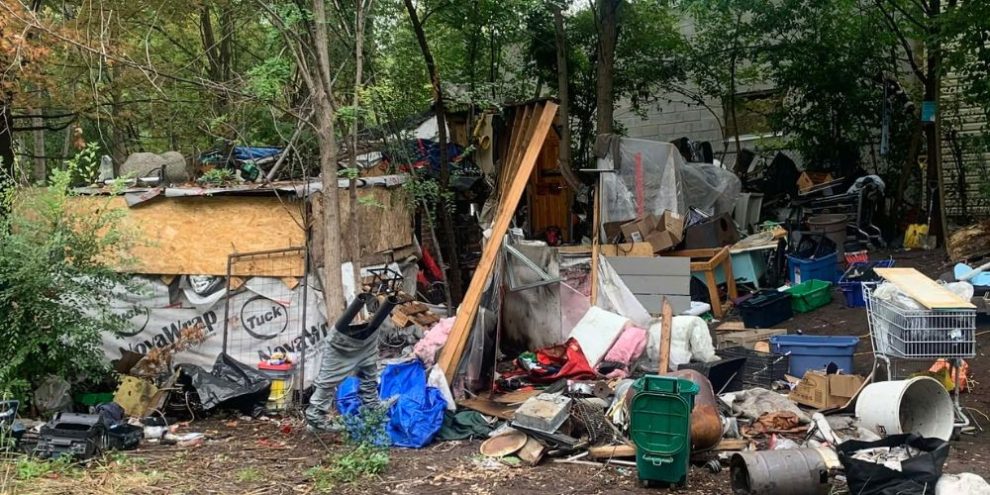
Encampments also continue to grow in number, with nearly 2,000 such spots across Ontario.
The nature of encampments has changed, the report noted, with fewer large clusters and now smaller ones where six to 10 people live, Jones said.
"It really speaks to the response that has been taken at the provincial level to encampments, which is much more of an enforcement approach, which really doesn't get at the root causes," Jones said. "It just kind of disperses the problem and moves it somewhere else."
The problem is that more people are becoming homeless than those who get off the streets or out of shelters into homes.
"In 2025, the community housing wait list reached an estimated 301,340 households, with an average wait time of 65 months and some households waiting more than 16 years," the report said.
"As a result, more people remain homeless for longer periods."
While public funding for housing and homelessness supports has increased significantly, it has not kept pace with the issue, the report said. Combined government funding on homelessness came in at around $4 billion in 2025.
The researchers say that $11 billion more over 10 years is needed to get rid of homelessness, which would mean significantly more investment in rent-geared-to-income housing, affordable housing options, emergency shelters and mental health and addictions support.
Funding for community housing, for example, has declined by 0.6 per cent since 2021, the report found, while emergency shelter funding has increased by more than 50 per cent.
"We see a lot of money put into the most expensive parts of the system because that's where the need is most acute, but that's ultimately not going to get us to solving the challenge," Jones said.
Green Party deputy leader Aislinn Clancy said homelessness keeps getting worse under Ford's leadership.
"Despite repeated calls from experts, municipalities and people with lived experiences to create an evidence-based homelessness strategy, the Ford government has done nothing," Clancy said.
Clancy said the province should follow the municipalities' call for help by investing $11 billion more over 10 years to solve the problem.
This report by The Canadian Press was first published Jan. 13, 2026.