Canada’s home insurance safety net is starting to fray at the edges as the costs of extreme weather continue to rise.
While competition is still healthy, and the country has so far avoided the coverage deserts growing in the United States, insurers are paring back policies in a variety of ways to adapt.
Raising premiums above the rate of inflation — sometimes steeply above — has been a common response, but experts say insurers are also increasingly excluding coverage of some risks, raising deductibles, and reducing their exposure to higher risk areas.
Barrie's News Delivered To Your Inbox
By submitting this form, you are consenting to receive marketing emails from: Central Ontario Broadcasting, 431 Huronia Rd, Barrie, Ontario, CA, https://www.cobroadcasting.com. You can revoke your consent to receive emails at any time by using the SafeUnsubscribe® link, found at the bottom of every email. Emails are serviced by Constant Contact
As Morningstar DBRS said in a November report: “The Canadian market is showing early signs of coverage tightening."
While insurers haven't withdrawn from areas entirely, some have thinned their exposure.
“We've rebalanced in some of the higher severe weather regions,” said TD chief executive Raymond Chun during the bank’s most recent earnings call.
“Where we had a higher concentration in some of the high severe weather zones, we've moderated.”
The bank is aiming for growth in regions with lower catastrophic risk instead, said Chun.
Definity Financial Corp., which says it’s Canada’s fourth-largest property and casualty insurer after closing a $3.3-billion takeover of Travelers last month, has also taken steps to pull back in higher-risk areas.
Chief executive Rowan Saunders said on the company's November analyst call that they had worked to churn the portfolio, shifting new business to less catastrophe-exposed areas and reducing concentration in areas of higher peril scores.
He said the heavy lifting on shifting away from higher risk is largely done, but it will be a continuing effort.
“That's just ongoing good portfolio management.”
Pressure to rebalance portfolios rose after costs spiked in recent years from already elevated levels, most notably 2024’s record $9.4 billion in insured losses.
But it’s far from a one-off.
According to a report from TD, average personal property losses between 2020 and 2024 were nearly double the prior stretch, while the number of catastrophic weather events averaged 15 a year, up from around two per year in the 1980s.
“Growing insured personal property losses are placing considerable strain on Canada’s home insurance sector,” said economist Likeleli Seitlheko in the report.
In response to the costs, insurers are raising deductibles to upwards of $10,000 for perils like hail, reducing coverage, or simply not offering it for some risks such as flooding, he said.
“In worst case situations, insurance coverage is simply not available for certain perils,” said Seitlheko.
Flood coverage, which was only introduced in Canada about a decade ago, has been patchy, with limited availability in higher risk areas. According to Public Safety Canada, Quebec has the highest number of properties at risk of flooding, followed by Ontario and British Columbia.
The Insurance Bureau of Canada estimates that about 1.5 million households, or about 10 per cent, can’t get flood insurance, while for those who can, it can add as much as $15,000 a year to premiums.
But even that’s overestimating how many can get coverage, said David Nickerson, who studies property economics at Toronto Metropolitan University.
“The industry says that flood insurance is available to 90 per cent of Canadians. That’s a gross exaggeration. Maybe 50 per cent, effectively, because of the idiosyncratic nature and redlining of high-risk areas.”
Part of the problem is patchy and outdated data to know which areas are at risk, said Nickerson, which is why the federal government is spending hundreds of millions of dollars to upgrade flood maps.
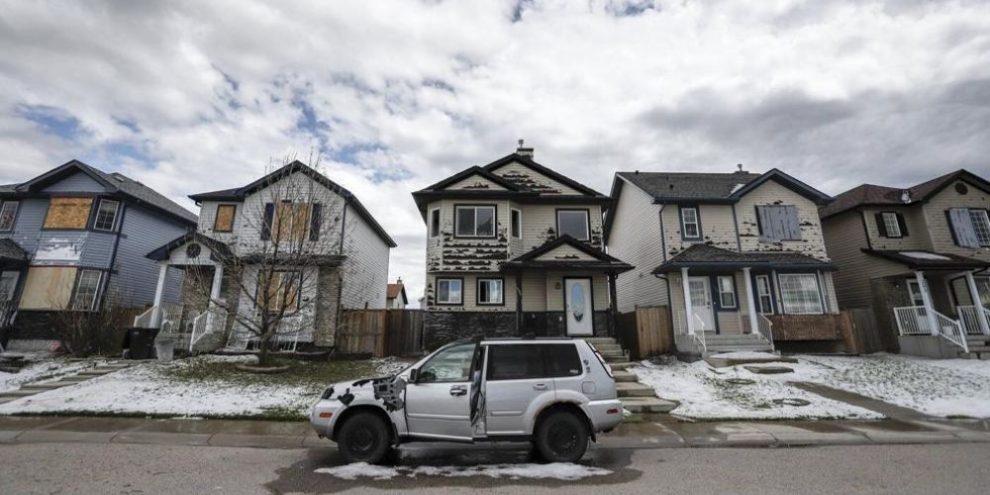
While insurance companies have a variety of sources of information, they can also still get caught out with concentration risk, as TD did in the 2024 Calgary hailstorm, said Nickerson.
“They got pasted with that huge, huge loss, and so they withdrew to replenish their financial reserves.”
Alberta has been a focal point of losses, where events like the $3 billion hailstorm and $1.1 billion Jasper wildfire in 2024 led to industry operating costs exceeding premium revenues by nearly 20 per cent that year, according to the TD report.
Despite the challenges, the industry itself remains stable, said Nadja Dreff, sector lead of global insurance at Morningstar DBRS.
The huge losses in 2024 were like a stress test for the industry and showed they had done enough to prepare, though that preparation has largely meant raising prices, she said.
“When you're looking at it from a consumer, especially personal insurance perspective, the story is not so good, right?” said Dreff.
“Because for insurance companies to weather these losses, well, it means they are increasing premiums on personal lines, and that has been the case. And we predicted to be again the case in 2026.”
Between 2021 and 2025, home insurance costs (lumped together with mortgage insurance) rose 31 per cent, according to Statistics Canada, outpacing overall inflation at 15 per cent.
Areas hit by elevated claims saw much higher increases over the five years, including an average of a 68 per cent increase in B.C. and 58 per cent increase in Alberta, said the TD report.
But with insurers needing to ensure financial stability amid rising costs, there's no easy answers.
“Everybody is kind of doing the best they can, and consumers are sort of on the receiving end,” said Dreff.
“Really the only way out of this situation, is for society as a whole to invest in climate resilience.”
Building and repairing homes to be better ready for more extreme weather is what the Insurance Bureau of Canada is also pushing.
“We've got to put the brakes on worsening the problem and really take a serious approach to building a more resilient country,” said Liam McGuinty, IBC’s vice-president of federal affairs.
As Canada aims to ramp up housing construction, it’s important to not build homes in flood risk areas, while also building to prepare for risks like hail and wildfires, he said.
As it stands, trend lines point to increasing costs as climate change makes weather events more extreme, said McGuinty.
“We should be very concerned about that trend, and all those costs ultimately have to be borne somewhere, right? And ultimately it's policyholders, it's premium payers that bear that cost.”
This report by The Canadian Press was first published Feb. 15, 2026.