
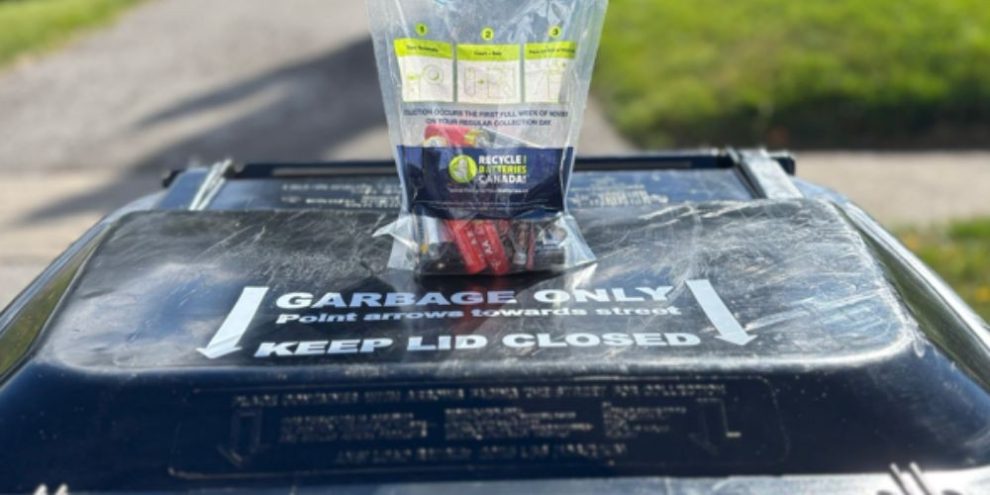
During the first full week of November, residents are encouraged to dispose of their batteries during battery collection week. Batteries collected through the program are safely processed and recycled, recovering valuable materials while keeping hazardous waste out of the garbage and recycling.
“Proper battery disposal is essential,” says Stephanie Mack, Director of Waste Management and Environment in Barrie. “It helps protect the environment and reduces the risk of fires in garbage trucks and at waste facilities.”
Barrie's News Delivered To Your Inbox
By submitting this form, you are consenting to receive marketing emails from: Central Ontario Broadcasting, 431 Huronia Rd, Barrie, Ontario, CA, https://www.cobroadcasting.com. You can revoke your consent to receive emails at any time by using the SafeUnsubscribe® link, found at the bottom of every email. Emails are serviced by Constant Contact
BARRIE (NOV. 2 - NOV. 6)
Battery collection bags were mailed out to all Barrie residential homes (not including multi-residential properties) through Canada Post. Batteries can also be placed in clear, sealable bags or unused battery recycling bags previously provided by the City.
To participate:
- Place filled battery bags ON TOP of either your garbage or organics cart on your regular curbside collection day next week.
- If no cart is set out, place bags on the ground at the curb.
- Bags must be clearly visible to the driver of the collection vehicle.
- Do not place bags inside carts or recycling containers.
Curbside Battery Collection Week is for single-use batteries only, including:
- Type AAA, AA, A, C, D, 9-Volt and button batteries commonly used for hearing aids and watches.
Cell phone, laptop, car batteries and battery packs are NOT accepted, but these materials can be taken to the landfill for safe collection.
ORILLIA (NOV. 2 - NOV. 6)
Place your batteries at the curb by 7:00 a.m.
Accepted Materials
- Undamaged, single-use, dry-cell household batteries: AA, AAA, C, D, 9-volt (alkaline, heavy duty), and button batteries.
Prohibited Materials
- Rechargeable battery packs (NiCad, NiMH, Lithium-Ion)
- Car or vehicle batteries
- Industrial batteries (Take prohibited or rechargeable items to the Household Hazardous Waste Depot)
How to Prepare
- Put your spent batteries inside a sealed clear Ziploc bag or zip battery bag.
- Place the bag in front of your green bin carts (do not put the bag loose inside the carts).
Cover the terminals of 9-volt and button batteries with electrical tape for safety.
COUNTY OF SIMCOE (NOV. 3 - NOV. 5)
How to Place
- Put your used batteries in a sealed, clear Ziploc or designated battery bag.
Where to Put It
- Place the bag on top of your organics (green) cart on your regular collection day—do not put the bag inside the carts. If no cart is set out, place the bag clearly visible on the ground at the curb.
Accepted vs. Prohibited Materials
Accepted
- Single-use, dry-cell household batteries such as AA, AAA, C, D, 9-volt, and button cells (e.g., for watches or hearing aids).
Taping Batteries
- It is recommended to cover the terminals of 9-volt and button batteries with electrical tape to prevent short circuits.
Prohibited
- Rechargeable battery packs (NiCad, NiMH, Lithium-ion), cell phone batteries, laptop batteries, car batteries, and industrial batteries. These must be taken to a local County waste facility or Household Hazardous Waste Depot instead.