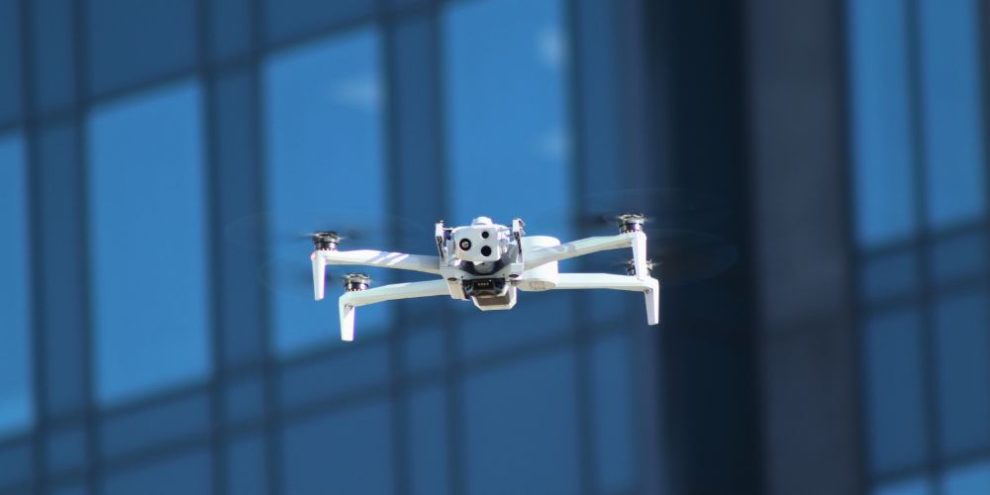
Barrie police have a new eye in the sky.
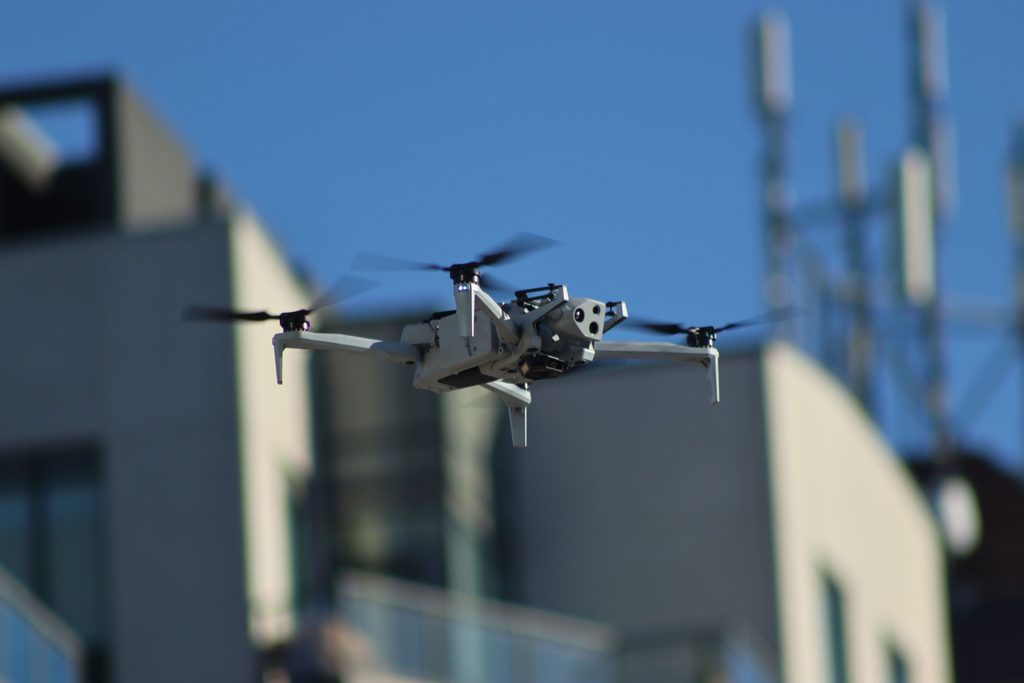
Testing for the service's Drone as a First Responder (DFR) pilot program on Thursday, opening the first of two consecutive 60-day periods with each featuring a different type of drone.
The idea is to relay real-time information to officers responding to calls, giving them additional intelligence they may not have while in transit to an occurrence.
"It will be a crucial tool for our day-to-day operations because the drone can help identify potential safety concerns or support informed decision-making and provide information that will help guide the appropriate response," Chief Rich Johnston said at a press conference at City Hall on Wednesday. "Think of it as a backup that provides situational awareness for our officers."
Such information could also help police locate people during a crisis, find missing persons, or determine the scale at which officers should respond to a call.
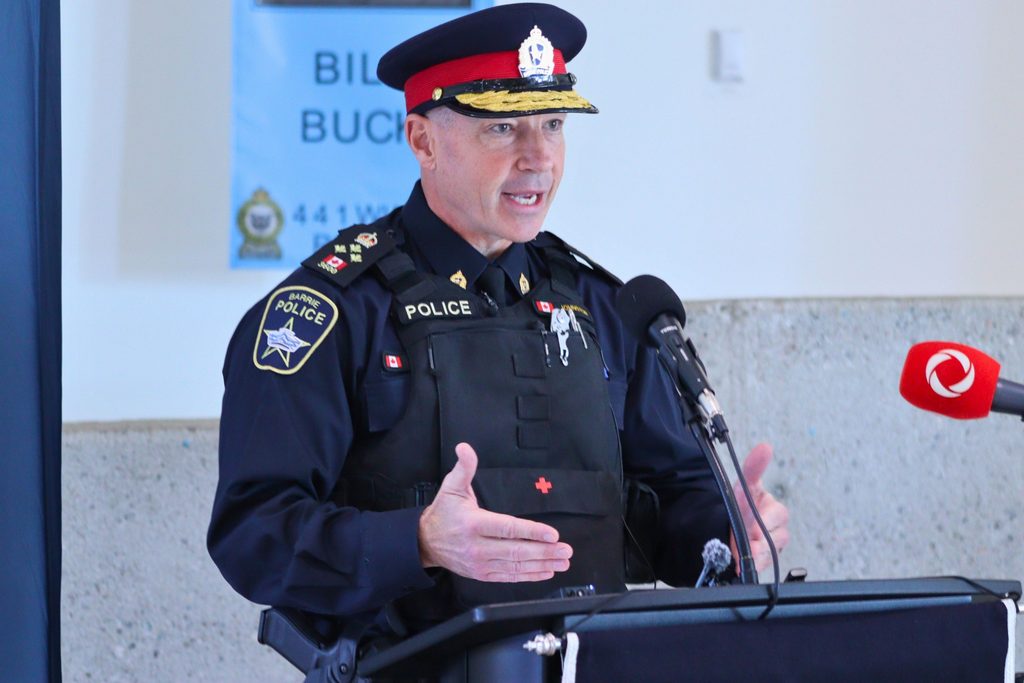
During the press conference, Johnston described a real call for service, a resident in crisis, that came in during a test flight on Thursday. Officers used it to test the drone's effectiveness.
"Our pilot was able to use the drone to help establish exactly where that the individual was, the behavior they were displaying, and the actions they were taking," he said. "The team pilot was able to keep a visual on the person and ensure that officers located them quickly, despite that person having moved from the original location."
The drones are piloted remotely from police headquarters, and can take off from one of two docks stationed on the roof of City Hall's council chambers as quickly as 25 seconds after a call. City Hall was chosen due to its central location within Barrie.
Features on the devices include infrared mapping and a top speed of 72 kilometres per hour. They have a coverage radius of 3.7 kilometres, or two nautical miles.
However, Johnston assures that the devices will not necessarily be used for public surveillance.
"It is not recording during flight," he said. "It has a live officer sitting behind the controls looking at it, and so when it's on scene and it's appropriate, that officer makes a decision whether there's evidentiary value or not to then start recording. So there's always a conscious human being sitting behind that device making a choice."
Johnston says a number of police services in Ontario have started similar pilot programs, including York Regional Police, Durham Regional Police, and Peel Regional Police. It's also been used in Calgary and Vancouver.
There are some limitations to the drone, however. Const. Dan Steele, one of the program's pilots, says those operating the drone are constantly monitoring if it's safe to use the drone for an appropriate call.
"The drones are engineered and designed to operate in adverse conditions — just like conventional aircraft, they're gonna be subject to the weather," he told Barrie360. "All pilots, myself included, make the final decision whether or not we're going to launch based on weather conditions and other factors."
Johnston says the service is building a page on its website that will include an automated dashboard that will update every eight hours with a summary of when the DFR was used.
The service is A report on the DFR program will be reported to the Barrie Police Service Board in the spring, when the two 60-day pilots have completed. Along with help from Simon Fraser University, it will track utilization rates, response time, call outcomes, and other metrics.
"The critical question for us is whether having these officers operating the DFR makes an impact on our ability to support community safety," Johnston said.
Barrie's program is funded by $286,448 over the next three years from the Ministry of the Solicitor General for Project Real-Time Operations and Response Enhancement (ROARE). The project aims to establish a community safety operations centre to "enhance frontline policing through advanced technologies," including drones.
Similarly, in September, the County of Simcoe emergency management department was awarded a $10,000 grant from TC Energy's Build Strong Grant Program to purchase an remotely-piloted drone. It says its drone will be used for hazard and disaster impact assessments, emergency response operations, and other County operational requirements.