
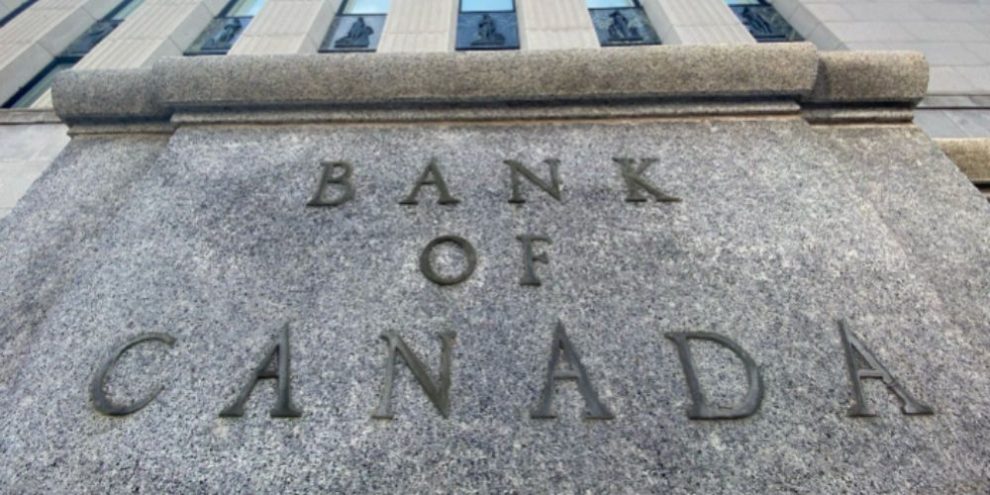
The Bank of Canada struck a somewhat optimistic tone about the economy after holding its policy rate steady on Wednesday but officials warned that instability in the Middle East is still weighing heavily on the outlook.
The central bank’s benchmark interest rate remains at 2.25 per cent after the sixth consecutive hold, which was widely expected by economists.
Bank of Canada governor Tiff Macklem said the economy is still grappling with heightened uncertainty but officials at the bank are growing more confident that the economy is working its way through those headwinds.
While he signalled that the bank's governing council is still ready to adjust its policy rate if needed, he said officials see the current rate as being at the right level to return inflation back to two per cent and support an economic recovery.
Barrie's News Delivered To Your Inbox
By submitting this form, you are consenting to receive marketing emails from: Central Ontario Broadcasting, 431 Huronia Rd, Barrie, Ontario, CA, https://www.cobroadcasting.com. You can revoke your consent to receive emails at any time by using the SafeUnsubscribe® link, found at the bottom of every email. Emails are serviced by Constant Contact
Speaking to reporters after the rate announcement, Macklem made clear that much of the bank's outlook and policy stance hinges on the global energy market.
If gas prices move up again and remain high for longer, a series of rate hikes are still on the table to guard against persistent inflation.
"I do want to stress though, that's not our base case," he said.
"At this moment, our best judgment is, where we are now looks appropriate."
Heading into Wednesday’s announcement, recent data suggested to the Bank of Canada that conditions in the labour market and economy were steadily improving after a rough start to the year.
A surprise contraction in the economy to start the year surprised the central bank, which had expected annualized growth of 1.5 per cent in the first and second quarter.
In its updated monetary policy report on Wednesday, the central bank said it's expecting growth of 2.5 per cent over the last three months.
Macklem noted the economy has struggled to grow over the past year in the face of tariffs, elevated uncertainty and slowing population growth.
He said consumer resilience and a stabilizing housing market are now helping the economy adjust through those headwinds.
The central bank is also seeing growing momentum in exports — even to the United States. That should help support more business investment in the coming months, Macklem said.
"What we're hearing from companies is they are adapting. They're finding ways to work with their clients. They're reconfiguring their supply chains. They're getting on with business," he said.
Leslie Preston, senior economist at TD Bank, said there wasn't much change in the Bank of Canada's overall outlook for the economy, even after the substantial miss for first-quarter growth.
The Bank of Canada now expects real gross domestic product to rise by 1.8 per cent in 2027 and 2028. That's a tick or two higher than its April forecast, but Preston said those figures don't reflect an economy firing on all cylinders.
"They did, at the margin, express a little more confidence in the signs of Canada's economy improving," she said.
Inflation hit 3.2 per cent in May as a global energy shock from the Iran war sent the cost of gasoline soaring over the spring.
So far, data suggest that higher gas prices from the war haven’t spread much into other parts of the consumer basket.
Renewed hostilities between the United States and Iran are pushing up global oil prices again though. The cost of gasoline remains “volatile and highly dependent on events in the Middle East,” the report noted.
“We’ve been looking through the direct effects of higher oil prices on inflation, but the longer they remain elevated, the bigger the risk they spill over to other goods and services,” Macklem said.
“As we have said before, we will not let higher oil prices become persistent inflation.”
To gauge lasting impacts from the Middle East conflict, one of the factors the Bank of Canada is tracking is how long supply chain bottlenecks tied to disruptions in the Strait of Hormuz continue to affect shipping volumes.
The central bank expects knock-on effects from the war will continue to fuel higher inflation, particularly at the gas pumps and the grocery store, through to early 2027. Food inflation is expected to be sticky thanks to higher fuel and fertilizer costs in the near term.
Weak demand in the economy could limit how much businesses pass higher costs on to consumers, but the central bank also flagged that a weak Canadian dollar might drive higher prices on imported goods.
CIBC senior economist Katherine Judge said in a note to clients that the central bank's updated forecasts show there's plenty of slack still to be absorbed in the economy.
That view of a softer economy lines up with CIBC's projection that the Bank of Canada will leave its policy rate on hold for the rest of 2026, she argued.
Preston also said she expects the Bank of Canada will leave its key rate unchanged for the foreseeable future as "softer growth is putting a bit of a lid on price pressures."
Financial market odds overwhelmingly expect another hold at the Sept. 2 announcement, according to LSEG Data & Analytics.
An ongoing strike among security officers at the Bank of Canada’s head office in Ottawa on Wednesday prevented the bank from holding its typical briefing with reporters before the rate decision was made public and pushed officials to instead hold a virtual press conference with Macklem.
This report by The Canadian Press was first published July 15, 2026.