
A quarter of a century ago, the terror attacks of Sept. 11, 2001, forced Canadians to quickly wake up to a world that had changed overnight — and to confront a new war which would change everything for Canada's military.
The Afghanistan war, Canada's longest armed conflict, taught harsh lessons — some that Canada learned, others it did not.
Soon after the attacks on the Twin Towers and the Pentagon, Canada stepped out of the quiet decade after the Cold War into the global fight on terror, and soon found itself at war with a Taliban insurgency halfway around the world.
Barrie's News Delivered To Your Inbox
By submitting this form, you are consenting to receive marketing emails from: Central Ontario Broadcasting, 431 Huronia Rd, Barrie, Ontario, CA, https://www.cobroadcasting.com. You can revoke your consent to receive emails at any time by using the SafeUnsubscribe® link, found at the bottom of every email. Emails are serviced by Constant Contact
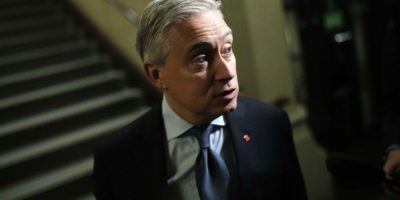
"Who would have dreamt the day before that, Canadian troops in their thousands would be serving in Afghanistan — Afghanistan, for God's sake, of all places. It was a dramatic change," said retired general Rick Hillier, who led a multinational force of NATO nations in Kabul and would become Canada’s best-known chief of defence staff.

“It was a shift in our understanding of how the world functioned. We no longer operated, if you will, as a country isolated from all that upheaval and turmoil and hatred and violence.”
Canada’s ambassador to NATO moved for the alliance to, for the first time ever, invoke Article Five — the clause in the NATO treaty that says an attack on one member country constitutes an attack on all.
Canada went to war with its allies to support the United States and overthrow the Taliban regime which was harbouring the terror group led by Osama bin Laden that was behind the 9/11 attacks.
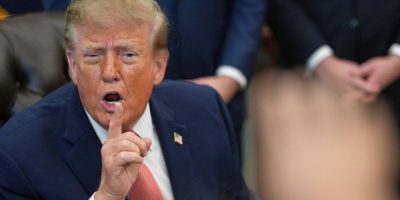
That alliance spirit is harder to detect today, with Canada's relationship with the U.S. tanking over a trade war and President Donald Trump threatening to tear up the NATO alliance and pull more troops out of Europe.
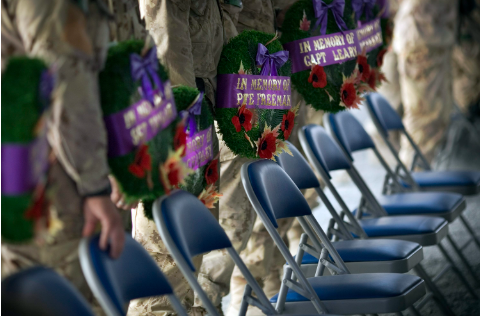
In the immediate aftermath of the terror attacks, no one knew that more than 40,000 Canadians would serve in the 12-year Afghanistan war and 159 Canadian military members would lose their lives there.
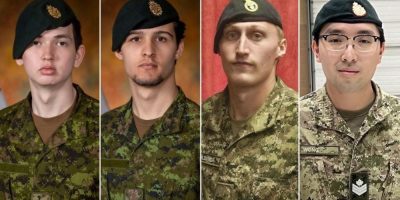
Among them was 24-year-old Pte. Kevin Thomas McKay of Oro-Medonte.

McKay was killed on May 13, 2010, on his last night patrol in Afghanistan, and two days before he was due to finish his tour of duty and return home.
He attended W.R. Best Public School in Shanty Bay and Eastview Secondary School in Barrie, and later trained as a carpenter at Georgian College.
He was deployed to Afghanistan in the fall of 2009 on his first overseas tour.
Barrie City Council named McKay Road in his honour in 2010.
Another soldier who died in Afghanistan was Sapper Brian James Collier of Bradford West Gwillimbury.
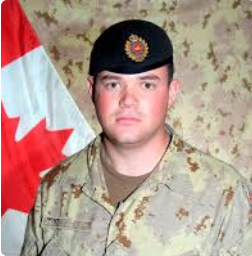
The 24-year-old was killed by a blast from an improvised explosive device.
Collier had been wounded three weeks after arriving in Afghanistan, and having recovered at the Kandahar airbase, he returned to his unit to complete his tour.
He attended Bradford District High School and worked for a while after graduating, then enlisted in the Canadian Armed Forces at age 21.
Eugene Lang, a former chief of staff to two defence ministers, said Ottawa thought at the time it was entering a short-term conflict.
"Nobody was really anticipating what we got into, and we weren't really prepared for it, in terms of the severity of the situation, the complexity of the situation and the duration," he said.

Military doctrine had to change on the fly as Canadians learned to fight an insurgency and the Canadian Forces scrambled to find Pashto speakers to help soldiers talk to locals.
The operational tempo was fast and the military entered the war short of necessary equipment and personnel after its budget had been slashed over the 1990s.
"We had a Canadian Forces that was under-strength, under-budget, under-equipped and not ready for operations quite literally anywhere in the world," Hillier said. "While we were trying to rebuild the basis for an armed forces, we were also getting ready to go to war, and those two things were demanding in a way that was quite incredible."
Hillier said while Canadians rose to the challenge, the lesson of Afghanistan is that countries can't afford to take a decade to prepare their armed forces for the next war.

When Canadian troops arrived in Afghanistan, they were the only ones to show up in green uniforms. The military also had wound down its tank fleets and would need to acquire new ones to deal with the proliferation of roadside bombs.
While Canada went into Afghanistan believing NATO allies would cover any equipment shortfalls, Canadian troops often ended up last in line to use any equipment that could be spared — and often did without.
Canada didn't have helicopters suitable to deploy at the outset, making operations more risky. That’s when Ottawa bought the air force's Chinook transport helicopters.
Another key lesson from Afghanistan, Hillier said, is that fighting a modern war takes an enormous number of people. The size of the regular force contracted by tens of thousands after the end of the Cold War, and numbered around 60,000 by the time the Afghan war began.
Even now, he said, Canada does not have a large enough military.
"The numbers are so far down as to be sort of frightening and we've got to rebuild those numbers," Hillier said. "I hope that we have learned that lesson and that we're getting back to it."
Justin Massie, professor of political science at the Université du Québec à Montréal, said he teaches his students the same lesson about Canada post-9/11 as he does when discussing the Korean War — that Canada entered the conflict with allies, was caught unprepared, scrambled to mobilize, then demobilized after the shooting stopped.
"The Canadian Armed Forces weren't equipped to wage a combat mission abroad to the likes of what we faced against the Taliban, and so the first victims were Canadian soldiers from improvised explosive devices because they didn't have armoured vehicles, didn't have helicopters to move from one village to another, didn't have the right camouflage gear," he said.
"There are consequences when you start a war unprepared, and I'm not convinced that we are now prepared to face an adversary such as Russia in eastern Europe."
He said the current government tends to talk about defence policy more as a way to create jobs than to build a capable military.
Lang said the government has learned that getting into such conflicts can happen very quickly and it can be "very difficult to get out once you're in."
He also said the Canadian Armed Forces seems to be on a better footing now than when it entered Afghanistan, thanks to rising defence spending, improving recruitment numbers and aircraft fleets being recapitalized.
"I'm not sure you're ever really prepared for (war) because you don't know exactly what it's going to be and how you're going to be implicated in it," he said.

Retired Canadian Armed Forces corporal Bruce Moncur still remembers being told to pack his kit and being given 72 hours notice to move after the 2001 terror attacks.
Moncur, who grew up in the U.S., signed up for the military just months before the event that would change the course of his life.
“I wanted to deploy after those attacks. I was immensely affected,” he said. "I had family, I had friends, I lived there."
Moncur never knew a peacetime military. He missed the “decade of darkness” after the Cold War — when the defence budget was slashed — and joined up just as the Canadian Forces were getting bigger budgets, better exercises and bigger missions.
He would deploy five years later and take part with about a thousand other Canadian troops in NATO’s largest-ever land battle, known as Operation Medusa. Canadians saw some of the most vicious fighting there against the Taliban at the height of the conflict in September 2006.
Canada’s complex legacy from that war snapped into focus for many this year, but not because of 20- or 25-year anniversaries. In January, President Trump publicly cast doubt on NATO's contributions and claimed allied troops “stayed a little back, a little off the front lines.”

That offhand comment deeply hurt people who fought in Afghanistan — including Moncur, who was shot three times by an American A-10 Warthog that mistakenly strafed his position.
"When Mr. Trump said the NATO forces weren't on the front lines, that cut deep because I had friends that lost limbs and died and killed themselves over what they saw on the front line," he said. “That was really hard on me mentally because I almost died for that — going to the defence of my neighbours to the south and to hear that was very, very distressing.”
Since the war, Moncur has become an outspoken advocate for Canadian Afghanistan veterans. He's led the charge to get the government to reconsider awarding veterans Canada’s top military honour, the Victoria Cross — something Ottawa recently promised to review.
Lang said that as Canadians look back on the war, they must not let it become something like Canada’s Vietnam — a war that everyone avoids talking about.
“We don't really want to talk about it much as a country because it wasn't successful in the end. We sacrificed a lot," he said. "The main thing for me is that we don't forget about it. We owe that to the people that served there, if nothing else."
This report by The Canadian Press was first published Sept. 9, 2026.
Files - Barrie 360