
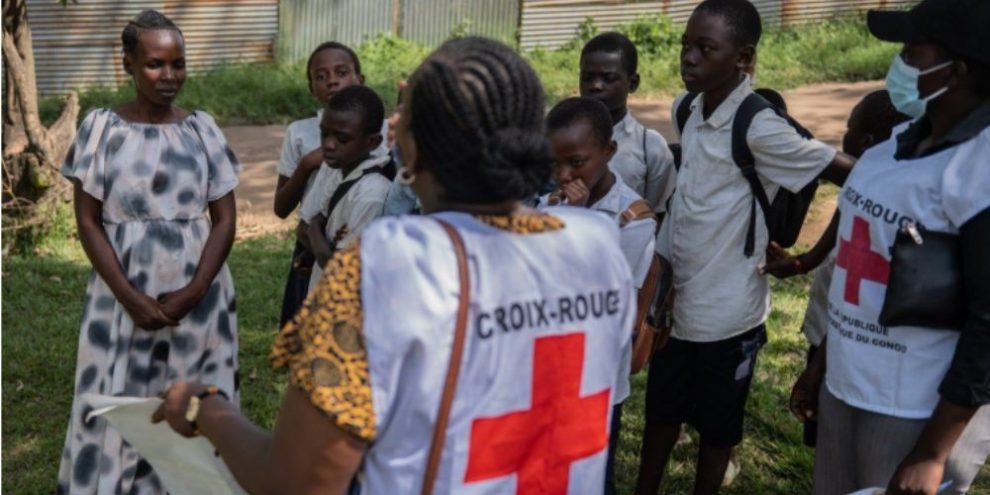
The Canadian government says travellers from Ebola-affected regions will be required to self-isolate for 21 days, while immigration authorities are temporarily suspending decisions on applications from Democratic Republic of Congo, South Sudan and Uganda.
Luc Brisebois, director-general for the Centre for Border and Travel Health at the Public Health Agency of Canada, says the measures are being implemented as a precautionary approach given the severity of Ebola disease and the evolving international situation, as well as the upcoming FIFA World Cup.
He says the risk to Canadians remains low.
Barrie's News Delivered To Your Inbox
By submitting this form, you are consenting to receive marketing emails from: Central Ontario Broadcasting, 431 Huronia Rd, Barrie, Ontario, CA, https://www.cobroadcasting.com. You can revoke your consent to receive emails at any time by using the SafeUnsubscribe® link, found at the bottom of every email. Emails are serviced by Constant Contact
All travellers will be assessed by border officials, while those who have symptoms will be transferred to hospital for further medical assessment.
The stricter border controls are being implemented under the Quarantine Act starting Saturday until Aug. 29,and those who do not have a place to isolate will be provided with a location.
Canadian officials also say that starting tomorrow, they are pausing final decisions on immigration applications for 90 days, though that could be extended or lifted based on how the outbreak evolves.
This will apply to applications of permanent residence visas, temporary resident visas, electronic travel authorizations, temporary resident permits, study permits, and work permits, says Tara Lang, director-general of integrity policy and programs at the Immigration, Refugees and Citizenship Canada.
“It's definitely not a ban. What it is, is a temporary pause in processing of applications. What this means is that in order to protect the health and safety of Canadians, we want to curb travel from the affected areas,” says Lang.
Just days after an outbreak was declared, the U.S. Centers for Disease Control and Prevention suspended the entry of travellers who have been in Congo, Uganda, and South Sudan over the past 21 days, apart from a group of U.S. citizens, nationals and green-card holders.
That’s since been altered to exclude permanent residents.
The World Health Organization’s director-general says an outbreak of a rare type of Ebola is outpacing response efforts, with more than 900 suspected cases and more than 220 deaths.
There has never been a case of Ebola disease imported into Canada and there are currently no cases of Ebola disease in North America
This report by The Canadian Press was first published May 26, 2026.
Canadian Press health coverage receives support through a partnership with the Canadian Medical Association. CP is solely responsible for this content.