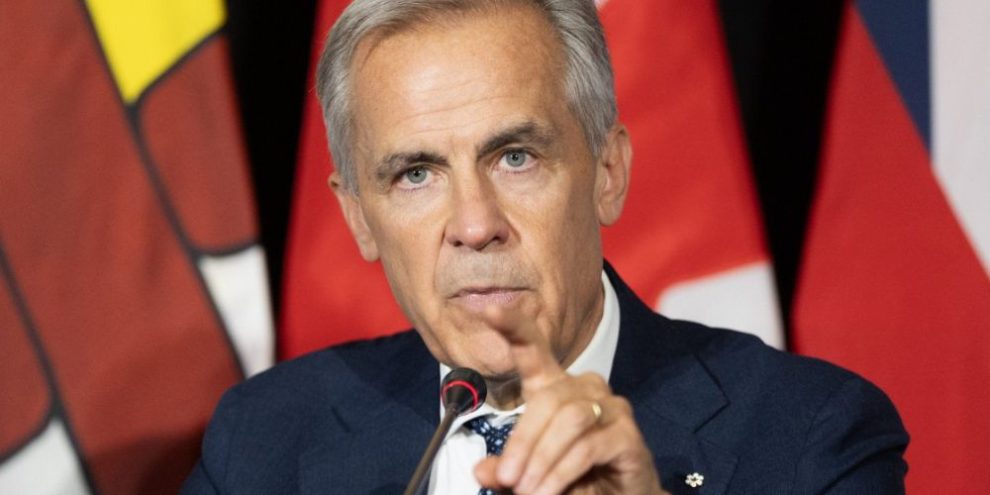
Prime Minister Mark Carney says "everything's on the table" if Canada can't secure a deal to avoid a dramatic escalation in U.S. tariffs planned for next month.
Carney was asked Thursday what measures his government is considering in response to U.S. President Donald Trump's threat to impose 50 per cent tariffs on a variety of Canadian goods.
While the prime minister said Canada has a "full range" of options, he refused to identify specific measures Ottawa could take in retaliation if Trump’s new tariffs come into force.
“It would be counterproductive at this stage to respond in advance. But it’s important to know what your options are, to have worked it through,” Carney said.
Carney didn't rule out reaching a broad trade agreement with Washington before the Aug. 19 deadline and acknowledged the tariff threat is another pressure tactic by the White House.
He said the "breadth of engagement" among U.S. trade officials this week has opened up an opportunity to advance trade talks.
Trump administration officials have said the tariffs announced Monday were a response to provincial bans on U.S. liquor, Canada's supply-managed dairy system and quotas on certain U.S. vehicles.
Later Thursday, the Trump administration also announced it is hitting dozens of countries, including Canada, with tariffs citing forced labour in supply chains.
Canada, Mexico and the United Kingdom are among the countries getting hit with a 10 per cent tariff, while other nations are seeing a 12.5 per cent levy. The new tariffs replace global 10 per cent tariffs set to expire first thing Friday morning.
Ontario Premier Doug Ford has repeatedly suggested leveraging his province’s exports to the U.S. to inflict economic pain in response to the tariffs.
Ford called for tit-for-tat tariffs on Tuesday and suggested the provinces could "dismantle the U.S. if we wanted to" by exerting pressure through energy exports.
British Columbia Premier David Eby later told reporters his province is willing to help pressure the U.S. into a fair trade agreement.
"If you need cards to get the agreement that we need on softwood lumber, to get the agreement that we need on growing prosperity for Americans and for Canadians again ... then British Columbia will be there," Eby said.
Premier Susan Holt of New Brunswick also has signalled she's open to using her province's energy sales to northeastern states to apply pressure in the trade war with the U.S. Others are not as eager.
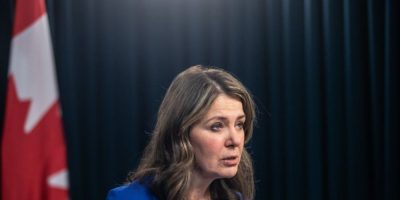
Alberta Premier Danielle Smith and Saskatchewan Premier Scott Moe have so far drawn a hard line against using their province’s cross-border exports in negotiation tactics.
Smith said she doesn't want to negotiate by "promising to punch someone in the nose." Instead, she said, Canadian leaders should be promoting a "win-win" deal for both Ottawa and Washington.
She warned the U.S. could cut off oil and natural gas exports to Ontario and Quebec if Canada engages in a skirmish over energy.
Barrie's News Delivered To Your Inbox
By submitting this form, you are consenting to receive marketing emails from: Central Ontario Broadcasting, 431 Huronia Rd, Barrie, Ontario, CA, https://www.cobroadcasting.com. You can revoke your consent to receive emails at any time by using the SafeUnsubscribe® link, found at the bottom of every email. Emails are serviced by Constant Contact
"You have to be very careful not to put things on the table that you're not prepared to do, and I'm going to try to prevent Canada from making a very dumb decision of putting energy on the table," Smith said.
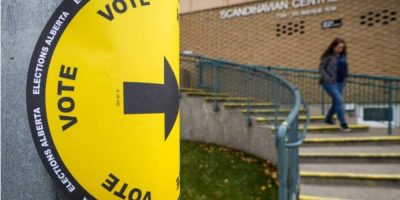
Alberta and Saskatchewan are the only provinces to allow U.S. liquor back on the shelves following the introduction of tariffs on Canadian goods last year.
An analysis by University of Calgary economics professor Trevor Tombe found Alberta and Saskatchewan would only see roughly one per cent of their total exports affected by the latest U.S. tariff list.
Premier Moe said Wednesday he's "positive and bullish" on Canada's chances of reaching an agreement over the next few weeks.
"All we can do is make every effort ... to support our federal government and support those that are sitting at the bargaining table."
Carney admitted there are different perspectives among the provincial leaders but said “we are united in direction and objective and purpose and seriousness about the response.”
While Trump's latest sanctions dominated the premiers meeting in P.E.I., the group of 13 leaders also brought up other topics ranging from health care funding to energy co-operation.
Carney said he backed a new agreement signed by New Brunswick, Nova Scotia and P.E.I. on Thursday to work together on their future electricity needs as the country looks to bolster its energy security.
The Maritime provinces agreed to makea regional road map for electricity transmission by next spring and consider creating an independent electricity system operator to manage power delivery in the region.
The federal government also announced $5.9 million tokick-startplanning and technical work on building a pair of new undersea power cables from New Brunswick to P.E.I.
And on Tuesday, as part of an ongoing effort to remove internal trade barriers to boost the country's domestic economy, nine of the premiers signed a new direct-to-consumer alcohol sales agreement.
The deal changed provincial rules to allow brewers and distillers to sell alcohol directly to consumers regardless of jurisdiction.
This report by The Canadian Press was first published July 22, 2026.
— With files from Craig Lord in Ottawa and Wolfgang Depner in Victoria.