
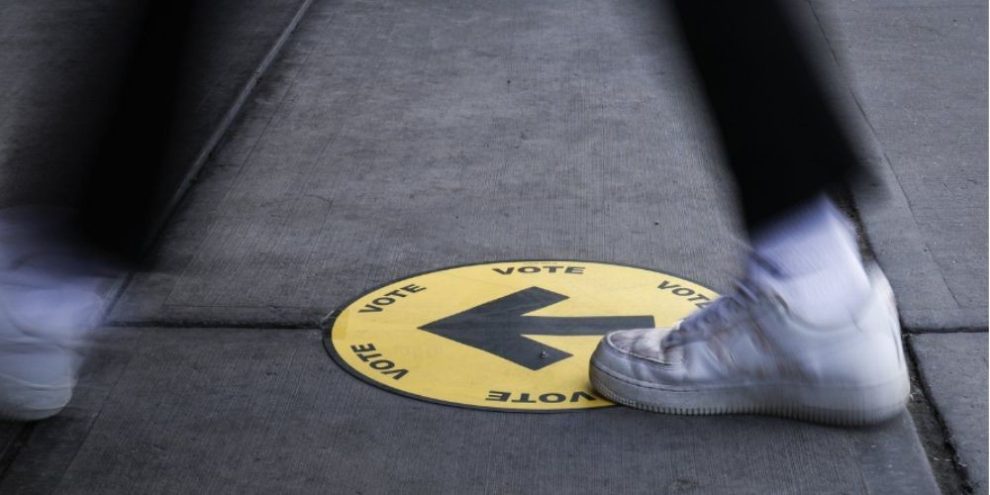
The Liberal government is proposing new legislation to strengthen election integrity by banning digital deepfakes of candidates, cracking down on unduly long ballots and protecting nomination and leadership contests.
The bill, introduced on Thursday, would extend existing election protections beyond the campaign period itself, making them effective year-round.
The government says this would include the extension of rules forbidding foreign people or organizations from improperly influencing someone's vote, as well as bans on offering or accepting bribes to influence a vote.
Barrie's News Delivered To Your Inbox
By submitting this form, you are consenting to receive marketing emails from: Central Ontario Broadcasting, 431 Huronia Rd, Barrie, Ontario, CA, https://www.cobroadcasting.com. You can revoke your consent to receive emails at any time by using the SafeUnsubscribe® link, found at the bottom of every email. Emails are serviced by Constant Contact
The bill also would make it illegal to knowingly spread false or misleading information about election activities or the voting process with the intent to disrupt an election or affect the outcome.
The Liberals insist that sanction would apply only to individuals who choose to spread information they know is untrue. Good faith views, opinions believed to be true, and parody or satire will not be affected, says a background document on the legislation.
The new bill also would introduce new privacy policy requirements for federal political parties.
The government says the bill would ban sophisticated video deepfakes of candidates intended to mislead Canadians.
The legislation also takes aim at long ballots, which have become a controversial feature in recent years, as a protest group trying to lobby against Canada's first-past-the-post system flooded the ballot in specific ridings with dozens of independent candidates.
Under the new legislation, voters would be permitted to sign only one candidate nomination paper, and each candidate would be required to have a unique official agent.
The Liberals say the bill would protect nomination and leadership contests from threats, including undue foreign influence, bribery and intimidation.
The legislation also includes measures on political financing. Political parties and third parties would be prohibited from accepting donations in forms that are difficult to trace, such as cryptocurrency, money orders and prepaid cards.
The bill also would bring new muscle to enforcement of the Canada Elections Act.
The maximum amount for administrative fines would increase to $25,000 from $1,500 for an individual, and to $100,000 from $5,000 for organizations.
The government said Thursday it would spend $31.5 million over five years to beef up Global Affairs Canada's Rapid Response Mechanism, which keeps an eye out for foreign information threats intended to harm Canadian interests.
It also plans to update a federal protocol, established in 2019, on protecting elections.
Under the protocol, a panel of senior bureaucrats has the power to warn the public during the election campaign if it decides one or more incidents threatened Canada's ability to hold a free and fair vote.
The panel of bureaucrats includes the clerk of the Privy Council, the national security and intelligence adviser, the deputy attorney general and the deputy ministers of public safety and foreign affairs.
The Liberals say the protocol will be updated through a new cabinet directive to add a means of appointing a person outside of government to the panel, in consultation with political parties and leaders in the Senate.
The government is also committing to improved communication with Canadians about threats to elections, and to fighting those threats through regular reporting, including an after-action report following an election.
The government says the Strong and Free Elections Act responds to recommendations from an inquiry into foreign interference, the chief electoral officer and the commissioner of Canada elections, who investigates alleged offences.
This report by The Canadian Press was first published March 26, 2026.