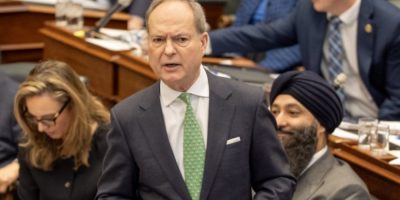
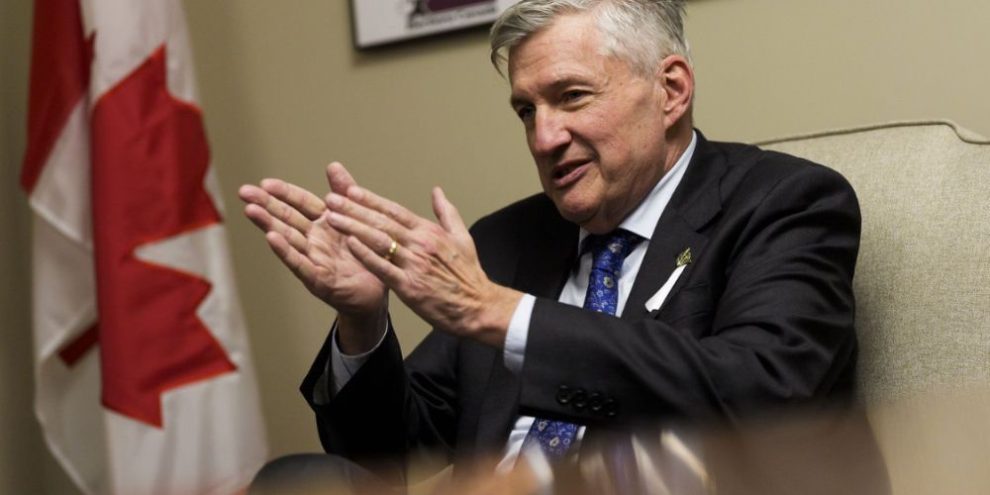
The Liberal who unseated Conservative Leader Pierre Poilievre from his Ottawa-area riding in the last election is criticizing his government's new return-to-office policy for federal workers.
Bruce Fanjoy, who represents the Carleton riding in the House of Commons, said in a social media post there's no evidence the policy will boost productivity and warned it will increase pollution.
He also said the new policy makes it harder for the government to reduce its operating costs, improve affordability and protect the environment.
Barrie's News Delivered To Your Inbox
By submitting this form, you are consenting to receive marketing emails from: Central Ontario Broadcasting, 431 Huronia Rd, Barrie, Ontario, CA, https://www.cobroadcasting.com. You can revoke your consent to receive emails at any time by using the SafeUnsubscribe® link, found at the bottom of every email. Emails are serviced by Constant Contact
The federal government is ordering public servants to be in the office at least four days a week starting in July, while executives are expected to return to the office full-time in May.
Fanjoy, who represents an eastern Ontario riding with more than 10,000 public servants, argued the policy also makes it harder for public servants to balance their work with other responsibilities.
He pushed for what he called a "flexible" hybrid model with a mix of in-office and remote work.
"The right balance is flexible and depends on circumstances," he said. "Done well, a hybrid model reduces the cost of government and benefits workers and all Canadians."
A Treasury Board message to deputy department heads published last week said working on-site is essential to the building of strong teams, collaboration and culture.
The Canadian Association of Professional Employees posted on social media that it planned to meet with Fanjoy Monday and looked forward to hearing more about how to push back against the new policy together.
Canada's largest federal public sector union has filed several unfair labour practice complaints over the return-to-office policy, while another union has warned of a possible strike as the government moves to increase public servants' in-office time.
Sharon DeSousa, national president of the Public Service Alliance of Canada, said last week the union filed five unfair labour practice complaints with the Public Sector Labour Relations and Employment Board in response to the government's decision.
DeSousa said the federal government is trying to change the working conditions of its members while the union is in active bargaining, which she said is against the law.
Sean O'Reilly, president of the Professional Institute of the Public Service of Canada, said the union is looking at all options to push back against the decision as it enters contract negotiations. He said the new policy might lead to a strike down the road, though he's still open to discussing in-office rules with the government.
The federal directive applies to public servants working in the core departments and agencies under Treasury Board, though some separate agencies — like the Canada Revenue Agency and the National Research Council of Canada — have said they intend to follow the same approach.
Remote work rules have been an ongoing source of friction in the public service since COVID-19 forced most federal workers to work remotely in 2020.
After public health restrictions began to ease, the federal government moved in 2023 to have workers return to the office two to three days a week.
The current rule, in place since September 2024, requires public servants to work a minimum of three days a week in-office, with executives in office four days per week.
The government's most recent order updates that rule.
Treasury Board said the government will engage with unions to implement the new return-to-office plan to work out things like assigned seating and occupational health and safety.
Prime Minister Mark Carney promised late last year that a plan would soon come into "sharper view."
At the time, Fanjoy said he hoped there would be "flexibility" as employees return to the office.
"A lot of our trickiest problems in cities are because we require everyone to be in a very small space," Fanjoy said in December. "Having public servants spread out a little bit, that's good for all the economies of our local communities."
This report by The Canadian Press was first published Feb. 9, 2026.