
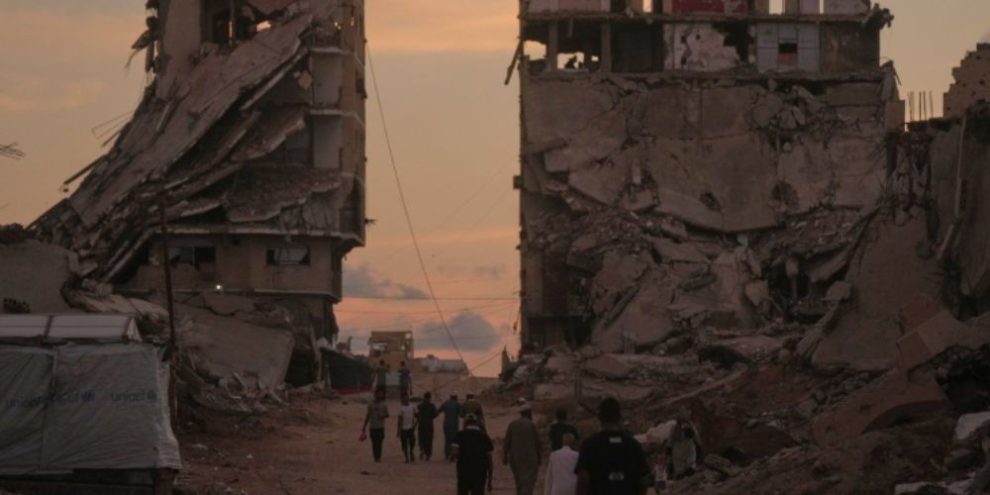
Edmonton mother Salomy Abusalim is running out of excuses to give her son when he asks why his dad is still in Gaza.
"This is killing me as a mom. I can't keep going on, lying to him," said Abusalim, whose husband has been trapped in Gaza due to bureaucratic difficulties.
"My husband was starving, literally starving," she said. "For three months he didn't have food at all. Imagine I'm staying here, eating at my table, my son eating my food and my other half — he can't find a piece of bread just to eat. It was devastating."
Three years ago, Hamas launched a deadly terrorist attack on Israel which left 1,200 people dead, including Canadians. The victims included some children. Women were sexually assaulted and 251 people were taken hostage in the attack.
Israel responded by launching a war that has killed more than 75,000 people in the Gaza Strip, violently occupying southern Lebanon and allowing settlers to attack Palestinians in the West Bank.
Canadians with ties to the region describe three years of horror — of relatives sending them text message updates on an unfolding humanitarian crisis as they grieve for loved ones killed in a conflict far away.
The worst part, she said, is when the internet goes down — when the messages from her husband stop and she grapples with her worst fears, wondering if he has been shot.
"It's a lot of scenarios in your mind, and it's not stopping. It's happening every day," she said.
Her husband Saed has been caught in bureaucratic limbo since the couple attempted to move to Canada. Abusalim moved to Edmonton in 2018, two years after giving birth to their son, Rashid.
Abusalim and Rashid, who is now 10, both have Canadian citizenship. Saed applied years ago for permanent residency, which Abusalim said was delayed by the COVID-19 pandemic.
Saed was set to complete biometrics on Oct. 10, 2023, she said. Three days prior, the Hamas attack ignited a catastrophic war. Technically there's a ceasefire in place but dozens of Palestinians are still being killed each month.
Abusalim said her husband was on a list of Canadians approved to leave Gaza through Egypt in January 2024, but Egyptian officials refused to let him enter and later demanded hefty bribes.
He still has an active visa application, she said, but Ottawa will not issue the document until he completes biometric screening, which can't be done in Gaza. Unlike some European countries, Canada appears unable to get citizens or visa applicants out of Gaza through Israel — where biometric checks might be possible.
The issue has come up for hundreds of people in the territory who applied to come to Canada.
The Immigration Department said in a statement that Canada has no control over who is able to leave Gaza and the department is bound by legislation to require biometrics.
"Biometrics can only be completed after people leave Gaza, as IRCC has no presence there," wrote spokesperson Mary Rose Sabater. She added privacy laws prevent the department from commenting on individual cases.
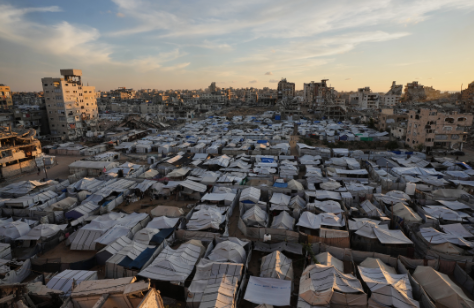
Abusalim said her son threatened to go on a hunger strike to protest his father being stuck in Gaza. She has now taken that on herself; on Tuesday, Abusalim said she was on her fourth day of consuming nothing but water.
"It's been eight years since my son held his dad, or smelled him and hugged him," she said.
"As a mom, I don't think any mom wants to go through any of this with her son or daughter. I don't think that keeping up this war is any good for any of us — any side of us, even the Israeli side."
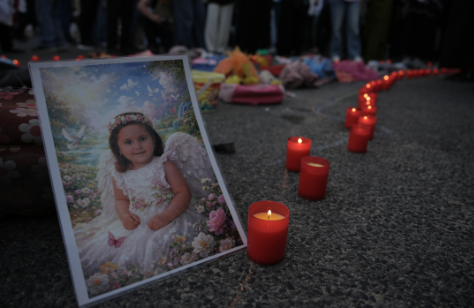
In Quebec's Beauce region, Sylvie Labrecque feels acutely the absence of her son, an aid worker killed in an Israeli airstrike in April 2024.
"Every day he's there in my heart, in my mind, and I do pray and meditate, thinking of him," she said in a Monday interview.
Jacob Flickinger, a 33-year-old infantry veteran, was on an aid mission with World Central Kitchen, a respected organization that had co-ordinated a convoy with Israel's military.
"He enjoyed very much to go work for these types of missions, because it meant a lot to him," Labrecque said.

Israel had drastically restricted the flow of aid to the territory. It also has barred reporters from Gaza and imposed unconventionally tight restrictions on the work of humanitarian organizations.
"It could have been safer, not only for him, but for the whole group, to do their work, even though they were in a war zone," Labrecque said. "They knew that."
Israel struck the convoy multiple times, killing Flickinger and six other aid workers. In August, Israel's military prosecutor decided against a criminal investigation.
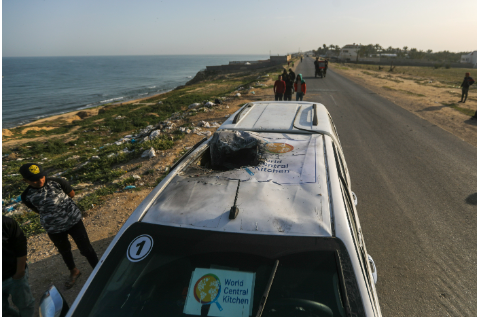
Foreign Affairs Minister Anita Anand called that finding unacceptable. She argued there were serious failures in the conduct of the strike and vowed to continue pressing for a full account of what happened.
Labrecque said Canada could do much more to raise the cost of killing aid workers. She said she fears the government of Israeli Prime Minister Benjamin Netanyahu has no incentive to do better.
"They've been killing already tens of thousands of people. So to kill a few more is kind of nothing to them," she said.
Israel insists it is protecting itself from regional threats and trying to avoid civilian casualties — but Labrecque said that statement strains credibility in the Palestinian territories, Lebanon and Iran.
"They've done an enormous disaster in Gaza and it's just expanding around," she said.
This past April, Hassan Haidar, from Windsor, Ont., was killed at a family horse farm in southern Lebanon by what his family said was an unprovoked Israeli drone strike.
The Israeli military said it could not comment in detail as it could not locate a case file for the incident, which occurred during its ongoing operations in Lebanon that Israel says are aimed at routing Hezbollah.
Haidar's brother Mohamed told reporters the world is letting civilian deaths go unpunished.
"I don't want his blood to run cold for no reason," he said. "Until more Canadians fall dead, do we then wake up?"
This report by The Canadian Press was first published Oct. 7, 2026.