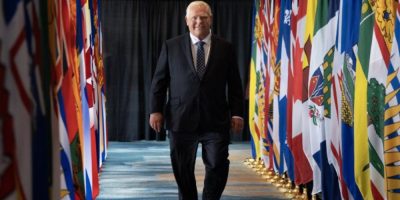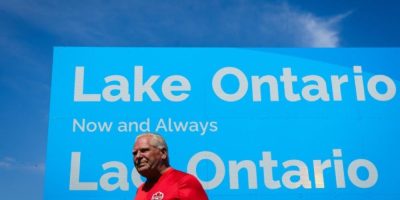
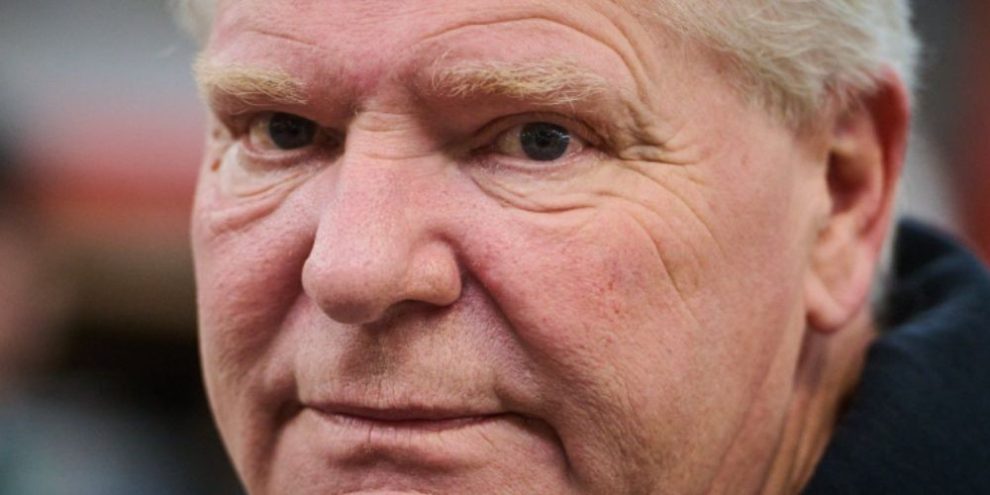
Ontario Premier Doug Ford's government is planning to skip public hearings to pass its omnibus budget bill that contains a retroactive clampdown on access to his cellphone records.
The usual legislative process sees bills go to committee, where affected groups and members of the public have a chance to weigh in, and committee members from the government and opposition can propose and debate amendments.
But government house leader Steve Clark is now proposing to bypass all of that for a budget bill that merges the province's conservation authorities, paves the way for redevelopment of a lot outside the Rogers Centre in downtown Toronto, caps resale ticket prices, and most controversially, changes freedom-of-information laws.
The retroactive FOI law would shield Ford and cabinet members — along with their offices — from public access to documents, with Ford admitting that part of the rationale is to kill a request from Global News to obtain his cellphone records.
NDP Leader Marit Stiles said Ford is going to great lengths to hide those records.
"This is an attack on our democracy, and by cancelling public hearings, Doug Ford is sending a clear message: if you don't agree with him, he doesn’t want to hear from you," Stiles wrote in a statement.
Interim Liberal leader John Fraser said the move is hypocritical for a government that is demanding more accountability from elected school trustees.
"They talk about school boards being accountable, (but this) government isn't accountable," he said.
"Accountability is being out in the open, debating things, having differences of opinion, making sure the public know what you're doing and know both sides of the story. So maybe we should get a supervisor here at Queen's Park, because this government isn't accountable to the people who elected it."
Green Party Leader Mike Schreiner said it shows Ford has something he wants to keep secret.
"He knows the public, and his own voters, aren't happy that he's changing the rules to make it easier to hide the truth," Schreiner wrote in a statement.
The government has fast-tracked several pieces of legislation over the past year or so, including laws to ban speed cameras, close supervised consumption sites and boost the education minister's powers, as well as a law known as Bill 5 that allows the government to suspend municipal and provincial laws in the name of mining or economic development.
Clark has justified those previous moves by saying that there was a need for certainty from the government's agenda, that the government needed to get bills passed before a recess or that there had already been "spirited" public debate outside the legislature.
When Clark was asked Thursday if he planned to allow the current budget bill to have public hearings — after it had been sitting for two weeks at the committee stage with no movement — he was cagey.
"I've made no decisions," he said, a couple of hours before tabling his 1,238-word motion.
The motion also seeks to schedule one day each of public hearings on a bill that overhauls school board governance and another that prevents municipalities from requiring that developments follow certain environmentally friendly standards.
This report by The Canadian Press was first published April 17, 2026.