Updated May 16, 2026 @ 10:35am
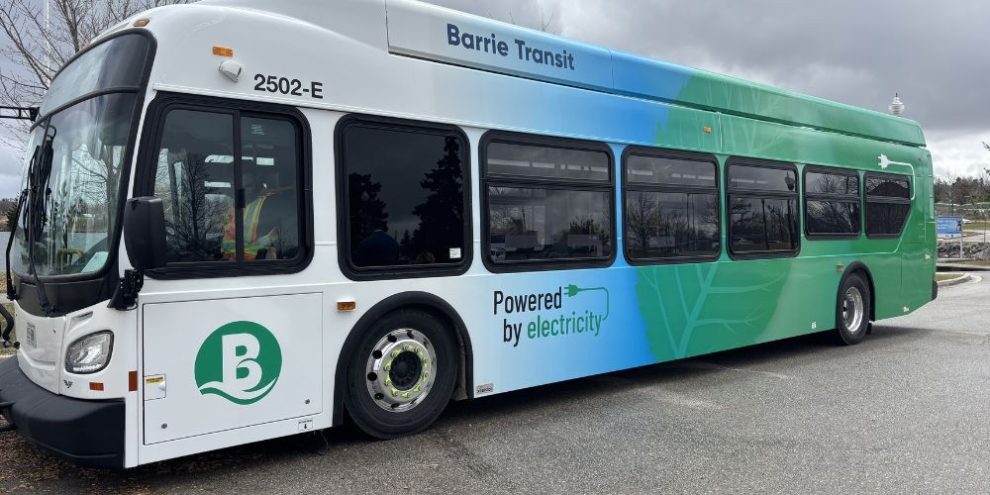
The City of Barrie’s Battery Electric Bus (BEB) pilot is providing early insight into how electric transit vehicles perform in real-world winter conditions, with new data showing a notable drop in range during colder months but overall operating costs remaining comparable to diesel buses.
A staff memorandum circulated on Wednesday outlines results from the winter testing phase of two electric buses, as part of a 12-month pilot program running toward summer 2026.
| MONTH | MILAGE (km/kWh) | REGENERATIVE BREAKING RATIO | ESTIMATE RANGE (km) | ELECTRIC HEAT ENERGY USE (kWh) |
|---|---|---|---|---|
| December | 0.66 | 0.25 | 196 | 40 |
| January | 0.55 | 0.22 | 163 | 52 |
| February | 0.61 | 0.27 | 182 | 59 |
Across the winter period, the average estimated range dropped to about 179 kilometres. This follows average ranges of 290 kilometres during the summer phase and 285 kilometres in the fall.
City staff attribute the decrease to colder temperatures, increased cabin heating demand, and reduced regenerative braking on icy roads. Temperatures during the winter study reportedly averaged around -10 C.
Energy used to heat bus cabins increased substantially over the winter, rising from 9.15 kWh in the fall to 50.17 kWh in winter, according to staff data.
This reduced available energy for propulsion, resulting in lower range and higher per-kilometre operating costs.
Despite winter challenges, the memo notes that overall operating costs for electric buses remain close to diesel equivalents.
Across summer, fall, and winter conditions combined, diesel buses ran at approximately $0.43 per kilometre, while electric buses cost $0.41 per kilometre.
However, staff note the gap shifts during winter months, when BEB operating costs rise to approximately $0.68 per kilometre, largely due to increased heating demand. At the same time, diesel costs increased slightly to approximately $0.48 per kilometre.
City staff suggest there may be opportunities to improve electric bus efficiency by adjusting the use of auxiliary heating systems and refining operational settings.
OPERATOR FEEDBACK GENERALLY POSITIVE
Transit operators have provided generally positive feedback on the two electric buses in the fleet, highlighting quiet operation, smoother ride quality, and improved driving comfort.
Barrie Transit has 46 conventional diesel buses in its fleet.
However, some concerns were raised about battery range during colder conditions, particularly when heating systems are in use, contributing to what operators described as “range anxiety.”
NEXT STEPS
City staff caution that the winter testing period included abnormal weather events, which may not fully represent typical seasonal operating conditions in Barrie. As a result, staff recommend continuing data collection through additional winter cycles to improve long-term performance analysis.
The 12-month pilot began in July and will continue through summer 2026, when metrics and performance analysis will be presented to city councillors upon its conclusion.