Two people have been arrested after the seizure of more than 16,000 counterfeit soccer merchandise items; an intellectual property lawyer urges retailers and consumers to only buy from trusted sellers and report suspected fraud.
Toronto Police said their investigation began last month after a local law firm specializing in brand protection received a complaint about fraudulent merchandise.
Police alleged that a warehouse in Mississauga, had a large quantity of fake merchandise, including jerseys, hats and flags, and the accused were supplying the products to retail stores.
"This was a large-scale operation designed to exploit fans and take advantage of their love for sports," Deputy Chief Robert Johnson said.
Thousands of Fake Jerseys and Flags Recovered
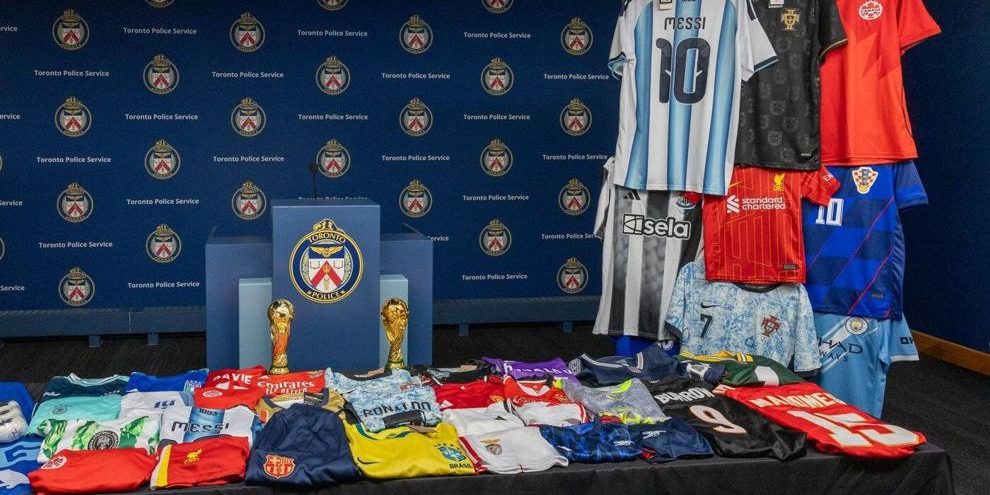
Police said officers searched the warehouse and trailers on site and seized fraudulent jerseys and flags purporting to be name brands, including Puma, Nike and Adidas, as well as two counterfeit FIFA World Cup trophies.
Supt. David Ecklund said the items were coming from overseas, but did not specify the exact source. Given the size of the seizure, investigators believe the accused were running the operation "for some time."
"Folks are walking into retail stores thinking that they're buying an authentic piece, a jersey or sporting equipment, they're paying full price as they would if it was authentic, but they're getting a counterfeit," he said.
Ecklund added that counterfeit merchandise is a "known concern" during major sporting events, including the FIFA World Cup.
"For criminals, it's a crime of opportunity, because they know people want to support their favourite team and will prey on that excitement."
A 41-year-old man from Milton and a 62-year-old man from Mississauga each face multiple charges, including fraud over $5,000 and passing off wares or services with intent to deceive or defraud.
How Consumers Can Spot Counterfeit Products
David Lipkus, an intellectual property lawyer with Lipkus Law, the firm that brought forward the complaint, said there are multiple ways for consumers and retailers to verify the authenticity of sports merchandise.
"If you're shopping online at third-party marketplaces or through social media, then start by looking at the price. A premium brand at a bargain basement price isn't a discount, it's a red flag," he said.
Lipkus added there are often spelling mistakes on the tags, or the material won't have the same quality as legitimate products. Consumers should also check the brand's website to see where to buy items locally, he said.
"Customers don't want to buy these low-quality products. They don't operate the same way. They haven't been tested for safety; the materials on them can harm the consumer," Lipkus said.
Reporting Suspected Fraud
Lipkus said if someone believes they unknowingly purchased counterfeit goods, they should report it to police and the Canadian Anti-Fraud Centre.
"Counterfeiting isn't a victimless crime. It funds illicit networks and compromises your safety," Lipkus said.
- with files from The Canadian Press