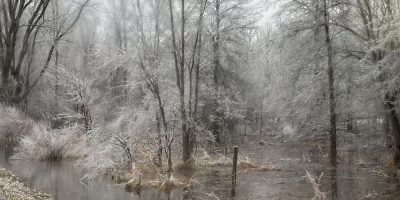

A milder-than-average winter forecast doesn't mean Simcoe County residents can afford to let their guard down.
County emergency officials are encouraging households to review their winter emergency plans now, warning that warmer seasonal temperatures could still bring significant weather events, including ice storms, heavy snowfall and rapid temperature swings.
Meteorologists are forecasting a winter influenced by El Niño conditions, which can sometimes produce dramatic fluctuations in weather patterns. Simcoe County Manager of Emergency Planning Grant Durfey noted those shifts could lead to shorter but more intense storms, including heavy snow and damaging ice accumulation.
He told Barrie 360's What Barrie's Talking About podcast that forecasts tied to a strong El Niño pattern may result in warmer overall temperatures, but residents should still expect periods of severe weather.
"An average mild winter doesn't mean you're not getting those extreme events in between," he said.
The county's experience during recent winter storms, particularly the major ice storm that struck parts of the region, continues to shape emergency planning efforts.
While authorities have improved communication systems and emergency response procedures, Durfey stressed that personal preparedness remains the most important line of defence.
"The more prepared you are, the less response we need to do, and then we can focus that response on those who truly need it."
Ice storm preparation starts at home
Residents are being encouraged to trim trees and branches that could fall onto homes or power lines during freezing rain events. Officials also recommend maintaining emergency supplies, including food and water.
For urban residents, emergency planners suggest having enough supplies to last at least 72 hours. Those living in rural areas should consider maintaining up to a week's worth of essentials, particularly if they rely on well water or are more vulnerable to prolonged power outages.
Durfey said many people overlook practical challenges that arise when utilities fail, including basic sanitation needs.
"It's not a normal thing I come to the radio to talk about ... pouring water into your toilet tank to flush it," he said. "But I think that's ... a skill that some people don't know anymore."
Generator and heating safety critical
Power outages remain one of the biggest concerns during winter storms.
Officials are reminding residents never to use barbecues or gas-powered equipment indoors and to avoid using open ovens as a heat source due to the risks of fire and carbon monoxide poisoning.
Portable generators can be effective during outages, but only when operated safely. Durfey recommends placing generators at least 10 to 15 feet away from doors, windows and air intake vents. Residents should also ensure carbon monoxide detectors are installed and functioning properly.
Emergency planners are also encouraging families to identify alternative heating options and know where local warming centres are located should prolonged outages occur.
Barrie's News Delivered To Your Inbox
By submitting this form, you are consenting to receive marketing emails from: Central Ontario Broadcasting, 431 Huronia Rd, Barrie, Ontario, CA, https://www.cobroadcasting.com. You can revoke your consent to receive emails at any time by using the SafeUnsubscribe® link, found at the bottom of every email. Emails are serviced by Constant Contact
Build a "go bag" before it's needed
Beyond stocking supplies at home, residents are advised to prepare a portable emergency kit.
Durfey said a basic "go bag" should contain food, extra clothing, blankets, hand warmers and other essentials needed to remain self-sufficient for several days if evacuation becomes necessary.
He also recommends keeping vehicles fuelled throughout the winter.
"Make sure you have at least half a tank of gas in your car," he said, noting motorists can become stranded during road closures or whiteout conditions.
Cash can also be useful during emergencies when power outages disrupt debit and credit card systems.
New volunteer program growing rapidly
At the same time, Simcoe County is expanding its ability to assist communities through its Simcoe Emergency Response Volunteer program, known as SERV.
Program coordinator Nathan Latulippe said the initiative was launched in May to address gaps identified during previous emergencies, including the 2025 ice storm.
Since its launch, more than 230 applications have been received from residents looking to support emergency response efforts.
The program includes teams focused on shelter support, communications and field operations. Volunteers may help residents access information at emergency shelters, support public communications efforts or assist with on-the-ground activities such as wellness checks and flood mitigation.
"A lot of people, they tell me, wanted to help more in previous emergencies; I just didn't know how," Nathan said. "And this is the way that they can do it."
County officials say the program will help create a larger pool of trained local volunteers who can respond quickly when emergencies occur.
Preparing today can prevent problems tomorrow
Durfey said residents should resist the temptation to ignore severe weather warnings because forecasts occasionally miss the mark.
"If it doesn't happen, then just consider it a practice exercise," he said.
The county is also working with Environment and Climate Change Canada and local volunteers to improve forecasting accuracy by collecting real-time snow and ice data from communities across Simcoe County.
For more information about emergency preparedness, residents can visit the county's Be Prepared webpage or learn more about the SERV volunteer program through Simcoe County.
As winter approaches, emergency officials say the message is simple: even if the season turns out milder than average, preparation today can make the difference between a manageable inconvenience and a serious emergency.