For many people, the idea of homesteading conjures images of sunlit gardens, neatly stacked jars of preserves and evenings spent in peaceful isolation. But for Aly Nickling-Riddle, who has spent the last several years building an off-grid life with her partner, Brian Riddle, the reality is far from the polished picture often found online.
At its core, she says, homesteading is about slowing down and reclaiming control in a world that often feels chaotic.
“The very core of it is really a desire to have a simpler life where you're a little bit more self-sustainable and self-sufficient,” she said. “Most cases, people are trying to grow a little bit more of their own food and rely less on supply chains and have a little bit more peace and quiet.”
A move inspired by uncertainty
Like many who turned toward self-reliance in recent years, Nickling-Riddle says the pandemic was the turning point.
“It was the pandemic that really turned the corner for us,” she explained. “Seeing the danger of the lack of food supplies and just being so reliant on systems that could fail at any time.”
Both she and her partner grew up in rural settings, but transitioning from full-time jobs to a fully off-grid lifestyle was anything but simple. Determined to do it right, they spent years researching before buying their land.
Thank goodness, she says, because homesteading is far from the romantic aesthetic many expect.
“A lot of people get drawn in by the Instagram romanticized version… and believe it’s going to be like that in their first year. And it’s not. It’s going to be dirty. It’s going to be time-consuming. Every muscle in your body is going to be sore.”
A lifestyle built on resilience
Now entering their fourth year on the homestead - after three years of planning beforehand - Nickling-Riddle says they’re still nowhere near a “finished” version of what they envisioned.
“We had an excellent, solid Plan A,” she laughed. “We’ve gone past Plan B, past Plan C, and we’re working on Plan D right now.”
Animals, weather, and infrastructure challenges are constant realities. Moose wander through their interior roads. Bears and deer require serious garden protection. Solar systems need backup. And in their case, a tornado caused significant damage to their land.
“You can’t control weather,” she said. “You need to be able to step back, have some patience, and really decide before you get into this: what is your why?”
For them, resilience has been the key.
The hidden cost of self-sufficiency
While homesteading can reduce long-term expenses, the early years are financially demanding.
“It certainly doesn't give you a break from the cost of setting up your infrastructure and buying your land and building a dwelling,” Nickling-Riddle explained.
Their property came with only minimal infrastructure. They built their cabin, power systems and water systems themselves and now run entirely on solar with generators for backup - all while working toward full food self-sufficiency through gardening, hunting, fishing, and canning.
A guide for those considering the leap
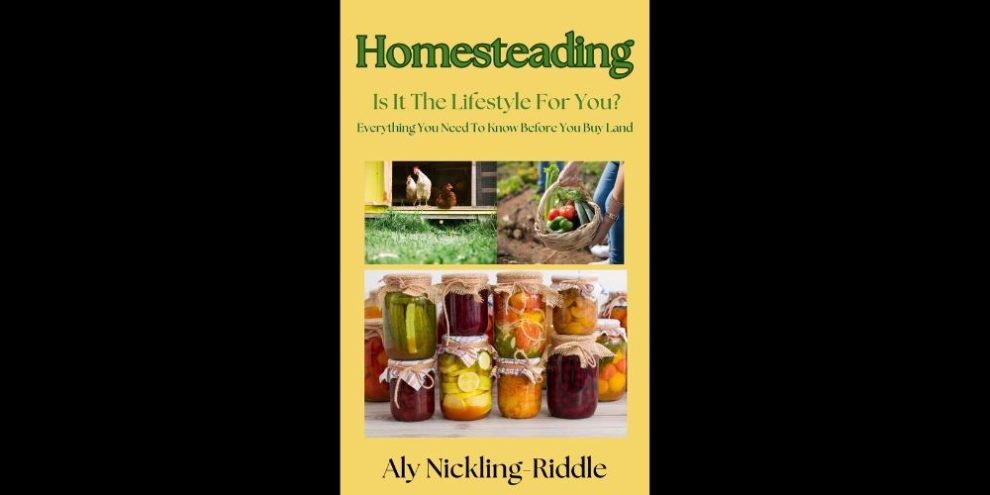
Nickling-Riddle has channelled her experiences into a book, Homesteading: Is It the Lifestyle for You? - a candid look at the realities behind the dream.
“My book isn’t going to teach you how to homestead,” she said. “It’s going to help you figure out whether you should homestead or if you’re ready to.”
The book is available in e-book and paperback formats on Amazon and can be ordered through local bookstores.
Looking ahead to winter
Despite the challenges, the lifestyle continues to feel right for them - and each year brings more confidence.
“We did a little bit better this year,” she said. “Each year, you underestimate how ready you need to be for the winter… and we’re ready to go.”
Want to know more? Our full interview with Aly Nickling-Riddle is on this week's What Barrie's Talking About podcast.