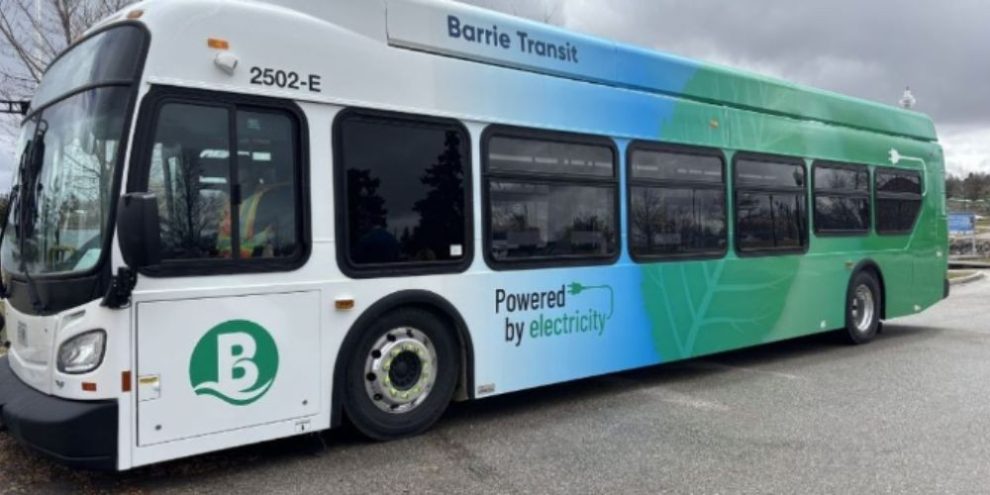
The City of Barrie has put two battery electric buses (BEB) to the test as part of a pilot project, and initial numbers show vehicle range during the fall phase was slightly less than during the summer period.
During the pilot program, city staff are gathering metrics and key performance indicators for 12 months.
From Sept. 1 to Sept. 12, the BEB operated in the transit network with no passengers and stops at 50 per cent of the designated bus stops. Between Sept. 15 and Nov. 30, the BEBs went into full service with normal passenger load and weather conditions for the fall season.
Performance data summarized:
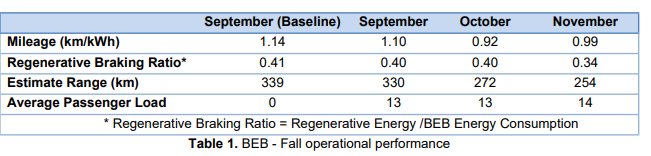
The report to city council shows the average BEB range measured 290 km during the summer phase, compared to 285 km for the fall testing phase.
"For reference, the city's diesel buses travel up to 400 km for a full day of service," the staff report stated.
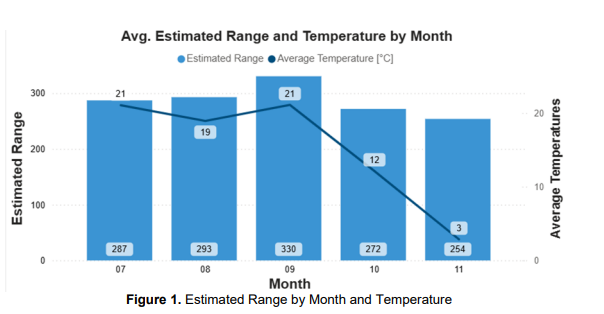
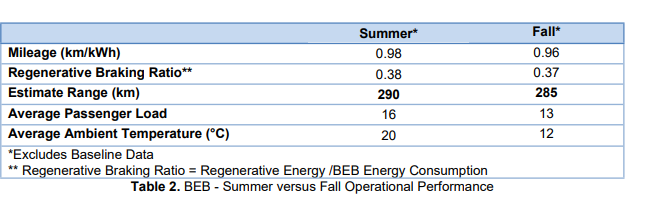
The modest decrease between the summer and fall testing periods happened despite regenerative braking performance and slightly lower overall passenger loads.
"This indicates that operator driving patterns remained generally consistent and that the reduction in vehicle weight (i.e. reduced passenger loads) did not offset the impact of seasonal weather conditions." according to the report.
City staff suspect the main factor affecting vehicle range was lower temperatures during the fall testing period, approximately 12 Cel. compared to 20 C in the summer, which meant the BEB required more energy to maintain cabin temperatures, and in turn reduced BEB range.
Data from both the summer and fall phases were consolidated to assess the estimated range on a per-route basis.
According to the report, the analysis indicates the estimated operating range is approximately 251-300 km. The variations within this range are being attributed to several factors, such as the number of stops, passenger loads, and geographic conditions.
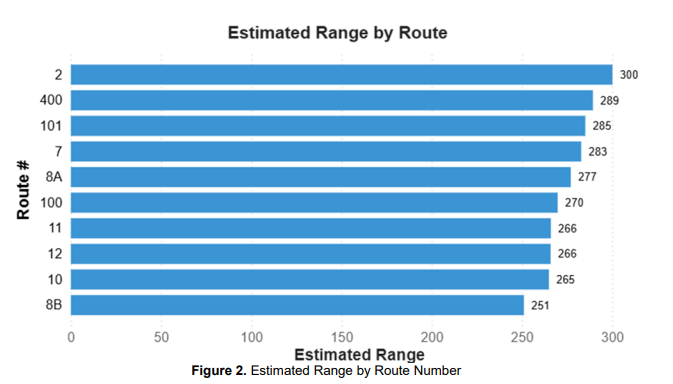
"Further data collection and analysis would help city staff to better understand these variations," the report said.
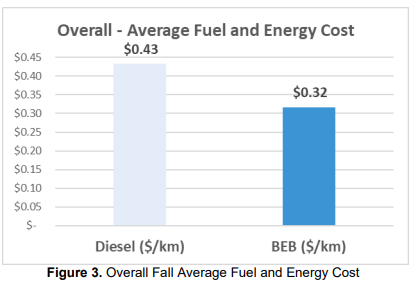
City staff also looked at the fuel and energy dollar cost per kilometre of a conventional 40' diesel bus compared to the 40' BEBs. Overall, the average, including both summer and fall, the cost for diesel buses was $0.43 km, while BEBs cost $0.32 km.