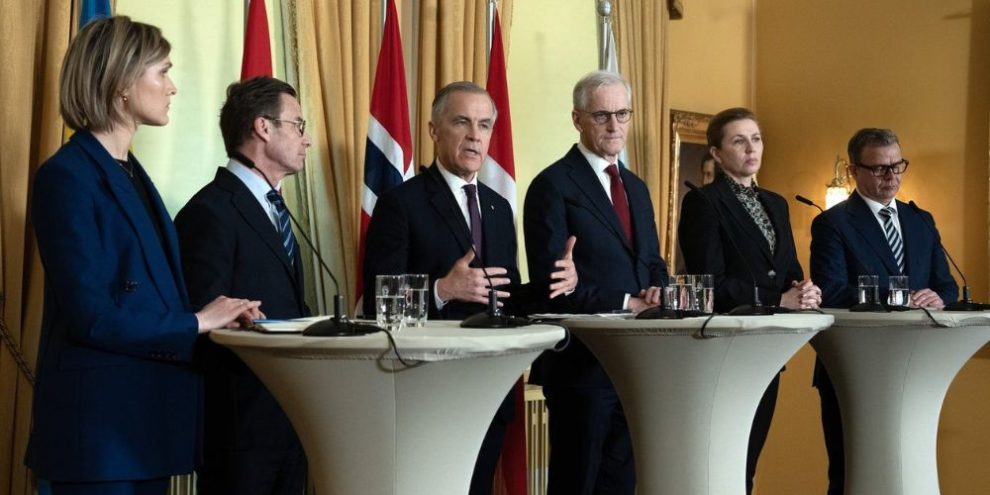
The prime ministers of Canada and Nordic countries have agreed to continue work to defend Arctic sovereignty and to deepen economic ties as technology and international trade are increasingly used as a “coercive tool."
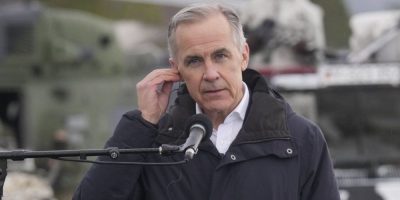
Prime Minister Mark Carney is concluding his time in Norway meeting with that country’s prime minister, along with the leaders of Denmark, Iceland, Sweden and Finland.
"At a time characterized by heightened geopolitical tension, war and a multitude of crises, we are united in the view that international co-operation, based on international law, shared values and interests, remains the best way to strengthen our common security and prosperity," reads a joint statement from the leaders after the meeting.
Barrie's News Delivered To Your Inbox
By submitting this form, you are consenting to receive marketing emails from: Central Ontario Broadcasting, 431 Huronia Rd, Barrie, Ontario, CA, https://www.cobroadcasting.com. You can revoke your consent to receive emails at any time by using the SafeUnsubscribe® link, found at the bottom of every email. Emails are serviced by Constant Contact
The leaders discussed the need to expand trade and investment ties, as like-minded countries have been upended in recent years in part due to U.S. tariffs and threats to annex Greenland.
Greenland is a self-governing Danish territory.
During a press conference after the meeting, Danish Prime Minister Mette Frederiksen said the old world order is gone and likely not coming back.
“So, we have to build something new and it has to be a world order that is built on the values that we represent,” Frederiksen said.
When asked if the leaders believe threats to Greenland’s sovereignty are over, Carney said Canada and the Nordic nations can work to defend their sovereignty by working together on shared defence, especially in the Arctic, and by deepening economic collaboration
Frederiksen did not respond to that question.
The leaders were asked if they were prepared to stand up to defend Greenland and Denmark if another NATO ally tried to seize the territory — a reference to U.S. statements on the need to take over the island for national security purposes.
Carney said territorial sovereignty must be upheld and the future of Greenland is up to its people and Denmark.
“We will back that with measures as necessary, as a partner,” Carney said.
“The European Union, and others, have been clear about these fundamental principles and the principle of solidarity has helped to create the space which always should have been there, to be clear, to develop a better security umbrella in the Arctic … So, we're clear on where we stand and we will continue to stand with Denmark and Greenland.”
U.S. President Donald Trump and NATO Secretary-General Mark Rutte agreed to a framework for a future deal on Arctic security in January.
Trump has said that it would allow "total access" to Greenland. NATO spokesperson Allison Hart said Rutte did not propose any “compromise to sovereignty” in discussions with Trump.
The leaders of both Denmark and Greenland have said that the island's sovereignty is non-negotiable.
Norwegian Prime Minister Jonas Gahr Store and the other leaders said they also stand with Greenland.
"It is for basic principles of international law, national sovereignty and territorial integrity, which is not simply language in schoolbooks. This is hardcore realities for how we preserve freedom, democracy," Store said.
These hardcore realities include increasing military threats in the Arctic. Carney said that Russia presents the biggest physical security threat, but there are more "layered" threats.
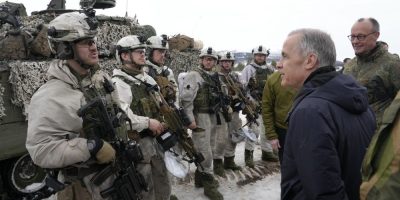
NATO is currently operating its biennial Cold Response training exercises, where 32,000 troops from 14 nations, including the U.S., are conducting a host of military exercises in northern Norway and Finland.
"We need to understand that Russia is our biggest threat, and it will remain a threat for Nordic, Arctic countries. And that's why we have to go forward to strengthen Arctic security together," Finnish Prime Minister Petteri Orpo said.
Carney was asked about the status of a joint German-Norwegian bid to supply Canada with submarines, along with the possibility of purchasing Swedish Saab fighter jets, and if that was discussed during the meeting.
Carney said the submarine bids — Korean-based Hanwha is the other competitor — are currently being reviewed and he stressed it is an independent process that he will not get involved in.
Store said he respects the Canadian procurement process.
The joint statement from the six leaders shares a commitment to continue working on Arctic security, deepening trade and investment ties, plus building "prosperous and green economies."
Before the meeting with Nordic leaders, Carney met with Norway's finance minister and the CEO of Norges Bank.
Carney is set to leave Norway on Sunday for London, where he is scheduled to meet with Prime Minister Keir Starmer on Monday.
It will be the seventh meeting between the two leaders in just over a year.
Carney is also scheduled to meet with King Charles.
After that, the prime minister will remain in Europe on vacation while the rest of the delegation heads back to Canada on Monday. He stressed Thursday that he will remain in close contact with staff throughout his time off.
This report by The Canadian Press was first published March 15, 2026
— With files from The Associated Press.