
Hospitals are seeing more children sick with flu after the virus began circulating earlier than usual this year.
The Children's Hospital of Eastern Ontario said it saw eight times more kids testing positive for influenza last month than it did in November last year.
A spokesperson for CHEO said the difference is stark — 17 confirmed cases last November compared to 145 cases this November.
CHEO's flu hospitalizations have doubled, with 12 children admitted last month compared to six the previous November.
Barrie's News Delivered To Your Inbox
By submitting this form, you are consenting to receive marketing emails from: Central Ontario Broadcasting, 431 Huronia Rd, Barrie, Ontario, CA, https://www.cobroadcasting.com. You can revoke your consent to receive emails at any time by using the SafeUnsubscribe® link, found at the bottom of every email. Emails are serviced by Constant Contact
Montreal Children's Hospital pediatric infectious disease specialist Dr. Jesse Papenburg said a surveillance network covering 15 children's hospitals across the country shows a rise in emergency department visits for the flu.
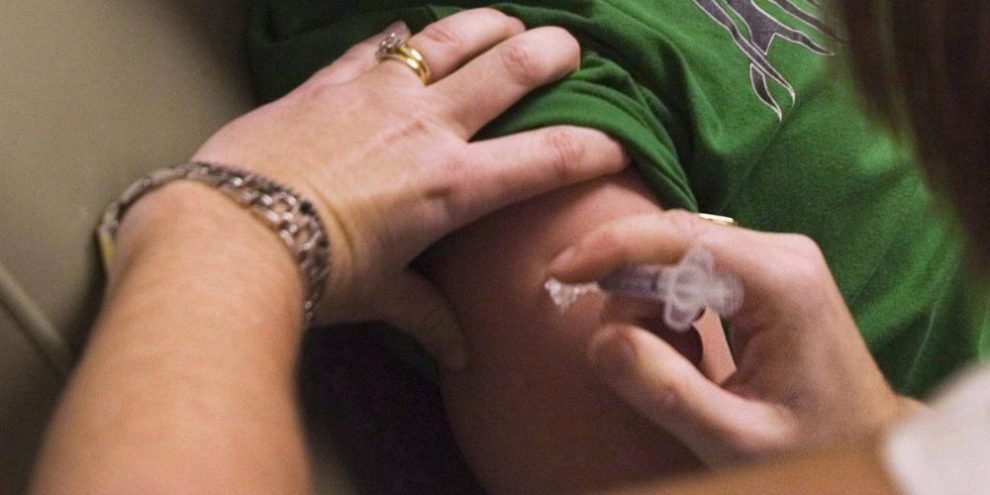
Doctors are urging people to get their flu shot now, noting it takes about two weeks for protection to kick in.
Papenburg said flu season usually hits school-age children first because they are more exposed to the virus through interactions with their classmates and friends.
"Thankfully, school-age children are at lower risk of having severe complications of their influenza infection," he said.
"But certainly children with underlying medical conditions and those that are very young, especially under two years of age, are at increased risk of hospitalization."
Seniors, especially those 75 years and older, are also vulnerable to more severe illness from flu and doctors expect to see more emergency department visits and hospitalizations in that age group, Papenburg said.
Dr. Allison McGeer, an infectious disease specialist at Mount Sinai Hospital in Toronto, said the virus may be causing more serious infections right now because people didn't have a chance to get their flu shot before the virus started spreading more widely in mid-November.
In Ontario, people who are not seniors or in other high-risk groups, including children, weren't able to get the shot until late October.
The flu virus has both influenza A and influenza B strains. Influenza A typically kicks off the flu season, with influenza B starting to spread more later in the winter.
Two strains of influenza A — H3N2 and H1N1 — are circulating, but H3N2 appears to be the dominant strain this year, McGeer said.
"If you're willing to get a vaccine in one year, this is the year to get it," she said.
H3N2 tends to make older people sicker because they've built up more immunity to H1N1 over the course of their lifetimes, she said.
H3N2 has mutated over the last several months, Papenburg said, meaning it may not offer as much protection against that strain as infectious disease specialists had hoped.
"What we've seen is that the virus evolved a little bit from the time that the choices were made for the vaccine strains. And this H3N2 strain that is circulating is not a perfect match with what is in the vaccine," he said.
But it's still worth getting the shot, doctors say, because some protection is better than none to prevent severe illness and hospitalizations.
Preliminary vaccine effectiveness data from the U.K. suggests that in the early days of their flu season this year, the shot provided 30 to 40 per cent effectiveness against H3N2 for seniors and 60 to 70 per cent protection against the strain for kids, Papenburg said.
This year's vaccine may also offer higher protection against the H1N1 and influenza B strains circulating, he said.
The Public Health Agency of Canada is expected to publish its latest flu surveillance data on Friday and case numbers are expected to continue to climb through December.
This report by The Canadian Press was first published Dec. 4, 2025.