
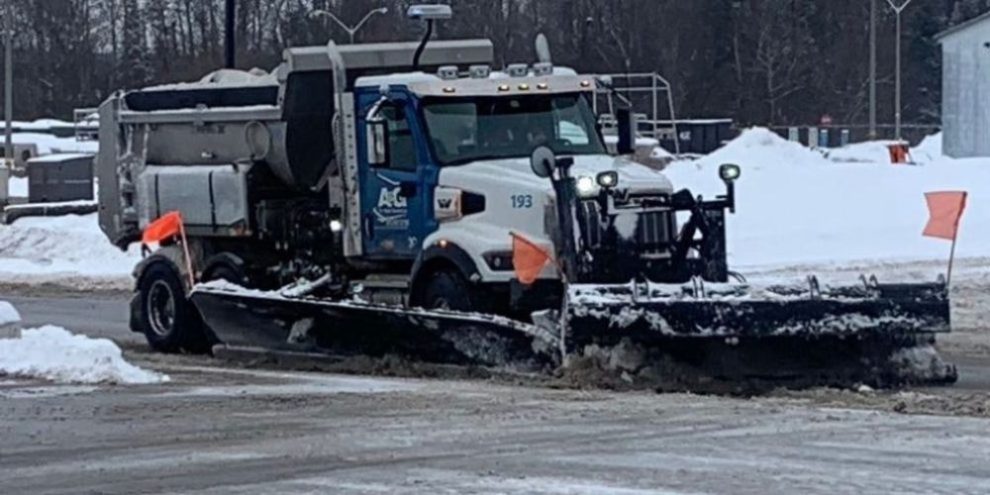
The first heavy snowfall of the season in Barrie seems to light a fuse under some residents after they finish clearing the end of their driveways of heavy snow dumped there by plow operators clearing the streets.
Coun. Bryn Hamilton raised the matter at a recent city council meeting in the wake of a snow squall event late last month.
"I know this happens every year that we get questions about why doesn't the city have the special equipment that can perhaps come behind the trucks and move it."
The snow left at the bottom of the driveway after a plow clears the road is called a windrow.
At that meeting, Dave Friary, the City of Barrie's director of operations, said windrows are an expensive endeavour.
"Initial reports, we're looking at $10 million to provide the service," he told council.
In a note to councillors this week, Friary cited new figures, and the annual operating budget for windrow service is estimated at $12 to $13 million, with a one-time capital investment of $8.5 million.
Barrie's annual snow-clearing budget is $9 million.
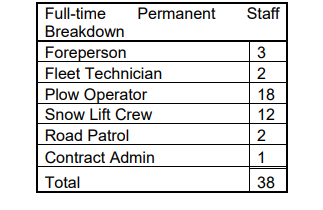
Windrow clearing, said Friary, would rely heavily on contracted services using 45 front-end loaders equipped with hydraulic windrow gates, requiring over 90 contracted personnel, and city staff would be necessary for contract administration, program development, inspections, and complaint resolution.
Additional staff would be needed for snow removal in high-density areas with limited snow storage, and more residential plow routes would be added to maintain timelines.
So as not to impede operations, Friary stated that a 24-hour parking ban during winter events would be necessary and strictly enforced.
There would be a $250,000 tab for electronic software and hardware for routing and communication.
Another drawback, according to Friary, is that the city's Operations Centre lacks space for required equipment and staff, and additional land and facilities would be needed, with costs currently unknown.
He added that townhouse developments, laneways, and areas with curb-faced sidewalks have minimal snow storage, which presents another operational challenge, and are often obstructed by utilities and infrastructure.
"While some municipalities in the Greater Toronto Area and York Region provide varying windrow clearing levels of service, these areas receive less than half the annual snowfall experienced in Barrie. Staff are not aware of any similar programs within Simcoe County," Friary states in the memo.
In an email to Barrie 360 following a major snow squall event in the city in February 2025, Friary repeated that mantra.
"Barrie averages 286 cm (113 inches) of snowfall annually, while communities such as Vaughan average 100 cm (39 inches) per year. More appropriate comparators would be municipalities north of Barrie, such as North Bay, Thunder Bay, and Sault Ste. Marie, where this service is not currently provided."
In the memo to council, Friary noted that windrow clearing does not fully remove snow from driveways.
"The goal is to push most of the windrow snow to the downstream boulevard, allowing vehicles to exit the driveway. Residents would still need to clear residual snow and address accumulation on the right side of the driveway."
Friary said that should council require additional and more detailed information on the service, a staff report with service options will be required.
By the numbers: (source - City of Barrie)
City's Responsibilities
The City's winter maintenance responsibilities include over 1,600 km of roads, over 600 km of sidewalks, 25 parking lots, 72 crosswalks, 113 bus shelters, 708 bus stops, and downtown sidewalk intersections. Please note:
- Pedestrian walkways are not maintained for winter operations.
- Snow removal operations around super mailboxes are handled by Canada Post.
- Snow/ice clearing at GO stations is handled by GO Transit staff.
- Winter maintenance on highways and off ramps—including the 400 series north of County Road 89 and 2-lane highways around Barrie (90, 26 & 27)—is overseen by the Ministry of Transportation.
- The city does not remove driveway snow windrows; this must be done by residents.