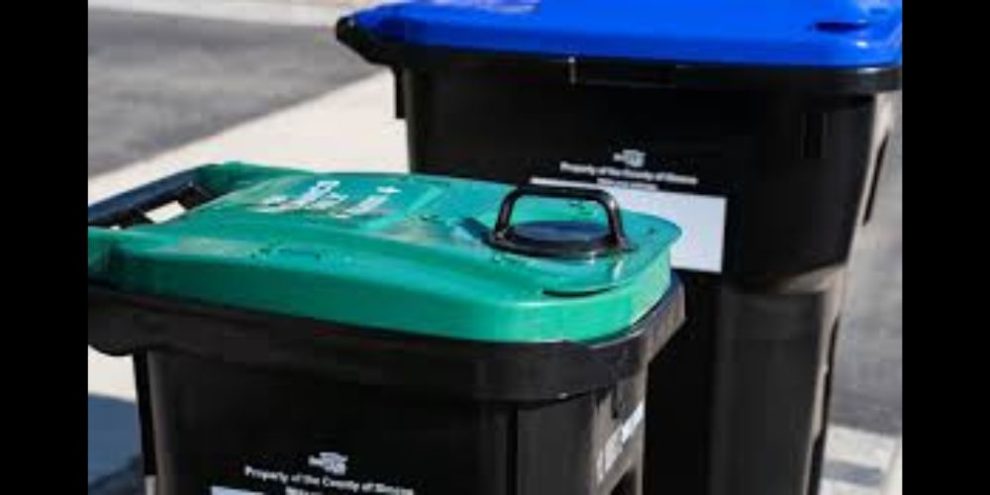
Residents across the County of Simcoe are doing relatively well when it comes to recycling - but officials say much more food and organic waste should be going into green bins instead of garbage bags.
A recent waste audit presented to county council examined what households are actually putting at the curb. The audit involved reviewing waste from 100 homes and carefully sorting garbage, recycling and organics to determine how well residents are following the system.
What staff found was a surprising amount of organic material still ending up in regular garbage.
“In fact, when we look very closely at the garbage, there's more organics in the garbage than garbage in the garbage,” Director of Solid Waste, Rob McCullough told Barrie 360.
Listen below to our full interview with Rob McCullough. It begins at the 14:09 mark.
In 2025, about 113,000 tonnes of material were collected through curbside programs in the county, which excludes the cities of Barrie and Orillia.
While recycling performance is strong — with about 80 per cent of recyclable material ending up in the blue box - organics participation is much lower.
According to the audit, less than half of the organic material generated by households is being placed in green bins.
One major issue is participation.
“Probably the major reason is there's still 25% of our households don't even put out a green bin,” McCullough said. “About 25% of the households never do it.”
Simcoe County switched to biweekly garbage collection in 2020, a move that initially encouraged residents to separate more organic waste. However, the increase in organics collection since then has been minimal. With population growth outpacing the increase in green bin use, the amount of organic waste diverted per household has actually declined slightly.
County staff had floated the idea of refusing garbage pickup from homes that do not place an organics bin at the curb. Council ultimately decided that approach was too extreme for now, opting instead to focus on education and research to understand why some residents are not participating.
At the same time, the county faces growing pressure to reduce landfill use.
Officials say landfill capacity in Simcoe County is rapidly running out.
The county currently has two remaining landfill sites, with one expected to reach capacity later this year. The final site is projected to fill up in 2027.
“So we're basically 18 months away from not having any landfill space left,” the McCullough said.
To manage the situation, some local garbage is already being shipped outside the region.
“We're taking about 25% to 50% of our curbside garbage down to Niagara right now to try and slow down the impact on our landfills,” McCullough explained, referring to landfill capacity in the Niagara Region.
Ultimately, nearly all waste generated in the county will need to be exported once local landfill space runs out.
Despite the challenges, the county says residents are generally performing well compared with other municipalities. Simcoe’s waste diversion rate currently sits at about 62 per cent, with long-term goals to increase that to 70 and eventually 80 per cent.
Officials say reaching those targets will depend heavily on improving organics participation — and helping residents better understand what belongs in the green bin.