Economists are expecting Statistics Canada's consumer price index report for November, slated to be released on Monday, to show the annual inflation rate moved slightly higher from the prior month.
A Reuters poll on Friday showed the consensus among economists is that headline inflation for November will come in at 2.3 per cent, according to LSEG Data & Analytics. Statistics Canada reported the annual inflation rate for October was 2.2 per cent.
RBC economists Nathan Janzen and Claire Fan said they expect Canada's inflation rate held steady in November at 2.2 per cent.
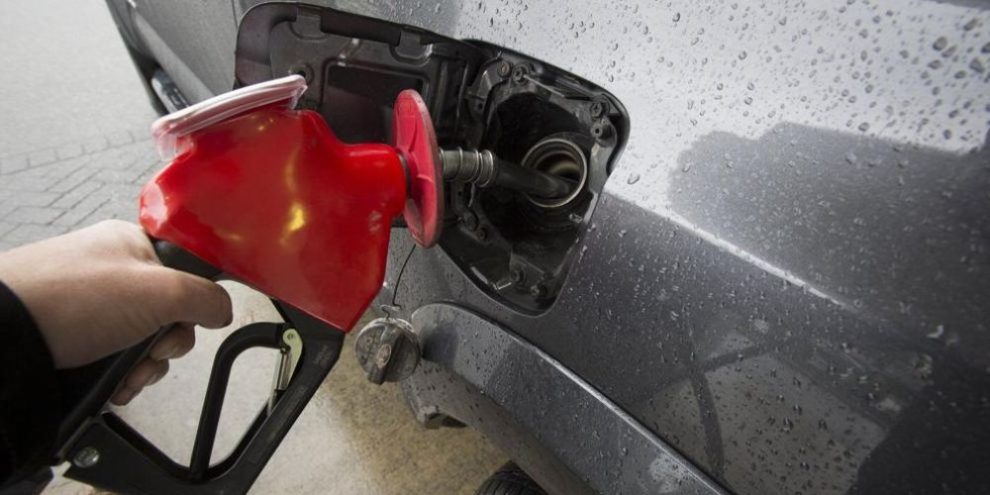
"Gasoline prices rose moderately in November, but were still about eight per cent below a year ago, thanks to the end of consumer carbon surcharges in April. That leaves energy inflation tracking well below zero," the pair said in a note to clients on Friday.
"Food prices, on the other hand, likely continued to grow faster year-over-year, at above three per cent, consistent with rising agricultural commodity prices over the first half of 2025."
Barrie's News Delivered To Your Inbox
By submitting this form, you are consenting to receive marketing emails from: Central Ontario Broadcasting, 431 Huronia Rd, Barrie, Ontario, CA, https://www.cobroadcasting.com. You can revoke your consent to receive emails at any time by using the SafeUnsubscribe® link, found at the bottom of every email. Emails are serviced by Constant Contact
RSM chief economist Joseph Brusuelas said in a statement that it appears overall inflation has stabilized in recent months around the Bank of Canada's two per cent target, despite some increases in the cost of food and certain metals.
He noted that concerns from earlier in the year about the potential impact of U.S. tariffs on price growth and the domestic economy overall "proved a bit overblown."
Canada's economy posted surprisingly strong growth in the third quarter with real gross domestic product rising 2.6 per cent on an annualized basis, marking a rebound from a contraction of 1.8 per cent in the second quarter.
“The Canadian economy has proven quite resilient (and) is on a much better footing than previously acknowledged following recent upward revisions to key growth data,” he said.
On Wednesday, the Bank of Canada kept its key policy rate steady at 2.25 per cent, noting that further cuts weren’t needed to boost economic activity and that inflation remains in check.
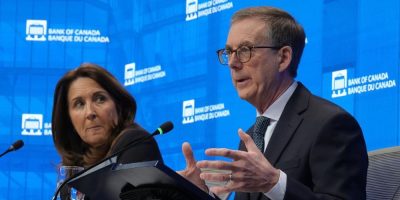
"We think the policy rate is about right," Bank of Canada governor Tiff Macklem said during a press conference on Wednesday.
The bank said ongoing economic slack would help offset trade pressures to keep inflation close to its target going forward.
TD Bank senior economist Leslie Preston pointed out though that there's likely some choppiness ahead in the inflation data because of special factors.
"When we get into December, the comparisons are going to be made to last year when we had the GST holiday. That's going to make inflation look higher than it is," she said.
Last year, the federal government enacted a temporary pause on charging the federal sales tax on certain items like diapers, beer and wine, restaurants and more between mid-December and mid-February.
"There's been a lot of noise on the month-to-month moves in inflation," she said.
Preston said she expects the central bank to leave its policy rate unchanged next year.
"Our baseline view is that some level of tariffs continues and the Canadian economy has another subpar year for growth. And in that world, we think the Bank of Canada keeps the overnight rate unchanged at 2.25 per cent," she said.
However, despite the stronger than expected economic data and recent stability in inflation, the central bank has acknowledged trade volatility has made it harder to produce economic forecasts.
"Uncertainty remains high, and the range of possible outcomes is wider than usual," Macklem said.
Brusuelas said it is “premature to declare victory on the inflation monster.”
With negotiations for the renewal of the Canada-United States-Mexico Agreement scheduled to take place in July, he warned of the possibility of another round of tax increases on trade, "or the collapse of the agreement itself.”
“Thus, consumers will continue to spend cautiously and the BoC is clearly putting in place policy that is prepared for any contingency,” Brusuelas said.
This report by The Canadian Press was first published Dec. 12, 2025.