Updated May 21, 2026 @ 1:48pm
The thought of ticks makes most people cringe. Not only do they feed on our blood, they can also carry Lyme disease.
But this isn’t the only disease you should be worried about. Different species of ticks can carry different bacteria and viruses.
To find out everything you need to know about ticks in Ontario, including the diseases you need to be aware of and how to prevent them, keep reading.
- Types of ticks in Ontario
- Lyme disease
- Other tick diseases
- How to remove ticks
- How to prevent tick bites
- How to prevent ticks on your property
- How to take care of pets
Barrie's News Delivered To Your Inbox
By submitting this form, you are consenting to receive marketing emails from: Central Ontario Broadcasting, 431 Huronia Rd, Barrie, Ontario, CA, https://www.cobroadcasting.com. You can revoke your consent to receive emails at any time by using the SafeUnsubscribe® link, found at the bottom of every email. Emails are serviced by Constant Contact
What Is A Tick?
Ticks are arachnids that go through 4 stages of life:
- Egg
- Larva
- Nymph
- Adult
Between each stage, a tick must have a blood meal or else it won’t survive. Once it has fed, the tick will fall off its host to molt. Each type of tick has preferred hosts but can feed on any animal they encounter. This is especially true for immature ticks in the nymph stage.
What Ticks Aren’t
Ticks are often confused with insects, especially when they’re in the larval stage and only have 6 legs. But adult ticks have 8 legs and are in the same family as spiders, mites and scorpions.
Unlike spiders, who have defined waists, there’s no clear separation between a tick’s abdomen and the rest of its body. Instead, their bodies are flat and teardrop shaped. After feeding, ticks will grow in size, become bloated and look rounder. They can even get as big as a small grape.
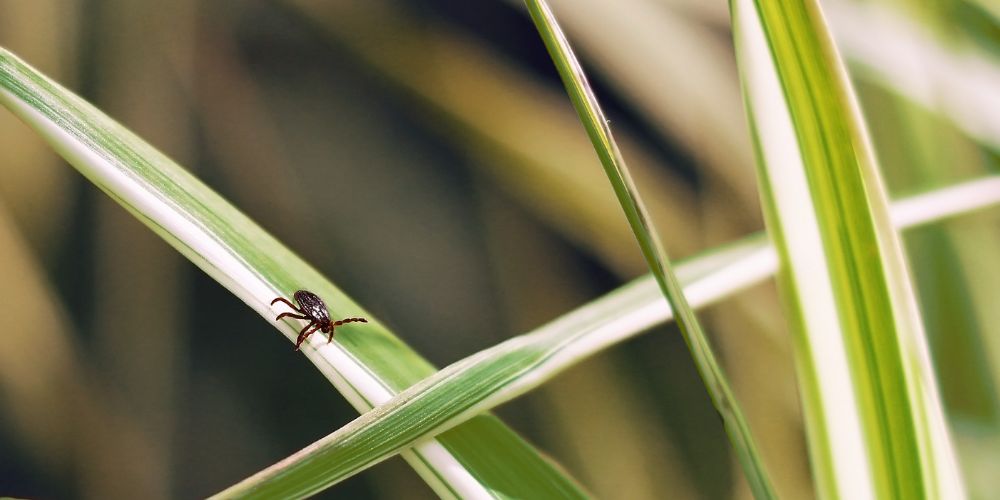
Many people believe that ticks can fly or jump, but this is not true. Ticks are very slow moving. They climb up tall grasses and plants to await their next victim. Some can be more aggressive, seeking out animals and humans, but only certain Ontario ticks will do this.
🎧 Oscar Peco of the Simcoe Muskoka District Health Unit talked with us about Ticks on this episode of What Barrie's Talking About
Subscribe on Spotify, Apple Podcasts and wherever you get your podcasts to get notified of new episodes every day.
Types Of Ticks Found In Ontario
Ticks in Ontario are most active in the spring and summer. That being said, you can find ticks any time the temperature is above freezing. That’s why you should be on the lookout whenever the daytime temperature is over 0°C.
There are two main ticks in Ontario called the black legged tick and American dog tick. There is also a third tick, called the lone star tick that is new to Ontario. These ticks are limited to specific areas but may spread.
While other ticks do call Ontario home, like the squirrel and groundhog tick, these are of lesser concern as they rarely bite.
It’s also possible, though less common, to get bit by other ticks that are less prominent and even unknown in the province. While ticks don’t move far on their own, they do travel on migratory birds and other animals so they can fall off outside their normal area. Climate change is also causing ticks to spread outside their original territories.
Knowing how to identify ticks is important as it narrows down which diseases you should be watching out for. Even more so now that ticks can no longer be submitted for pathogen testing.
Once you know how to identify the different species of ticks, we’ll talk about the diseases they can potentially carry.
Black Legged Ticks (Ixodes scapularis)
Also known as deer ticks, the black legged tick is the most common in Ontario. As their alternate name suggests, they’re often found on deer.
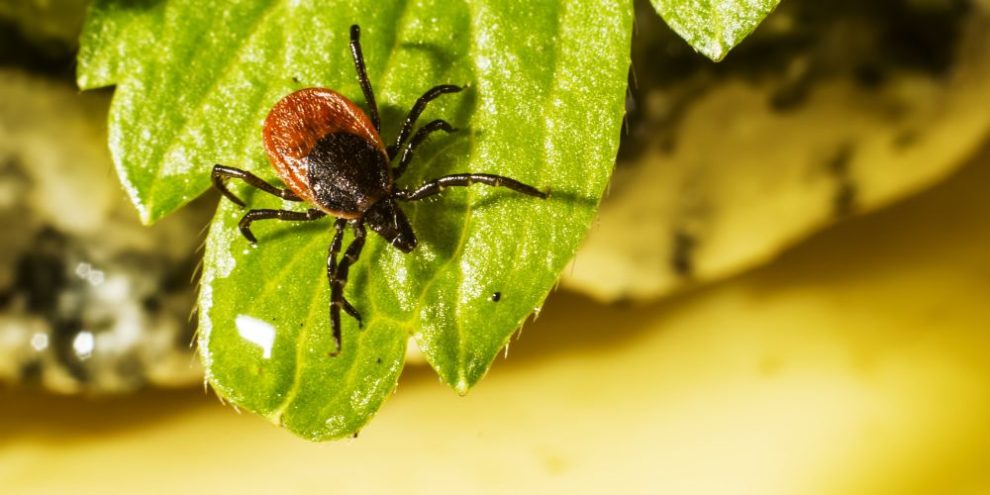
Black legged ticks are hard-bodied ticks that are 1 to 5 mm long. This makes them very hard to see before they feed. Immature ticks can be as small as a poppyseed, while adults are closer to the size of a sesame seed. This also means their bites are usually painless.
Male black legged ticks are dark brown or black. Females are red or orange with a black or dark brown shield on their upper body.
These ticks are most often found in forested areas around:
- Lake Erie
- Lake Ontario
- St Lawrence River
- Rainy River area of Northwest Ontario
- Southwest Ontario
But blacklegged tick territory is expanding. Warmer winters mean the species is moving northward across the province, including into areas of northern Ontario that were historically considered too cool. They've been found active as early as March and as late as December in some regions.
Knowing when each life stage is active can also help you stay alert at the right times. Nymphs are most active from May through July and are responsible for the majority of Lyme disease transmissions — largely because they're so difficult to spot. Adults are easier to see but are still a risk, emerging in fall and again in early spring. Larvae hatch in late summer but carry less disease risk at that stage.
American Dog Tick (Dermacentor variabilis)
The American dog tick, or wood tick is another hard-bodied tick. They’re the second most common tick in Ontario and prefer using dogs as a host.
Adult American dog ticks are the size of an apple seed and are usually a reddish-brown colour. Females have white or silver markings on their dorsal shield, while males usually have markings all over their backs.
This species of tick is usually found in wooded areas with long grass and are usually found in Southern Ontario.
American dog ticks are most active from April through late June. Unlike blacklegged ticks, they tend to go dormant during the hottest part of summer.
Lone Star Tick (Amblyomma americanum)
First discovered in Ontario in 2017, lone star ticks (turkey ticks) are new to Canada and not yet established. This means it's much less likely you’ll come across one.
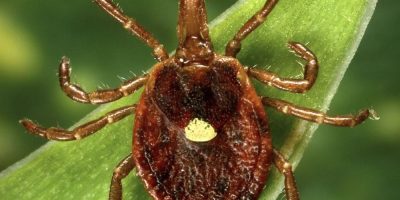
Adult lone star tick bodies are usually rounder in shape and 4 to 6 mm in size. Because they are larger in size, they’re usually easier to find. They also have more painful bites.
They can range in colour from reddish-brown to tan. Females are more distinguishable thanks to the single white spot found in the centre of their backs. Males have white spots and streaks around the margins of their back.
These ticks are usually found in forests with thick undergrowth and were first discovered in Southwestern Ontario. Unlike other ticks that will wait for animals to come to them, lone star ticks actively hunt. They will crawl towards their host to feed and usually do so in groups. So, if you find one lone star tick, there’s a good chance there are more … so, keep looking.
Squirrel Tick (Ixodes marxi)
Squirrel ticks are common in Ontario but they rarely bite humans. Instead, they feed on squirrels, chipmunks, hares, foxes and racoons.
Female squirrel ticks have a tan coloured body with a darker dorsal shield. Males are predominantly reddish tan, with a lighter colour around the margins of their back.
These ticks are usually found in the nests of their hosts or in buildings where squirrels have made their homes.
Groundhog Tick (Ixodes cookei)
The groundhog tick, also called the woodchuck tick, is another species that rarely bites humans.
Adult groundhog ticks are about the size of a sesame seed. Females are generally tan or reddish tan with a darker shield. Males are mostly tan with a light tan margin. Groundhog ticks are sometimes mistaken for blacklegged ticks without a microscope.
Unlike other ticks, groundhog ticks can live for a year or more without a host to feed on.
Like squirrel ticks, they usually live in dens and nests of hosts.
RELATED: SMDHU promotes free app to help identify ticks ...
Lyme Disease
Lyme disease is caused by the Borrelia burgdorferi bacteria and can be a serious illness if not properly managed.
Nymphs pose the highest risk for Lyme disease transmission. Because they're roughly the size of a poppyseed, they're easy to miss during a body check and can feed undetected for long enough to transmit disease.
In Ontario, the Lyme disease bacteria is carried by the black legged tick. However not all black legged ticks carry the bacteria. It’s also believed that there’s less risk of infection if the tick is removed within 24 hours.
Groundhog ticks can sometimes carry Lyme disease but do not usually transmit it.
Symptoms Of Lyme Disease
Symptoms of Lyme disease can show up between 3 to 30 days after you get a bite. However, most people show symptoms within 1 to 2 weeks.
The first symptom of Lyme disease is usually a rash. The most common is a bullseye rash, which is usually more than 5 cm in diameter and spreads outwards like a bullseye. That being said, bruise-like rashes or other unusual rashes should also cause alarm. Especially if you have found a tick or were in an area where ticks commonly live.
Other symptoms of Lyme disease include:
- Fever
- Chills
- Headache
- Stiff neck
- Muscle aches and joint pains
- Fatigue
- Swollen lymph nodes
- Spasms, numbness, tingling
- Facial paralysis
- Problems with heartbeat
- Breathing issues
- Balance issues
- Short-term memory problems
If you have any of these symptoms and have been somewhere that ticks could live, call your doctor.
If you’re bitten by a tick with the Borrelia burgdorferi bacteria there’s also a chance that you will be asymptomatic. That means you may not show symptoms. While this usually means your prognosis will be good, some people have been afflicted by problems later in life. If you find a black-legged tick on your body, you should contact your doctor.
Diagnosis
Doctors can often diagnose Lyme disease based on symptoms but sometimes lab tests are required.
The National Microbiology Laboratory no longer tests individual ticks for pathogens. While you’re still able to submit ticks for identification, it’s generally faster to identify using etick.ca.
Treatment
Most cases of Lyme disease don’t require antibiotic treatment. Antibiotics may be recommended if the tick was attached for a long time. They may also be used if you were in an area where the disease is common.
If antibiotics are required, it’s best to start them within 72 hours of the bite. So be sure to reach out to your doctor right away.
If left untreated, Lyme disease can make you feel weak or tired. It can also become a multisystem disease, affecting your heart, nerves, liver and joints. In severe cases, untreated Lyme disease can cause arthritis, neurological issues, numbness and paralysis. In rare cases, it can even lead to death.
Other Tick Diseases in Ontario
The most well known and common tick disease in Ontario is Lyme disease. However, it is not the only disease that ticks can carry. Though these diseases are rare, knowing what they are will help you catch them early if you’re infected.
Alpha-Gal Syndrome
While rare in Canada, Alpha-gal Syndrome (AGS) is an emerging tick-related illness worth knowing about. It's not a disease caused by a virus or bacteria, but rather an allergic reaction triggered by a sugar molecule called alpha-gal, which is found in most mammal meat (like beef, pork, and lamb).
The reaction starts after a person is bitten by a tick that carries alpha-gal in its saliva. It is most commonly found in the Lone Star tick, a species traditionally found in the southeastern U.S.
However, Lone Star ticks have been reported in southern Ontario, particularly near the U.S. border, suggesting that this condition may become more relevant in the region as tick populations shift due to climate change.
Symptoms of AGS can include:
- Hives, swelling, or itching
- Nausea or vomiting
- Trouble breathing
- Severe allergic reaction (anaphylaxis)
What makes alpha-gal syndrome unusual is that the allergic reaction is delayed, often occurring 3–6 hours after eating red meat. That delay makes it easy to miss the connection.
There is no cure for alpha-gal syndrome, but it can be managed by avoiding red meat and products made from mammals (like gelatin or certain dairy). If you experience strange allergic reactions after eating meat, especially following a tick bite, talk to your doctor and ask about getting tested for alpha-gal.
Meat allergy caused by ticks is getting more common >>>
Ehrlichiosis
Ehrlichiosis is a bacterial infection caused by Ehrlichia chaffeensis and is primarily associated with the lone star tick. While it isn't currently established in Ontario, it's worth knowing about as lone star tick populations continue to expand northward.
Symptoms usually appear within one to two weeks of a bite and can include:
- Fever
- Headache
- Chills
- Muscle aches
- Nausea
- Confusion
Ehrlichiosis is similar to anaplasmosis in its symptoms, but the two are caused by different bacteria and carried by different ticks. Like anaplasmosis, it can be treated with antibiotics, but it can become serious if left untreated.
Anaplasmosis
Anaplasmosis is another disease carried by the black legged tick. This disease is caused by the Anaplasma phagocytophilum bacteria. In 2021, there were 16 confirmed cases in the Kingston, Frontenac, Lennox and Addington area. While the risk remains low in Ontario, you should be aware of the symptoms if you are bit by a black legged tick in the Kingston area.
It’s possible to have an asymptomatic infection, but most people get nonspecific symptoms within 1 to 2 weeks including:
- Fever
- Headache
- Chills
- Muscle pain
- Gastrointestinal problems
- Difficulty breathing
- Hemorrhage
- Renal failure
- Neurological issues
Babesiosis
Babesiosis is also carried by black legged ticks. It’s a life-threatening infection of the red blood cells caused by the Babesia microti bacteria.
So far, human babesiosis cases have only appeared in Manitoba, though the pathogen has been found in Ontario ticks.
Babesiosis is a Lyme-like disease, making the two diseases harder to distinguish. Signs and symptoms of a possible babesiosis infection include:
- Body aches
- Chills
- Fatigue
- Fever
- Headache
- Loss of appetite
- Sweating
Babesiosis can also cause hemolytic anemia, which means your red blood cells die faster than new ones are made. Symptoms of hemolytic anemia are:
- Confusion
- Dark-coloured urine
- Dizziness
- Rapid heart rate
- Swollen spleen or liver
- Pale skin
- Weakness
- Jaundice
Powassan Virus
The Powassan virus was first discovered in Ontario. Several different species of ticks can carry this disease including black legged ticks, groundhog ticks, and squirrel ticks.
Symptoms of Powassan infection include:
- Headache
- Fever
- Stiff neck
- Drowsiness
- Nausea
- Vomiting
In rare cases, the virus can cause Powassan encephalitis. This causes the brain to swell, which can lead to brain damage.
Ticks can transmit Powassan virus in as little as 15 to 30 minutes, which is much more quickly than other diseases. That being said, most infections don’t cause disease. From 1958 to 2017, there have only been 21 cases of Powassan virus disease.
Borrelia miyamotoi Disease
Borrelia miyamotoi produces a Lyme-like disease, but without the rash. In rare cases, it can also cause meningoencephalitis.
There’s been no human detection in Canadians to date, but it’s carried by black legged ticks in Ontario. Symptoms of the disease include:
- Fever
- Chills
- Fatigue
- Severe headache
- Arthralgia/myalgia
Less common symptoms include: dizziness, confusion, vertigo, rash, dyspnea, nausea, abdominal pain, diarrhea and anorexia.
Rocky Mountain Spotted Fever
Rocky Mountain spotted fever is caused by the Rickettsia rickettsii bacteria. Symptoms of this disease usually appear within 5 to 10 days of a bite and include:
- Fever
- Severe headache
- Myalgia
- Nausea
- Rash - usually starts as small bleeding spots on the ankle or wrist
As the name suggests, this virus is more common in the Western provinces. While the American dog tick common to Ontario does carry the bacteria, there is only one locally acquired case to date.
Tularemia
Tularemia, also known as Rabbit Fever, is caused by Francisella tularensis. The disease is very rare, with only 4 cases in Ontario from 2011 to 2020. Symptoms of rabbit fever include:
- Fever
- Skin ulcers
- Enlarged lymph nodes
It can also cause pneumonia or throat infections.
This virus has been seen Canada wide with detection in humans. In Ontario, it’s carried by the American dog tick.
Other diseases also exist but they’re either not present in Ontario, are even less common or have not been detected in humans yet.
How To Remove A Tick
In most cases, quick tick removal is key to preventing the spread of disease. That being said, you don’t want to rush. Tick removal requires a delicate hand. Without it, you could increase the risk of transmission.
If you find a tick on you, a family member or a pet, follow these instructions:
1. Get Hold Of The Tick
Use fine-tipped tweezers to grab the tick as close to the skin as possible. You can also use a tick remover tool.
DON’T remove the tick with your fingers. Try to locate or find a store with tweezers or a tick key. If you absolutely must use your fingers, use a tissue or paper towel then clean and disinfect your hands and the bite area immediately.
DON’T use nail polish, vaseline, repellents, lit match or cigarette, nail polish, nail polish remover, kerosene, or liquid soap. These are myths and aren’t effective/ can be dangerous. They can also cause bacteria to spread, increasing risk of infection.
2. Gently Pull The Tick Out
Pull the tick straight out, gently but firmly.
DON’T squeeze, jerk, twist or crush the tick. This can release the bacteria and increase your risk of infection.
3. Clean Up
Wash your hands and the skin around the bite and hands with soap and water. Once finished, disinfect your hands and the bite with rubbing alcohol.
4. Dispose Of The Tick
If you want to identify the tick, place it in a sealed container, such as a bottle or a jar with a lid. You can then use eTick.ca to identify the tick. This is a free public platform where you can upload a photo of your tick and receive an identification from experts. It covers all tick species found in Canada and will tell you whether the tick you found is a species of concern.
Ramien Sereshk, Program Health Inspector Coordinator for Simcoe Muskoka Health Unit, says "You should contact your healthcare provider if the website identifies it as a black-legged tick. Especially if symptoms associated with Lyme disease appear.”
To kill the tick put it in alcohol. Try to identify the tick. If you are unable to, your health unit or doctor may be able to submit it for identification.
DON’T simply throw the tick out or wash it down the drain. It can crawl back out.
What To Do After A Tick Bite
Once the tick is removed, your job isn't quite done. Here's what to watch for:
- Monitor the bite site for a rash. A bullseye rash is the most recognizable sign of Lyme disease, but any unusual rash near a bite site is worth calling your doctor about.
- Watch for flu-like symptoms including fever, chills, headache, fatigue and muscle aches in the days and weeks following a bite.
- Note how long the tick was attached if you can. The longer it was feeding, the higher the risk of disease transmission.
- If you haven't already, use eTick.ca to identify the species. If it comes back as a black-legged tick, contact your healthcare provider even if you feel fine.
- Symptoms can appear anywhere from a few days to several weeks after a bite, so don't dismiss something unusual just because time has passed.
If in doubt, call your doctor. Early treatment is much more effective than treating Lyme disease or other tick-borne illnesses after they've progressed.
How To Prevent Tick Bites
Although these small insects are unappealing and sometimes frightening, the Simcoe Muskoka District Health Unit wants everyone to enjoy the outdoors using simple but useful tips.
Choose The Right Clothing
Ramien Sereshk, Program Health Inspector Coordinator for Simcoe Muskoka Health Unit, says some key prevention measures include dressing smart if you are out in nature.
"Wear light-coloured long-sleeve shirts and pants, closed-toe footwear and tuck in your clothing," Sereshk says. “An example of this would be tucking your pants into your socks so ticks can’t crawl onto your skin.”
Use Insect Repellent
It’s recommended to use an insect repellent registered in Canada that contains DEET and Picaridin, also known as Icaridin. You can also spray your clothing with repellents that contain permethrin. Unlike DEET or Picaridin, permethrin is applied to fabric, not skin, and it works by making ticks avoid contact with treated clothing altogether.
Do Regular Checks
If you're spending a full day outdoors, don't wait until you get home. "If you're out all day long, try to do a quick check for ticks every few hours," says Dr. Bobbi Pritt of the Mayo Clinic. Doing a quick scan of your clothing and exposed skin every few hours can help you catch a tick before it attaches.
Put Clothes In The Dryer
When you get home, put your clothes in the dryer on high heat for at least 10 minutes. This will kill any ticks and prevent them from getting loose in your home.
Do A Final Check
Sereshk says that ticks like to hide in hard-to-find spots like in between the toes, scalp and behind the knees, so a full body check when you get home as soon as possible is your best defence.
The video below is a great example of checking yourself and your family.
As an extra precaution, you can have a shower to wash off any loose ticks.
Learn more about how to protect yourself from ticks year-round >>>
How To Prevent Ticks On Your Property
Here are some ways to help keep ticks away from your property:
- Keep your grass under 4”. Short grass creates a dry environment that ticks don’t like.
- Trim bushes and trees to let in sunlight. Ticks avoid hot, dry locations.
- If you’re near a wooded area or an area with tall grasses, create a border of gravel or wood chips. You will want it to be at least a meter wide to deter ticks.
- Remove leaf litter, brush and weeds.
- Install playsets and sandboxes away from bushy areas. To further protect your kids, place playsets and sandboxes on a bed of wood chips.
- Deter birds and rodents from coming into the yard.
- Install fences to keep deer out.
- Install bird feeders away from your home.
If you want an extra layer of protection, professional acaricide treatments are also available. These are pesticide applications targeting ticks specifically and can significantly reduce tick populations in your yard. Talk to a licensed pest control professional about whether this is a good fit for your property.
Take Care Of Pets
When checking your pet for ticks, pay extra attention to the spots they can't easily groom themselves.
"Wherever pets can't easily groom themselves, that's where the ticks will be — on the ears, around the muzzle area, under the collar, between the toes," says Dr. Saravanan Thangamani, who studies tick-borne diseases at SUNY Upstate Medical University.
It's also worth knowing that pets can bring ticks indoors. If a tick comes in on a pet, it can survive in the house for months while it waits to find its next host, which could be another person in your household.
Talk to your vet about tick prevention options for your pet. There are medications that can stop ticks from attaching altogether.
By taking these steps to prevent tick bites and knowing what to do if you find a tick, you can help keep you and your family safe.