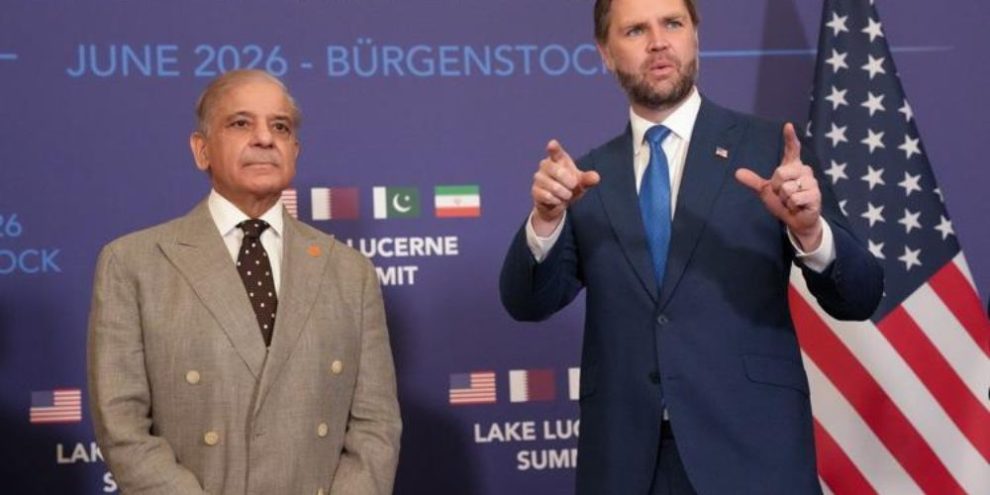
U.S. Vice President JD Vance and senior Iranian officials arrived in Switzerland on Sunday to formally launch negotiations over Tehran’s nuclear program and to build on a fragile interim deal aimed at ending the war in Iran.
A Critical 60-Day Window for Negotiations
The framework agreement, signed last week, has triggered a 60-day period for top U.S. and Iranian negotiators to finalize the technical details. The outcome of these talks carries major implications for both the global economy and international security.
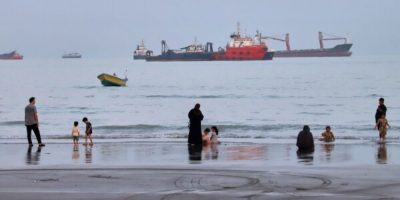
However, just days after the agreement was reached, it is already being tested. Fighting escalated in Lebanon between Israel and the Iranian-backed militant group Hezbollah. Compounding tensions, Iran’s military announced it had closed the Strait of Hormuz, a key waterway through which roughly a fifth of the world’s traded oil and natural gas passes.
Delayed Arrivals and Diplomatic Build-Up
Vance had initially planned to arrive at the picturesque Bürgenstock resort near Lucerne on Friday. His departure was delayed after the fighting in Lebanon intensified, and Iranian officials cancelled their earlier travel plans.
By Sunday morning, delegations from the United States and Iran, along with mediators from Pakistan and Qatar, had arrived at the mountainside resort overlooking Lake Lucerne. According to the Swiss government, talks were expected to begin shortly.
Disputes Over Strait of Hormuz Status
U.S. Central Command disputed Iran’s claim that it had once again shut down the Strait of Hormuz. Officials said U.S. forces continued to monitor the situation to ensure shipping traffic remains uninterrupted. Vance also noted that millions of barrels of oil have moved through the strait in recent days.
Vance left the United States shortly after Iranian state television reported that Tehran’s negotiating team had landed in Switzerland. Iran’s delegation includes parliamentary speaker Mohammad Bagher Qalibaf and Foreign Minister Abbas Araghchi, alongside central bank and oil officials.
On the U.S. side, Vance joins special envoy Steve Witkoff and Jared Kushner, President Donald Trump’s son-in-law, who had already begun working through the complex technical elements of the negotiations.
Broader Diplomatic Participation
The talks also include Pakistani Prime Minister Shehbaz Sharif, Army Chief Field Marshal Asim Munir, and Qatari mediators. Pakistan’s Foreign Ministry said Sharif plans to hold separate meetings with delegations from Iran, Switzerland, and the United States to reaffirm Pakistan’s commitment to dialogue and lasting regional peace.
Vance and his wife, second lady Usha Vance, arrived at Emmen Air Base near Lucerne just before 6 a.m. local time, according to his office.
Political Pressure at Home
Although Vance is expected to stay in Switzerland for only “a day or two,” leaving much of the detailed negotiating work to Witkoff and Kushner, his involvement has drawn increased scrutiny. The vice president is reportedly weighing a 2028 presidential run.
Both Trump and Vance have faced intense criticism from factions within their own party. Republican hard-liners have compared the current agreement unfavourably to the Obama-era nuclear deal, which Trump and GOP leaders argued failed to halt Iran’s nuclear ambitions.
Details of the Interim Agreement
The deal reached between Trump and Iranian President Masoud Pezeshkian allows Iran to resume selling oil freely and provides access to billions of dollars in previously frozen assets. It also requires Iran to dilute its stockpile of highly enriched uranium, believed to be stored at nuclear sites targeted in U.S. strikes last summer.
The agreement permits commercial vessels to pass through the Strait of Hormuz without charge for 60 days, though it leaves open the possibility of future fees imposed by Iran. Trump warned Saturday that the U.S. could introduce its own tolls on the strait if no deal is reached within that period, stating on social media that such fees would compensate for acting as a “Guardian Angel” to Middle Eastern countries.
Market and Regional Impacts
The Trump administration has sought to reassure global markets that the Iran conflict has only briefly affected oil prices, despite concerns from Americans about rising gasoline costs ahead of the summer travel season. Following the announcement of the deal last week, oil futures dropped nearly 8%, with markets expected to react closely to the progress of the talks.
Ongoing Conflict Complicates Talks
Further complicating the negotiations, neither Israel nor Hezbollah is part of the U.S.-Iran agreement. Israeli Prime Minister Benjamin Netanyahu has pledged to maintain Israeli forces in southern Lebanon until all threats are eliminated, while Hezbollah has said it will not stop its attacks unless Israel withdraws.
In the days following the agreement, fighting between Israel and Hezbollah resulted in 47 deaths in Lebanon and four Israeli soldiers killed.