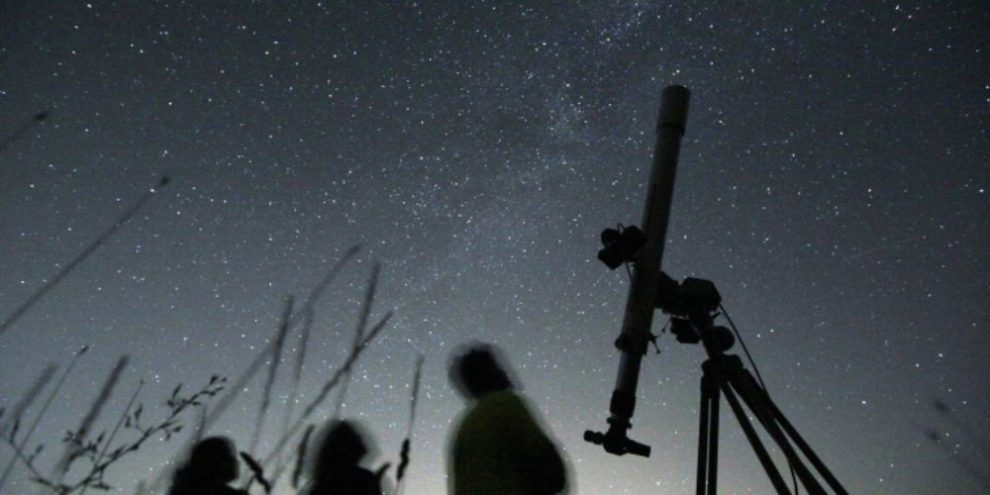
The last major meteor shower of the year, known as the Ursids, peaks soon, bringing glowing streaks to nighttime and early morning skies. Compared to other meteor showers, it's more subdued, but experts say it's still worth a glimpse.
Meteor showers happen when space rocks hit Earth's atmosphere at extremely high speeds and burn up, gaining fiery tails — the end of a “shooting star.” Random meteors are visible from Earth on any given clear night, but more predictable meteor showers happen yearly when Earth passes through streams of cosmic leftovers from comets or asteroids.
The Ursids peak Sunday night into Monday morning and will be visible until Dec. 26 from the Northern Hemisphere. Skygazers usually see five to 10 meteors per hour during the height and there's a possibility for outbursts of up to 25 meteors per hour, according to the American Meteor Society.
Barrie's News Delivered To Your Inbox
By submitting this form, you are consenting to receive marketing emails from: Central Ontario Broadcasting, 431 Huronia Rd, Barrie, Ontario, CA, https://www.cobroadcasting.com. You can revoke your consent to receive emails at any time by using the SafeUnsubscribe® link, found at the bottom of every email. Emails are serviced by Constant Contact
How active a shower will appear from Earth depends on the amount of debris and the moon's brightness, which can blot out glowing meteors. The Ursids feature less space debris than other showers like the Geminids, but the narrow crescent moon won't be much of an obstacle when they peak.
No special equipment is needed to view a meteor shower. To see the Ursids, which hail from a comet called 8P/Tuttle, bundle up and get away from city lights.
“The darker your sky, the better the shower is going to be,” said astronomer Peter Brown with Western University in Canada.
The meteors can be seen over the whole sky, but all the streaks will seem to come from a central point near a constellation for which the shower is named. In this case, that's the constellation Ursa Minor, also known as the Little Dipper.
Once it gets dark, avoid bright lights from cellphones, which will make it harder for your eyes to adjust.