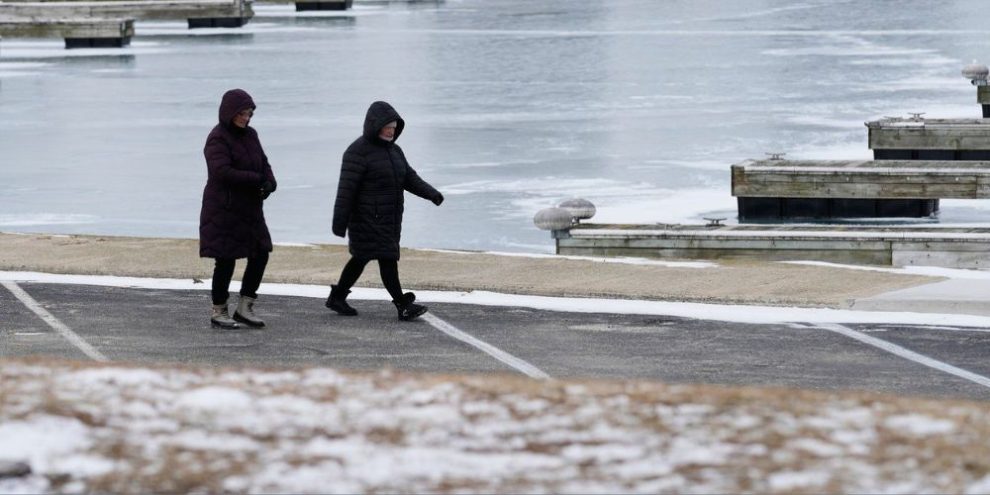
As bitterly cold temperatures plunge much of the country into a deep freeze, emergency doctors and public health experts are warning people to protect themselves from frostbite.
In some parts of Canada where winters aren't always this frigid, people may not realize that frostbite is "a real risk that can happen to anybody" when the temperature drops, said Dr. Sahil Gupta, an emergency physician at St. Michael's Hospital in Toronto.
"I trained in Edmonton. We saw frostbite a lot more than I do here," he said.
"But with the cold spells that we have had, especially going into this weekend, I think we need to be prepared."
Barrie's News Delivered To Your Inbox
By submitting this form, you are consenting to receive marketing emails from: Central Ontario Broadcasting, 431 Huronia Rd, Barrie, Ontario, CA, https://www.cobroadcasting.com. You can revoke your consent to receive emails at any time by using the SafeUnsubscribe® link, found at the bottom of every email. Emails are serviced by Constant Contact
WHAT IS FROSTBITE?
Frostbite happens when the skin freezes.
The early stage of frostbite is called frostnip, when there is not yet any permanent damage to the skin.
"Mild frostbite tends to look sort of like a sunburn," said Dr. Kate Hayman, medical director of the Toronto General emergency department at University Health Network.
The skin often looks red, but can also be pale until it's warmed up and then becomes red, she said.
More serious frostbite is characterized by grey or "dusky" skin and sometimes blisters, Hayman said.
The skin can also feel unusually hard and waxy, as well as tingly and numb, said Gupta.
In severe cases, the skin turns darker blue or black, he said.
Blood carrying oxygen can't get to the area because the cold has damaged the blood vessels
When the skin turns black, the skin tissue is dying and in some cases amputation is needed.
WHAT PARTS OF THE BODY ARE PRONE TO FROSTBITE?
Frostnip and frostbite can affect any area of exposed skin, including the face, ears, hands and feet, according to the Toronto Public Health website.
"Prolonged exposure to extreme cold is of particular concern for extremities, such as fingers and toes," the website says.
Frostbite can develop within minutes on exposed skin, especially with wind chill, Environment Canada's website says.
HOW CAN I PREVENT FROSTBITE?
"We're urging everybody to limit the amount of time that they spend outside" during the extreme cold, said Marc-Antoine Deschamps, superintendent of public information for the Ottawa Paramedic Service, on Friday.
"If you have to go outside, it's important that you dress in layers, that you put on multiple layers to really trap the heat close to your body," he said.
Don't forget a hat, neck warmer, gloves or mittens and boots that aren't too tight to allow good circulation to your feet, Deschamps advised.
Dr. Howard Shapiro, associate medical officer of health for Toronto Public Health, recommended choosing mittens over gloves because they keep the fingers warmer.
People who must work outside should take regular breaks to warm up, Environment Canada's website advises.
People who are homeless are at especially high risk of severe frostbite, Hayman said.
"Amputation is much more common among people who are homeless than those who are housed," she said.
"Early care is critical."
The city of Toronto has opened warming centres, including "surge sites," to help shelter people who are homeless during the extreme cold.
Matthew Bradica, a public health inspector with the Thunder Bay District Health Unit, said it was minus 47 with wind chill in Thunder Bay, Ont., on Friday.
He urged people to take extra precautions if they're venturing out in the cold, even if it's to do "ordinary things" like errands.
"You could be on your way to the grocery store (and) you can get a flat tire," Bradica said.
He said people should keep an emergency kit in their car that includes extra layers of clothing, hats, gloves and mittens — as well as jumper cables, shovels and windshield scrapers.
"You want to get out of the cold as soon as you possibly can," Bradica said.
WHAT DO I DO IF I HAVE SIGNS OF FROSTBITE?
"Getting out of the cold and early rewarming are the most important things that people can do," said Hayman.
Many cases are mild and can be managed at home, she said.
People should immerse the affected areas — usually the hands or feet — in warm water for at least half an hour until the skin feels soft again. It's important to keep the area clean in case there are wounds.
If there is an ongoing change in sensation, such as numbness, or change in skin colour after it's been rewarmed, people should seek medical attention, Hayman said.
Blisters are also a warning sign that there may be deeper injury to the skin, Gupta said.
Shapiro said it's important that once you warm the affected area, you don't go back out into the cold where it can freeze again.
"That's going to lead to more damage. You really want to try and get somewhere warm and get help," he said.
Both Hayman and Gupta said too often, people with frostbite don't come into the emergency department until a few days after they were exposed to the cold.
"We really need to initiate treatment within 24 to 48 hours to reduce the risk of amputation," Hayman said.
"We would really like to see these cases earlier rather than later in emergency departments."
HOW IS FROSTBITE TREATED IN HOSPITAL?
Doctors can use medications that improve blood circulation so the blood reaches the frostbitten areas and sometimes prevent the need for amputation.
Those medications include iloprost — which widens and relaxes the blood vessels — and thrombolytics, which are the same class of drugs used to bust clots when people have heart attacks or strokes.
This report by The Canadian Press was first published Jan. 24, 2026.