A bridge housing project on Tiffin Street is being described as a national test case and is expected to begin welcoming residents next week as part of efforts to address homelessness in Barrie.
Called the “Bridge to Stability” upon its launch in February, it acts as a feeder system, allowing those suffering from chronic homelessness to be sheltered while also receiving support through the HART Hub initiative.
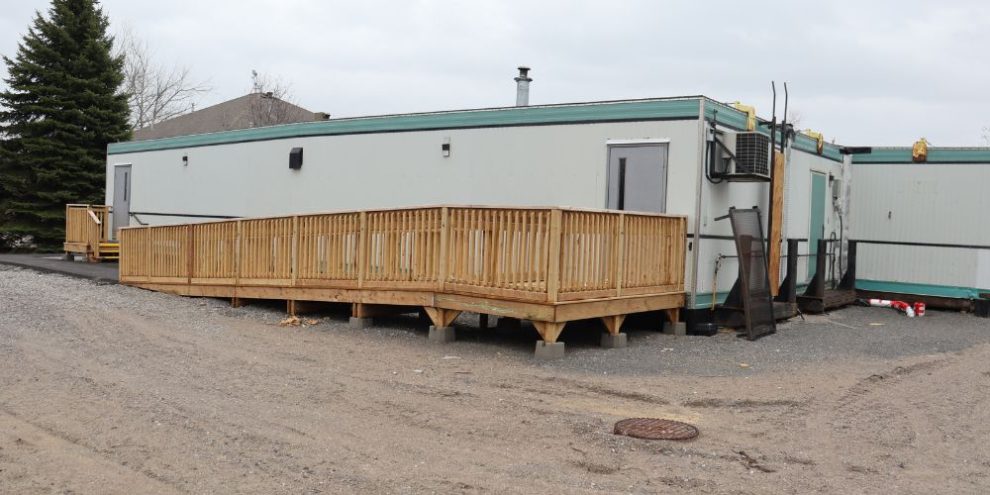
Modular homes were trucked in and installed at the site adjacent to a former County of Simcoe paramedic post in November.
Four cohorts of 10 participants will be moved in incrementally beginning next week, with the goal of having the 40 individual units fully occupied by the end of May.
"This is essentially the missing element that we found to have people transition from being unsheltered or experiencing homelessness into a lot of addiction or recovery treatment programs," said Andrew Scarabelli, County of Simcoe director of housing and homelessness services. "They weren't stable enough to commit to wanting or accepting those services. Often that's because they were in encampments."
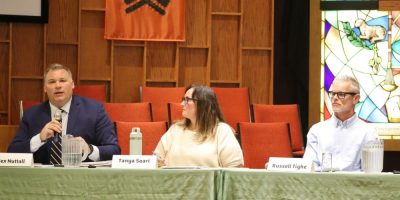
Scarabelli was one of three County of Simcoe representatives who provided an update on the program during a presentation to the City of Barrie's affordability committee Wednesday at City Hall.
Councillors largely supported the program, while asking questions about its rollout and impact.
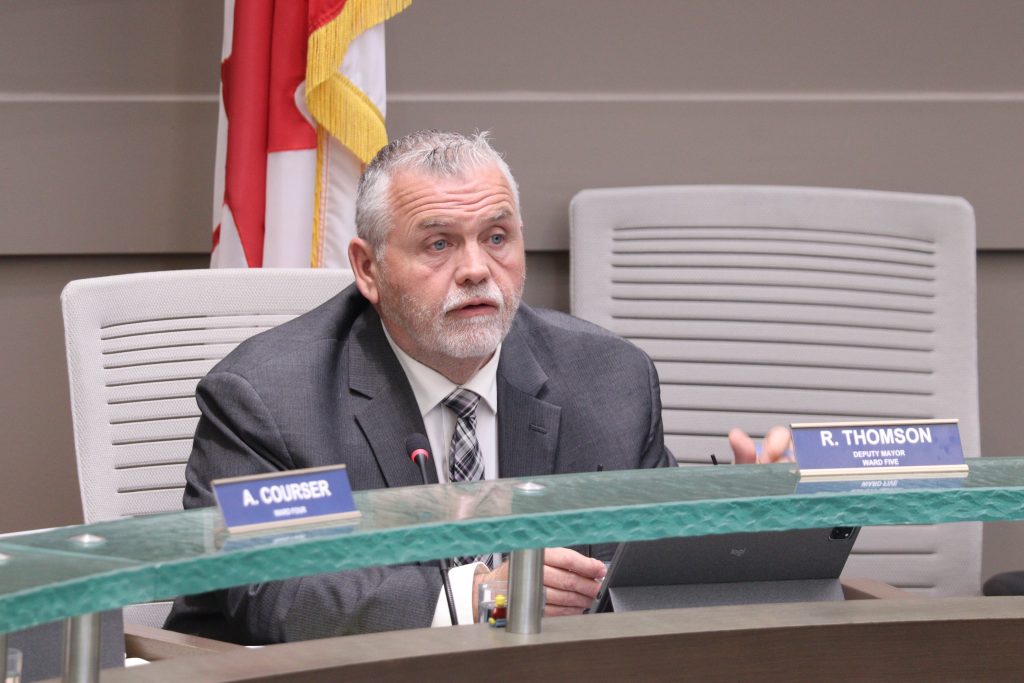
"The approach on my first term was the polar opposite: we encouraged encampments," said Deputy Mayor Robert Thomson. "It's so nice that we're finally coming to the point where the compassionate approach, the medical side of it, the human side of it is working."
The County says the HART Hub program has seen about a 70 per cent success rate in transitioning participants to permanent housing, but those who do not succeed typically return to being unsheltered.
The one-year pilot is funded through the federal Homelessness Reduction Innovation Fund (HRIF), led by the Canadian Alliance to End Homelessness (CAEH).
"[The CAEH] had approached us looking to pilot a bridge housing program, something they have not done throughout the country," said Scarabelli. "And we're hoping to use the City of Barrie as a demonstration project for how we can best support your highest acuity unsheltered individuals.
"There was no targeted housing specific programs for your highest acuity unsheltered individuals... these are individuals that are unsheltered, often in encampments."
Kate Hunter, County of Simcoe manager of homelessness services, says the opening of the bridge housing program was delayed slightly to ensure time was invested into hiring qualified staff and delivering mandatory in-person training.
Referrals are made through the Simcoe County Coordinated Access System, with all eligible participants in Barrie 18 or older, chronically homeless, unsheltered, and without dependents. Support provided is tailored to each participant's individual needs.
The model focuses on rapid transition to permanent housing, targeting a 90-day stay until transition and a maximum of eight months for extenuating circumstances.
Meanwhile, the former paramedic station features a cafeteria, with a kitchen for the residents, along with showers, clinical and meeting space. Local philanthropic group Barrie Cares raised the money to renovate that building as part of its "Campus of Care" project, and it opened in the winter.
There will be around-the-clock on-site supports provided by trained professionals in the building along with space for case management, visitors, communal use and food services. It will run as HART Hub components in Barrie are scaled up by the County.
The Tiffin Street site will have a 24-hour security presence, but will not operate as an emergency shelter or offer drop-in services.
Along with the update on the Tiffin Street project, the County says it has received temporary permits to begin work on two apartment towers on Rose Street, another affordable housing development.
Barrie Mayor Alex Nuttall declared a state of emergency related to encampments on Sept. 9, which remains in effect.
In an update earlier this month, city clerk Wendy Cooke said 111 encampment sites on city-owned property have been addressed.