If the war on drugs wasn’t already underway, Barrie city council may have just escalated it.
Council approved a wide-ranging motion Wednesday night calling for tougher enforcement on drug use and trafficking, while also targeting illegal dispensaries and urging other levels of government to expand access to rehabilitation.
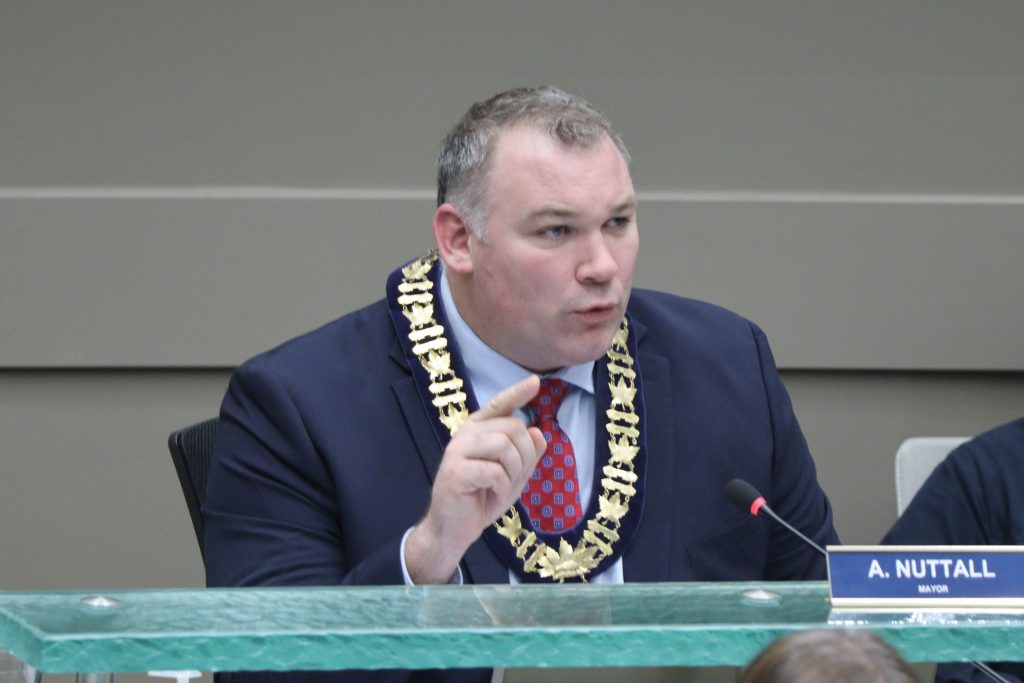
The motion, introduced by Mayor Alex Nuttall, spans multiple levels of government and municipal policy tools.
At the municipal level, there are steps such as exploring zoning changes to prevent illegal retail operations and adding five permanent staff positions to support the City’s ongoing encampment response.
"Without police, prosecution, judges, federal and provincial governments and taking the situation seriously as we are, we will continue to have citizens living in addictions on our streets," Nuttall said in prepared remarks.
It directs the City to send formal requests to Barrie Police outlining support for "zero tolerance" enforcement of drug laws for drug users. Correspondence to provincial and federal officials would also ask for measures like stricter sentencing support of closing illegal drug-related businesses.
The request includes stronger enforcement to shut down unlicensed cannabis dispensaries, as well as limits on the number of legal stores allowed based on population and minimum distance requirements between pharmacies and methadone clinics and for oversight of those operations to be transferred to health authorities.
It also signals support for increased enforcement targeting both drug users and dealers, though it does not change police authority on its own.
At the provincial level, the motion aims for changes to the Mental Health Act to allow for mandatory rehabilitation, otherwise known as “compassionate intervention,” along with increased funding for mental health and treatment facilities to support those changes. Similar changes, including adding rehab facilities in prisons, were also requested federally.
The City will also request that the County of Simcoe hand over specialized outreach funding and the outreach responsibility.
"When I look at the list of complaints coming in, there are a few that the City has power to change, Nuttall said. "(For) the ones that we do have the power, through working with legal and zoning experts, I believe we have a path on removing illegal dispensaries."
When it comes to the abundance of marijuana dispensaries, Coun. Gary Harvey says there are 29 licenced in the city.
"It seems like coffee shops—every corner you go to now, they're there," he said during the meeting. "I'm not quite sure how they're all financially viable with as many as we have."
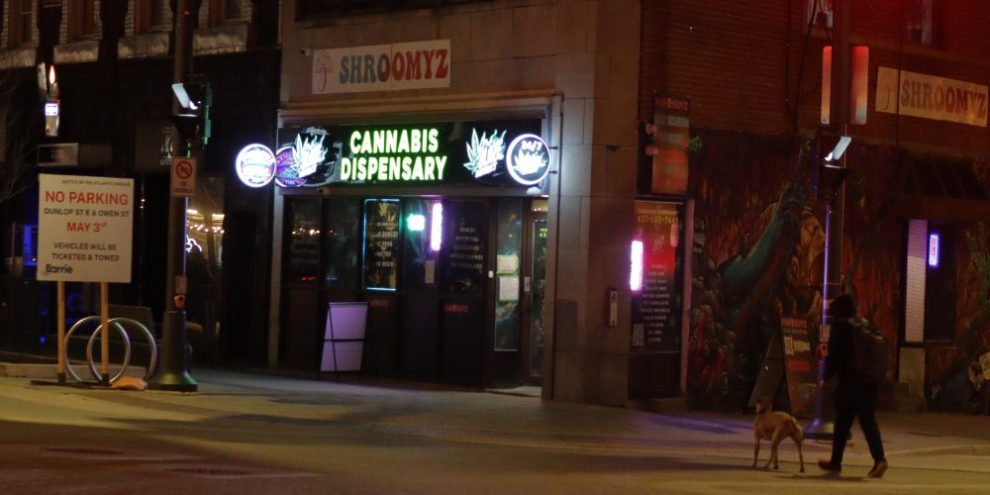
Nuttall cited a few examples of illegal dispensaries in the downtown area and alleged there are links between them and organized crime.
“Why are there fire bombings and vehicles being driven through the storefronts? It’s not happening at other stores,” he said.
To shut those illegal retailers down—namely illegal dispensaries like mushroom shops—and discourage similar activities in the future, the City would need to amend the zoning by-law to disqualify illegal acts where retail is permitted. That amendment was requested through the motion.
Eventually, the motion passed 8-2 with Councillors Ann-Marie Kungl and Amy Courser voting against it, though both expressed support for efforts to address illegal storefronts. Coun. Jim Harris was absent.
Multiple councillors described the move toward zero-tolerance as a "bold move," given that they recognize there could be a case against it regarding human rights.
But the consensus among those in support is that it's about time.
"I understand the councils that don't support this because of an ideology, what they believe is right and wrong," said Deputy Mayor Robert Thomson. "We've gone down such a road that normalized this behavior, and we encouraged it in Barrie—and I hate to admit that—but we did everything to make Barrie the best place to be homeless."
"It's frustrating and mind-numbing for me that we sometimes spend more time walking on eggshells instead of taking the necessary actions we have to take," Morales said.
Councillors concerns reflected support for enforcement alongside concerns about treatment approaches.
Kungl raised concerns about the proposal for mandatory rehabilitation for drug users.
“I don’t think we can summarize enforcement into zero tolerance for someone who is using, because an addiction—which is a disease—is something they’re trying to manage to stay alive,” she told Barrie 360 after the meeting.
Courser also questioned the effectiveness of mandatory treatment, asking for evidence the approach would work.
In response, Nuttall pointed to past efforts in Portugal, which he said helped reduce opioid deaths through a focus on treatment and prevention. One statistic he cited from that project outlines a decrease from 30 per cent to eight per cent of people under 30 that have had experience with drugs.
“It doesn’t mean it’s going to work here, but it worked for Portugal,” he said.
Compassionate intervention also exists through legislation in Alberta and Saskatchewan, which allow for the involuntary, court-ordered addiction treatment of individuals who pose a severe risk of harm to themselves or others. It targets those with severe addiction who cannot seek help themselves, and offers stabilization, assessment, and 3-6 months of care.