Updated May 14, 2026 @ 3:27pm
Honda Canada indefinitely suspended its plans for a $15-billion electric vehicle complex in Ontario, the Japanese automaker said, as it posted its first-ever annual loss.
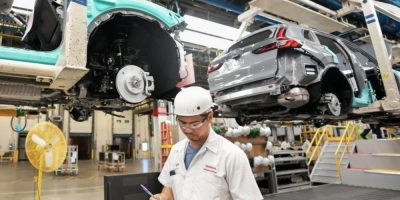
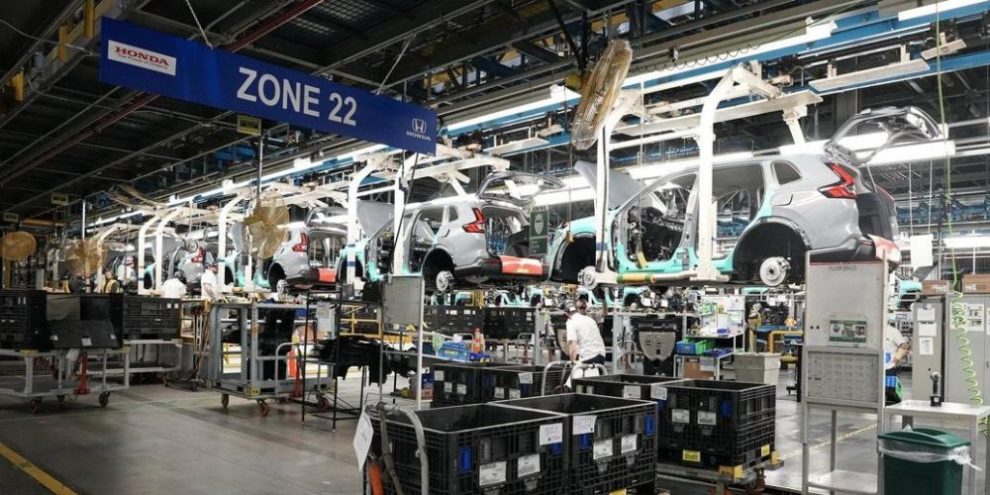
The company said Thursday the decision does not affect the current employment or production levels at its existing manufacturing facility in Alliston, Ont.
Honda said it made the decision in response to evolving business conditions, a change in external resource strategy and shifting customer demand.
"Based on our revised strategic objectives, we have determined that an indefinite suspension of the value chain project is appropriate at this stage," the company said in a statement.
It added it will continue reviewing its future procurement and business strategies, while carefully monitoring market conditions.
Honda noted the new EV plant had the potential to create 1,000 incremental manufacturing jobs in Alliston.
Barrie's News Delivered To Your Inbox
By submitting this form, you are consenting to receive marketing emails from: Central Ontario Broadcasting, 431 Huronia Rd, Barrie, Ontario, CA, https://www.cobroadcasting.com. You can revoke your consent to receive emails at any time by using the SafeUnsubscribe® link, found at the bottom of every email. Emails are serviced by Constant Contact
In a statement, New Tecumseth Mayor Richard Norcross said the federal government must take a hard look at the policies, incentives, and infrastructure required to support Canadian-made vehicles and secure long-term investment.
"Our competitiveness is being tested in real time, and the response must be decisive and immediate."
He said that through town council and the Simcoe Area Auto Mayors, they are actively pushing for coordinated action and stronger alignment with industry needs.
" This includes continued advocacy, collaboration, and engagement—both domestically and internationally—to reinforce relationships and demonstrate that our region remains ready, capable, and competitive," Norcross added in the statement.
The move comes as Honda reported its first-ever annual loss of US$2.7 billion on Thursday, largely stemming from its EV operations and changing policies in the United States, such as a pullback on EV incentives and withholding money for EV charging stations. That's on top of 15 per cent U.S. tariffs on imported autos and auto parts.
The company said losses related to its EV operations are estimated to total US$16 billion, incurred mostly in the fiscal year just ended and the current fiscal year.
Analysts say Honda might have been too ambitious too fast, when many markets weren’t ready. As a result, Honda abandoned many of its plans for EV models, including those in the works in a joint venture with Sony Corp.
While the automaker looks to cut its losses, Daniel Ross, director of strategic market insights at Canadian Black Book, said he fears Honda's thinking is too short-term.
"I think, actually, things are about to get better," he said, referring to a recent uptick in EV demand in Canada after the federal government's new EV affordability rebates.
"Now is the time to bolster up, actually, that strategy to get things moving," he said. "Now is the most positive outlook there has been on EV adoption for Canada."
Ross said even as consumers are shying away from bigger purchases amid economic headwinds, EVs are becoming more affordable and attractive with government incentives.
"The market is moving," he said. "If you're not there, you're probably going to be doing yourself a disservice in the long term."
The federal government announced its EV affordability program in February, offering up to $5,000 in rebates for EVs that cost less than $50,000. Plug-in hybrids are eligible for $2,500 subsidies.
Baris Akyurek, vice-president of insights and intelligence at AutoTrader.ca, agrees on the shifting consumer sentiment.
"It's a bit surprising," he said of Honda's move to step away from EVs.
Referring to a survey AutoTrader.ca ran in February and March, he said overall interest among potential EV buyers was up from a year ago, with almost half of respondents hoping to buy an EV as their next car. That rebound was a first since 2022, when AutoTrader first began tracking consumer sentiment on EVs.
Akyurek said skyrocketing gas prices have bolstered demand for EVs in recent weeks. He doesn't expect the demand to slow, even as EV supply starts to tighten — which would likely put upward pressure on prices.
Announced in 2024, Honda's EV project would have included a vehicle assembly plant as well as battery production facilities. It was set to receive upwards of $5 billion in federal and Ontario funding.
The company said Thursday that while the project had received funding commitments from both provincial and federal governments, no moneyhad been transferred.
Victor Fedeli, Ontario's minister of economic development, job creation and trade, backed up Honda's comments on funding.
"We have really firm guardrails and protections for the taxpayer that no money leaves until all the commitments have been made," Fedeli told reporters in Toronto on Thursday.
Prime Minister Mark Carney said Honda's move was "a disappointing decision," however, he added that it reflects the automaker's broader strategic and financial position.
However, Carney said affordability would likely steer the decision on the kind of vehicles Canadians want to drive.
"It's going to be a question of affordability, reliability, the performance of those vehicles, the relative costs there," he said at a press conference Thursday related to the federal government's new clean electricity strategy.
Honda produced just over 400,000 vehicles in Canada last year, making it the second-largest producer behind Toyota Motor Co.
Production included both conventional gas and hybrid versions of its Civic and CR-V vehicles.
Honda's decision to halt development is just one of many EV projects that have fizzled out in Canada.
General Motors ended production of its BrightDrop electric delivery van last year, Ford Motor Co. has pivoted from EVs to pickup truck plans at its Oakville, Ont., plant and several battery-related plants have been shelved.
This report by The Canadian Press was first published May 14, 2026.
-- With files from The Associated Press.