Barrie police say they are increasing enforcement and visibility in the downtown core, but told the police services board this week that legal limits and prosecution practices continue to constrain outcomes — even as expectations for “zero tolerance” policing remain high.
The comments came during a Barrie Police Service Board meeting where members reviewed a report outlining downtown deployment models, drug enforcement challenges and a sharp increase in police activity in the core compared to the same period last year.
The report, prepared by Insp. Peter Dewsnap of the Barrie Police operational support services division, responds to recent correspondence from Mayor Alex Nuttall supporting a zero-tolerance enforcement approach to drug-related offences in the city following a motion at city council on April 29.
Dewsnap said officers continue to take a “see it and seize it” approach to open drug use in the downtown core, but noted that federal legislation and prosecution practices limit the use of simple possession charges in many cases.
"We struggle with whether we're the appropriate people or agencies that are to be dealing with people that are suffering with addiction and mental health and homelessness," he said. "Our approach down there is [to bring in] the appropriate agencies that can better assist them than the police can."
The report also notes officers must consider diversion, warnings or referrals under the Controlled Drugs and Substances Act, while the Public Prosecution Service of Canada often does not prioritize simple possession cases involving individuals experiencing addiction.
The prosecution focus is a main reason for Nuttall's plea to the provincial and federal government for support of the "zero-tolerance" policy.
"When you're going in and you're busting drug dealers who literally have storefronts, and those folks are given discharges, what are the police supposed to do?" Nuttall stated during the meeting.
Police said their focus is often placed on immediate safety, visible enforcement and referrals to community-based supports rather than prosecution in every case.
"I recognize the frustration in our community when they see someone they believe to be dealing drugs and the desire to see the police be there at that moment and interact. "
The service currently relies on a downtown deployment model introduced in 2025, which includes the Guardians pilot program (previously known as the City Guardian program) and the Downtown Engagement Team (DET), made up of special constables and officers conducting proactive patrols on foot, bicycle, ATV and marked vehicles.
Police also noted that deployment is adjusted during major events such as Kempenfest and the Barrie Airshow to maintain a visible presence in the downtown core.
Despite legislative constraints, data presented to the board shows overall enforcement activity has increased year-over-year. Citywide, community-reported harm and overall crime declined in the first four months of 2026 compared to the same period in 2025 by 25 per cent, while police-generated calls for service increased by 23 per cent.
In the downtown core, calls for service rose by 175 per cent alongside a 28 per cent increase in community-reported harm, while proactive policing interventions also increased by five per cent.
In response to the report, the board approved making the Guardians program a permanent part of the service’s staffing model. The move converts seven special constable positions from temporary full-time contracts into permanent roles already accounted for in the police budget.
Deputy Mayor Robert Thomson, who also sits on the board, expressed concern with how the Guardians program and approach to drugs will be perceived in 2026, citing that some residents don't understand the difference between a special constable and sworn officer.
"Sometimes the visibility can be a double-sided sword," he said. "People are seeing our special constables witnessing the open drug use or something unlawful going on but they're legislative and their powers are so limited."
Police echoed that the formalization of the Guardians program will see some changes compared to 2025 and will constantly be evolving.
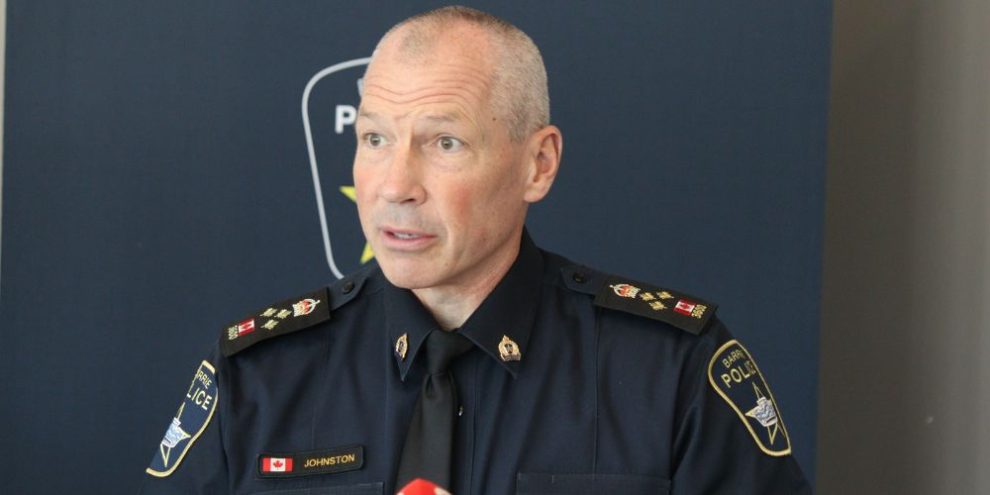
"Nothing set in stone," Johnston said. "We need to constantly change and innovate to keep up with the changing issues that we have in our downtown."