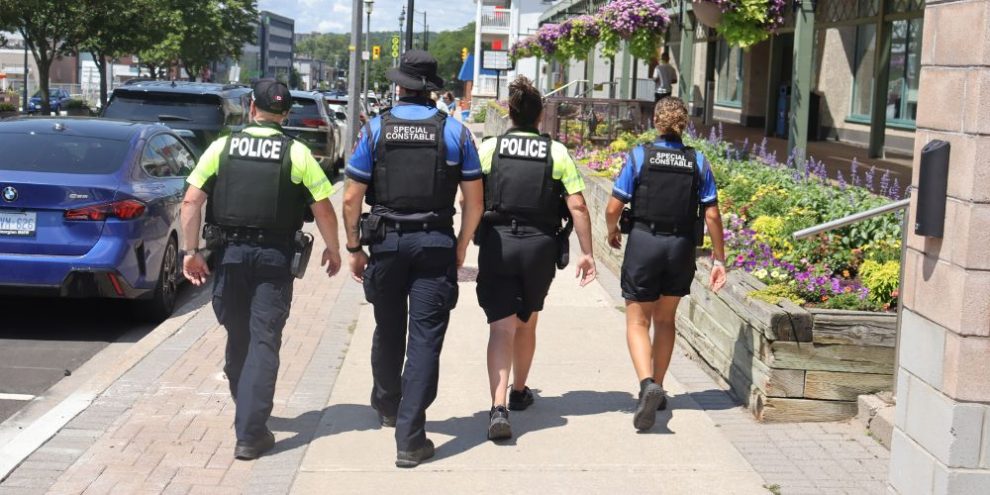
On a warm summer afternoon, a walk through downtown Barrie with members of the Barrie Police Service’s City Guardians program does not immediately look like traditional policing.
There are no dramatic incidents or television-worthy moments. Instead, officers spend much of their time on patrol, speaking with members of the public, connecting with businesses and addressing concerns before they escalate.
Now entering its second summer, the program is focused on visibility — but officers say much of the work involves communication, education and responding to complex social issues where enforcement is not always the answer.
"Whether it's business owners or it's patrons coming down or people that live downtown, we'll interact," Sgt. Paul Matte told Barrie360. "We try to interact with everyone."
Barrie's News Delivered To Your Inbox
By submitting this form, you are consenting to receive marketing emails from: Central Ontario Broadcasting, 431 Huronia Rd, Barrie, Ontario, CA, https://www.cobroadcasting.com. You can revoke your consent to receive emails at any time by using the SafeUnsubscribe® link, found at the bottom of every email. Emails are serviced by Constant Contact
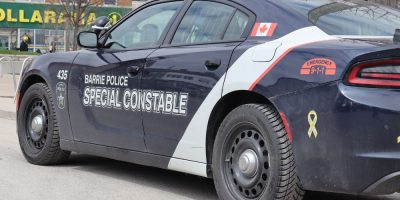
The City Guardians program pairs police constables with special constables who patrol the downtown core, including areas such as Meridian Place, the waterfront, City Hall, the downtown library branch and other city properties. Officers patrol on foot, mountain bikes and utility task vehicles (UTVs).
It began through a partnership with the City of Barrie that was designed to increase both visibility and responsiveness in the area. A pilot program in 2024 had 10 officers deployed, and that number has risen annually since.
While visibility is a key part of the program, officers say one of the biggest challenges is making sure people know they can contact police when something concerns them.
Matte said officers often hear from people who hesitate to call police because they do not want to take resources away from other situations.
"We're here to be bothered," he said. "If there's something happening in front of your storefront, or in the alleyway behind your storefront, or if you're down here to enjoy downtown Barrie and you feel something's happening that you know doesn't seem right, call us."
Officers say part of their role is also addressing perceptions about downtown safety and helping people understand what they are seeing.
"If you, for example, perceive that there's a large issue in Meridian Square with people congregating and using drugs and drinking alcohol, whether that's factual or not, that's your belief. We need to come down to try to help people see what's going on. If there is an issue, deal with it, and if there isn't an issue, try to educate."
Barrie Police's annual report from 2025 says the City Guardians recorded 3,068 occurrences between Jun. 16 and Dec. 31, spending an average of 15 minutes at each location and responding to 335 dispatched calls, with the remainder initiated through the Special Constables’ own proactive work.
Matte said many of the challenges officers encounter in area are connected to broader issues involving addiction, mental health and homelessness. Those challenges cannot always be addressed through enforcement, especially when police do not have the legal authority to intervene in every situation.
"There's only so much we can do," he said.
That limitation has been part of a broader conversation about how the city responds to public drug use and safety concerns downtown.
In the spring, city council passed a motion to send a formal request to Barrie Police outlining support for "zero tolerance" enforcement of drug laws to curb the issue of open drug use in the city.
In the last month, Barrie Police data shows there has been 27 possession-related offences and five trafficking offences in Ward 2, where the downtown core is located.
For special constables like Nathan Cooper, the City Guardians program also provides a sought-after opportunity to develop skills toward eventually becoming a full-fledged officer.
Special constables have specific police authorities but operate under a different role than sworn police constables, often gaining experience through positions in courts and other station duties.
But being out and about downtown and learning how to apply authority and engage more with the community is proving to be a strong building block for them as they develop their policing careers.
"As soon as something else happens that we don't necessarily deal with on a day-to-day basis, that's when we're leaning on the police constables because they they have a lot more training," Cooper told Barrie360. "We can seek mentorship from them and really decide what kind of officer we want to be."
While the program is designed to support downtown safety, Cooper said it also provides special constables with valuable experience in becoming better communicators.
"Communication can make or break your day," Cooper said. "If you're able to articulate why someone's under arrest or have a conversation with someone, even just about how their day's going, that goes a lot further than anything else."